
# Pick n Pay: From Four Small Stores to a $7.3 Billion Retail Giant — The Remarkable Reinvention of a South African Brand
How a family-led retail vision became one of Southern Africa's most recognisable supermarket groups, built a powerful discount brand in Boxer, and is now fighting to win back customers, restore profitability and secure its next chapter.
Imagine walking into a supermarket on a busy Friday afternoon.
A young mother is comparing the prices of cooking oil and cereal. A restaurant owner is buying groceries in bulk. A student is looking for something affordable to prepare for dinner. A pensioner is checking which products offer the best value for money.
They may have different incomes, different priorities and different shopping habits, but they share one expectation:
They want their money to go further.
For a supermarket, that simple expectation is the beginning of an extraordinarily complicated business.
Behind every shelf is a network of suppliers, farmers, manufacturers, warehouses, distribution centres, technology systems, employees, franchise operators and financial decisions. A retailer must manage all of them while competing on price, availability, quality, convenience and customer experience.
This is the world in which Pick n Pay has spent nearly six decades building its business.
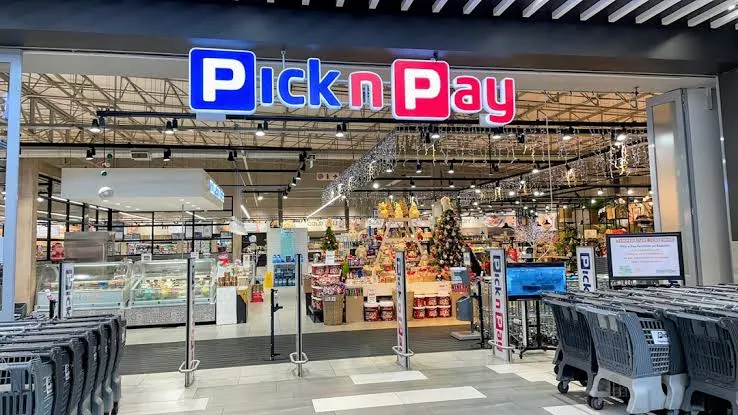
Today, the South African retail group operates more than 2,200 stores across six southern African countries. Its portfolio includes the familiar Pick n Pay supermarket brand, the fast-growing discount retailer Boxer, clothing and liquor outlets, hypermarkets, franchises and digital shopping platforms.
For the financial year ended March 1, 2026, the group reported turnover of R120.3 billion (approximately $7.28 billion).
That is an extraordinary journey from the four stores acquired by Raymond and Wendy Ackerman in Cape Town in 1967.
But this is not simply a story about a supermarket becoming bigger.
It is a story about customer loyalty, brand positioning, acquisitions, retail innovation, a changing African consumer, a difficult corporate turnaround and the importance of knowing when a successful business model needs to change.
And perhaps the most interesting part is that Pick n Pay's next chapter may be more challenging than the one that made it famous.
It started with four stores and a different idea about retail#
In 1967, Raymond Ackerman and his wife, Wendy, acquired four small Pick n Pay stores in Cape Town.
Raymond was not entering an industry he knew nothing about. He had already gained experience in South African retail, including working in the grocery business at Greatermans, where he had managed the Checkers supermarket operation.
But he believed there was an opportunity to build something different.
He wanted a retailer that listened to customers, offered competitive prices and treated people fairly.
That belief became central to the company's identity.
One of his most memorable philosophies was that "the customer is queen."
It was more than a clever slogan. It represented a way of thinking about business.
Instead of treating customers as people who simply came to spend money, Ackerman believed a retailer should understand their needs, respect their concerns and give them a reason to return.
His management philosophy was built around what he called the four legs of the table:
- Administration.
- Social responsibility and marketing.
- People.
- Merchandise.
The customer sat above all four.
The message was clear: a business would struggle to remain balanced if any of these foundations were neglected.
Over time, Pick n Pay grew from those four stores into a major South African retail group.
Its founder's influence also extended beyond supermarkets. Ackerman became known for consumer advocacy, social responsibility and his opposition to discriminatory policies during apartheid.
He was a businessman, but he understood that companies do not operate separately from the societies in which they exist.
That understanding helped shape the Pick n Pay identity.
The first lesson from its history is that a powerful brand often begins with a belief about how customers should be treated.
The secret was never just selling groceries#
There is a reason Pick n Pay became more than a neighbourhood supermarket.
It understood that retail was not simply about putting products on shelves.
It was about creating a shopping experience that people could trust.
Over the years, the group developed several retail formats to serve different needs.
1. Pick n Pay Supermarkets#
This is the group's best-known retail format.
The supermarkets offer everyday groceries, fresh produce, household essentials, personal-care products and other consumer goods.
The brand has traditionally positioned itself around quality, convenience, customer service and competitive value.
Its customers range across different income groups, making the brand's ability to balance affordability and shopping experience especially important.
2. Pick n Pay Hypermarkets#
Hypermarkets offer a broader shopping experience, combining grocery products with general merchandise and other categories.
The format targets customers who prefer to purchase a wider range of household needs under one roof.
It is a different proposition from a neighbourhood supermarket, but both formats benefit from the familiarity of the Pick n Pay name.
3. Pick n Pay Clothing#
Retailers increasingly understand that customers do not think about their lives in isolated product categories.
A household that buys food also buys clothing, school essentials and other everyday items.
Pick n Pay Clothing allows the group to participate in another part of household spending.
The business sells clothing for different members of the family, with a proposition built around affordable everyday fashion.
It also gives Pick n Pay an opportunity to use its existing customer relationships, retail infrastructure and brand recognition beyond food.
4. Pick n Pay Liquor#
The liquor business operates through dedicated stores and other retail formats.
It represents another category within the group's broader retail ecosystem, allowing it to serve customers with different purchasing requirements.
5. Pick n Pay Express#
Express stores provide a smaller convenience-oriented format, including outlets associated with fuel-station forecourts.
The underlying idea is simple: customers do not always need a large supermarket.
Sometimes they need a quick, convenient purchase close to where they are travelling.
6. Pick n Pay ASAP!#
Retail is no longer limited to physical shops.
Pick n Pay has developed an on-demand digital shopping platform called asap!, alongside its traditional online grocery service.
The platform gives customers the ability to order products through digital channels and receive them through delivery services.
This is particularly important in a world where convenience increasingly influences purchasing decisions.
The retailer is no longer competing only for the customer who walks through its doors.
It is also competing for the customer who wants groceries delivered to their home.
And that brings us to one of the biggest changes in modern retail: the store is no longer the entire shopping experience.
The acquisition that changed the group's future: Boxer#
If Pick n Pay's history is about building a trusted supermarket brand, Boxer's story is about understanding a different customer.
Boxer was established in 1977 in Empangeni, KwaZulu-Natal, originally trading as KwaZulu Cash & Carry.
Its business was built around affordability, essential products and customers in communities where price sensitivity is particularly important.
It developed into a discount retail business with a distinct identity.
In 2002, Pick n Pay acquired Boxer.
That decision deserves attention.
Instead of trying to make the Pick n Pay brand serve every customer in exactly the same way, the group acquired a business with a different operating model and a clearer proposition for value-conscious shoppers.
Boxer was not simply another supermarket carrying the Pick n Pay name.
It had its own identity, management approach, customer proposition and operating discipline.
Its limited-range discount model focuses on essential products and competitive prices.
The distinction is important.
A traditional supermarket may compete through assortment, fresh categories, convenience, service and shopping experience.
A discount retailer can compete by keeping the product range focused, controlling operating costs and offering customers a compelling price proposition.
Both models can serve the same broad market, but they do not have to operate in exactly the same way.
Why Boxer became so important#
Boxer grew into one of the strongest businesses within the Pick n Pay Group.
At the end of FY2026, the group reported that Boxer had generated turnover of R46.7 billion (approximately $2.82 billion).
Its trading profit reached R2.64 billion (approximately $159.5 million).
For comparison, the Pick n Pay supermarket segment recorded a trading loss of R953 million (approximately $57.7 million) during the same financial year.
This comparison reveals something significant.
The group does not have one uniform retail performance story.
Its two principal banners have been delivering very different financial outcomes.
Boxer's discount model has become a major growth and profit engine, while the core Pick n Pay supermarket business has been undergoing a difficult restructuring and recovery process.
And the group has recognised the value of giving Boxer more room to grow.
The Boxer listing: Turning a successful subsidiary into a separately listed business#
On November 28, 2024, Boxer made its debut on the Johannesburg Stock Exchange.
The listing was a major milestone.
Boxer had previously been wholly owned by Pick n Pay. Through the initial public offering, Pick n Pay sold a minority interest, allowing investors to own shares directly in the discount retailer.
The transaction raised approximately R8.5 billion (about $471 million at the exchange rate reported at the time).
The offer represented 34.4% of Boxer's issued share capital, while Pick n Pay retained a 65.6% majority interest after the listing.
This was not an ordinary company spin-off in which the parent completely separated itself from the subsidiary.
Pick n Pay continued to control Boxer.
The listing was part of a wider recapitalisation strategy intended to strengthen the parent company's balance sheet and support its turnaround.
It also gave Boxer access to its own public-market investor base and capital-raising opportunities.
Then, in May 2026, Pick n Pay sold another 12.5% interest in Boxer through an accelerated book-build transaction.
The sale generated gross proceeds of R4.7 billion (approximately $284.3 million) and net proceeds of R3.7 billion (approximately $223.8 million).
Following the transaction, Pick n Pay's ownership fell from 65.6% to 53.1%.
It remained the controlling shareholder.
This is a useful example of how a company can unlock some of the value of a subsidiary without completely giving up control.
It also illustrates an important corporate strategy:
A successful subsidiary can become an independent growth platform while continuing to contribute to its parent's wider business.
Pick n Pay's footprint: A retailer with a regional presence#
A supermarket brand becomes powerful when customers can find it.
That is why the size and location of a retailer's store network matter.
At March 1, 2026, Pick n Pay Group reported 2,261 stores across six countries in Southern Africa.
Its footprint included:
| Country | Group stores at March 1, 2026 |
|---|---|
| South Africa | 2,102 |
| Eswatini | 36 |
| Zambia | 24 |
| Botswana | 22 |
| Zimbabwe | 73 |
| Lesotho | 4 |
| Total | 2,261 |
The network includes Pick n Pay-owned stores, franchises, Boxer stores and the group's associate supermarket operations in Zimbabwe.
South Africa remains the centre of the group's business.
But the regional footprint gives the company exposure to customers beyond its home market.
There is an important detail here: the group's current six-country footprint does not include Nigeria. Its earlier Nigerian presence has been exited as part of its broader portfolio rationalisation.
This is a reminder that international expansion is not always a straight line.
Entering a country is one achievement.
Building a profitable business there is another.
A retailer must understand local purchasing power, consumer behaviour, suppliers, currency conditions, distribution infrastructure, regulations and competitive dynamics.
Sometimes the correct business decision is to expand.
At other times, it is to withdraw, simplify and focus resources on markets where the company has a stronger path to sustainable returns.
The numbers: How big is Pick n Pay's business?#
Let's move beyond the brand story and look at the financial performance.
The latest audited full-year results available are for the 52 weeks ended March 1, 2026.
The group reported:
| Financial measure | FY2026 | Approximate USD |
|---|---|---|
| Turnover | R120.3 billion | $7.28 billion |
| Trading profit | R1.685 billion | $101.9 million |
| Profit before tax and capital items | R360 million | $21.8 million |
| Headline loss | R386 million | $23.4 million |
| Trading profit margin | 1.4% | 1.4% |
| Gross profit margin | 18.8% | 18.8% |
Currency conversions use the November 6, 2026 reference exchange rate explained in the editorial note.
The first number that stands out is turnover.
R120.3 billion ($7.28 billion) is a substantial retail business.
However, the more interesting figure is the trading profit margin of 1.4%.
What does that mean?
Imagine a retailer sells goods worth R100 ($6.05).
It does not keep all R100 as profit.
It must pay suppliers, employees, landlords, utilities, logistics providers, technology vendors and other operating expenses.
After those operating costs, the amount left can be surprisingly small.
A 1.4% trading margin means that, at the group level, trading profit was approximately R1.40 ($0.085) for every R100 ($6.05) of turnover.
That is why supermarket retail is such a demanding business.
A small improvement in purchasing costs, wastage, stock availability, logistics or labour productivity can have a meaningful effect on profitability.
Equally, a small deterioration can damage an entire year's financial performance.
The difference between turnover and profit#
There is another important point.
Pick n Pay's FY2026 turnover grew by 3.4% on a comparable 52-week basis.
However, trading profit fell by 4.2% to R1.685 billion ($101.9 million).
Its headline loss improved to R386 million ($23.4 million), compared with R408 million ($24.7 million) in the previous financial year.
This means that while the group made progress on some financial measures, it was not yet reporting a full recovery in its underlying profitability.
The retailer was still dealing with the cost and complexity of restructuring its supermarket operations.
And that is why the FY2026 results should not be read as a simple growth story.
They are better understood as the financial picture of a company trying to repair and reposition a large retail business.
Two banners, two very different financial performances#
The contrast between Pick n Pay and Boxer is one of the most revealing parts of the group's financial results.
For FY2026:
| Business | Turnover | Trading profit/(loss) |
|---|---|---|
| Pick n Pay | R73.6bn ($4.45bn) | (R953m) (-$57.7m) |
| Boxer | R46.7bn ($2.82bn) | R2.64bn ($159.5m) |
| Group | R120.3bn ($7.28bn) | R1.69bn ($101.9m) |
The table highlights why Boxer has become so strategically important.
It is not merely adding sales.
It is generating a significant share of the group's operating profit.
In fact, Boxer's trading profit was greater than the group's consolidated trading profit because the Pick n Pay segment was loss-making.
This is a reminder that a diversified business can contain strong and weak divisions at the same time.
For management, the challenge is to understand what makes the successful division work and how the weaker division can be repaired without destroying the qualities that made the stronger business successful.
It would be a mistake, however, to assume that the same retail model can simply be copied across both banners.
The customer propositions are different.
The operating models are different.
And the market expectations are different.
The turnaround: Pick n Pay's fight to win back the customer#
For years, Pick n Pay has faced pressure in a competitive South African grocery market.
Customers have become increasingly sensitive to prices.
Competitors have continued to strengthen their value propositions.
Operating costs have risen.
The group's own financial statements have highlighted weaknesses in the Pick n Pay supermarket segment.
The company responded with a multi-year turnaround strategy announced in 2024.
Its priorities included:
- Recapitalising the business.
- Re-establishing leadership structures.
- Resetting the store estate.
- Restoring competitiveness.
- Improving the customer proposition and product range.
- Improving operational efficiency and cost discipline.
Some of these priorities have largely been completed, while others require continued execution.
The store estate reset has involved closing or converting stores that were not delivering acceptable returns.
This is a difficult decision for any retailer.
A store may have a long history in a community. Customers may be familiar with it. Employees may have worked there for years.
But a business cannot keep every location open simply because it has always been there.
The commercial question is whether the store can operate sustainably.
A retailer that continues to operate unprofitable locations without a credible recovery plan can weaken the entire group.
The turnaround therefore involves making difficult decisions about the business's size, structure and operating costs.
Improving the customer experience#
A supermarket cannot recover simply by cutting costs.
It must give customers a reason to return.
Pick n Pay has identified improvements in product range, fresh food categories, logistics and price competitiveness as important parts of its recovery.
It is a sensible approach.
Customers do not necessarily care whether a retailer has restructured its balance sheet or redesigned its management structure.
They care whether the products they want are available, whether the prices are competitive and whether the shopping experience is worth repeating.
A successful turnaround must eventually be visible at the shelf, the checkout and the customer's home.
The latest results: Is the turnaround beginning to work?#
In October 2026, Pick n Pay published interim results for the 26 weeks ended August 30, 2026.
These results offer a more recent picture of how the turnaround is progressing.
The group reported:
| Financial measure | H1 FY2027 | Approximate USD |
|---|---|---|
| Turnover | R60.5 billion | $3.66 billion |
| Trading profit | R490 million | $29.6 million |
| Headline loss | R299 million | $18.1 million |
| Net cash on hand | R10.0 billion | $604.8 million |
Compared with the corresponding period in the previous year:
- Turnover increased by 2.4%.
- Trading profit increased by 58.1%.
- Headline loss narrowed by 31.9%.
- The trading profit margin improved from 0.5% to 0.8%.
These are encouraging movements.
But they need to be interpreted carefully.
The group was still reporting a headline loss of R299 million ($18.1 million). The results indicate progress, not a completed turnaround.
The Pick n Pay supermarket business is improving, but the pressure is not over#
For the first half of FY2027, the Pick n Pay segment recorded a trading loss of R516 million (approximately $31.2 million).
That was an improvement from the R621 million (approximately $37.6 million) loss recorded in the comparable period.
The business's trading loss narrowed by 16.9%.
Company-owned South African supermarkets also recorded positive like-for-like sales growth of 2.4%, ahead of internal selling-price inflation of 1.5%.
This is significant because it suggests that sales growth was not simply the result of raising prices.
The group is trying to rebuild the underlying performance of its core supermarket business.
Boxer continues to provide a strong growth engine#
During the same six-month period, Boxer reported turnover of approximately R24.1 billion ($1.46 billion) within the Pick n Pay Group's consolidated results.
Its trading profit increased by 8.1% to approximately R1.0 billion ($60.9 million).
Boxer also opened its 600th store during the period.
The message is clear: Boxer continues to expand while the parent group works to restore the competitiveness of the Pick n Pay supermarket business.
Online shopping is becoming more important#
Pick n Pay's online business recorded turnover growth of 35.4% in the first half of FY2027, according to its interim results announcement.
This is worth paying attention to.
The modern supermarket is no longer competing only with the store down the road.
It is also competing with the customer's phone, the speed of delivery and the convenience of ordering from home.
Digital growth offers an opportunity to serve customers in new ways, but it also creates operational demands around stock accuracy, picking, packaging, delivery and customer service.
The best online grocery experience is not simply an attractive app.
It is the ability to deliver the right order, at the right time, in the right condition.
The brand strategy: Why Pick n Pay and Boxer should not be treated as the same brand#
This is where the story becomes particularly interesting from a brand-management perspective.
A common mistake in business is assuming that one brand can communicate the same promise to every customer.
But customers are not identical.
A shopper who prioritises range, convenience, fresh food and a familiar full-service supermarket experience may have different expectations from someone whose primary concern is stretching a limited household budget.
Pick n Pay and Boxer allow the group to serve these different needs through separate brand propositions.
Pick n Pay: A broad supermarket experience#
Pick n Pay's brand identity is built around customer service, product variety, food quality, convenience and value.
Its ambition is to remain relevant across a broad range of customers.
The challenge is to make that promise tangible in everyday shopping.
Customers must be able to see the value in the products, prices, store environment and service.
Boxer: A clear value proposition#
Boxer has a more focused proposition.
It is a limited-range discount retailer targeting customers who want essential products at competitive prices.
Its strategy relies on a disciplined operating model and a strong understanding of the communities it serves.
The distinction is powerful.
Pick n Pay does not have to turn every supermarket into Boxer.
Boxer does not have to imitate every feature of Pick n Pay.
Instead, the group can use two distinct brands to address different customer needs.
This is an example of portfolio brand strategy.
The parent company owns and coordinates multiple brands, each with a distinct market position.
The strategy only works, however, when the brands retain their separate identities and deliver on their individual promises.
What makes a supermarket brand difficult to replace?#
A supermarket is not a technology company with a product that can be downloaded in a few seconds.
Its competitive advantage is built through physical infrastructure and repeated customer behaviour.
Consider the factors that influence a shopper's decision:
Availability: Can customers find the products they need?
Price: Does the retailer offer value compared with alternatives?
Quality: Can shoppers trust the products they purchase?
Convenience: Is the store accessible, and can customers shop efficiently?
Experience: Are the stores clean, organised and easy to navigate?
Loyalty: Does the retailer give customers reasons to return?
Digital convenience: Can people shop online without unnecessary friction?
Each factor contributes to the brand experience.
Pick n Pay's long history gives it brand recognition, but recognition alone cannot guarantee future success.
A customer may remember a retailer fondly and still shop elsewhere if the prices, product range or experience become less attractive.
That is the difference between brand awareness and customer loyalty.
Awareness means people know your name.
Loyalty means they continue choosing you.
The difficult business realities Pick n Pay must overcome#
The group has made progress, but several challenges could influence its future.
1. Competition is relentless#
South Africa's grocery retail market is highly competitive.
Pick n Pay competes with established businesses such as Shoprite and Checkers, SPAR, Woolworths and other retailers, including discount-focused operators.
These businesses compete through price, product quality, convenience, store locations, private-label products and customer experience.
A retailer cannot assume that decades of brand recognition will protect it from competitors that execute better.
2. Consumers remain price-conscious#
Food and household essentials are recurring expenses.
When consumers experience pressure on their purchasing power, they often become more selective about where they shop and what they buy.
For retailers, this creates a difficult balance.
They must protect affordability while maintaining sufficient margins to cover their operating costs.
A retailer that raises prices too aggressively may lose customers.
A retailer that cuts prices without controlling its costs may damage profitability.
The winning model must balance both.
3. Labour and operating costs#
Retail is a people-intensive business.
Stores need cashiers, shelf packers, supervisors, security personnel, managers, logistics staff and other workers.
Labour costs are therefore a major part of the operating structure.
Pick n Pay's interim reporting disclosed that it reached an agreement on restructuring its store labour model in October 2026, allowing the withdrawal of a formal labour consultation process.
This is part of the group's attempt to build a more competitive operating structure.
The real challenge is to improve productivity without damaging staff morale or customer service.
4. Store expansion must produce returns#
Opening new stores creates opportunities for growth, but it also requires capital.
A store needs an appropriate location, inventory, staffing, equipment, distribution support and sufficient customer demand.
Boxer's expansion demonstrates the potential of a focused discount model.
However, every new store must still justify its investment.
The objective is not simply to have more locations.
It is to have productive locations.
5. Online retail must be economically sustainable#
Digital grocery sales are growing, but online fulfilment comes with additional costs.
Orders must be picked, packed and delivered.
Returns and substitutions must be handled.
Customers expect accurate inventory information and dependable delivery.
The online channel must therefore grow in a way that creates value rather than merely increasing sales at the expense of profitability.
6. The group must protect its brand reputation#
A retailer can spend years building a reputation and lose customer confidence through inconsistent execution.
Poor product quality, unreliable stock availability, weak service or a perception that prices are no longer competitive can damage the customer relationship.
For Pick n Pay, the challenge is to make its historic customer-first promise visible again in every store and every digital interaction.
What African entrepreneurs can learn from Pick n Pay#
Pick n Pay's story is particularly relevant to African entrepreneurs because it shows that a business can grow by understanding customers, building a distribution network, developing multiple brands and continuously adjusting its operating model.
There are several lessons worth studying.
1. Start by understanding the customer#
Raymond Ackerman's customer-first philosophy was foundational to Pick n Pay's identity.
The most successful brands do not begin by asking how to sell more products.
They begin by understanding why customers buy, what frustrates them and what would make them return.
For an entrepreneur, that could mean interviewing customers before developing a product, studying purchasing habits or identifying underserved communities.
Do not build what you think customers should want.
Build around what they actually need.
2. Know when one brand is not enough#
The Pick n Pay and Boxer strategy offers a practical lesson in segmentation.
Different customer groups can require different price points, experiences and product ranges.
Trying to serve everyone with one brand can weaken the message.
A company may be better served by creating clearly differentiated brands that address distinct customer needs.
But each brand must have a clear purpose.
Launching several brands without meaningful differences can simply increase complexity and cost.
3. Build distribution as a competitive advantage#
In retail, distribution is not a supporting function.
It is part of the product.
A business that can consistently put the right goods in the right locations has an advantage over competitors that cannot.
For African entrepreneurs, this lesson extends beyond supermarkets.
It applies to agriculture, e-commerce, manufacturing, healthcare, consumer goods and technology.
The ability to reach the customer reliably can be as important as the product itself.
4. Use acquisitions to enter markets and build capabilities#
Pick n Pay's acquisition of Boxer gave the group access to a distinct business model and customer segment.
The lesson is not that every entrepreneur should acquire another company.
It is that acquisitions can accelerate strategic growth when the target brings something genuinely valuable.
That could be customers, technology, distribution, manufacturing capacity, specialist talent or access to a market.
The value must come from what the combined businesses can achieve after the acquisition.
5. Do not confuse size with success#
Pick n Pay's FY2026 results make this lesson very clear.
The group generated more than R120 billion ($7.28 billion) in turnover, yet it still reported a headline loss.
A large customer base and impressive sales figures do not automatically produce a healthy business.
Entrepreneurs must understand margins, cash flow, operating expenses, financing costs and capital requirements.
Growth is important.
Profitable and sustainable growth is better.
6. Know when to restructure#
Some businesses become attached to the way they have always operated.
But markets change.
Customer expectations change.
Technology changes.
Competitors change.
A business that refuses to adapt can gradually lose relevance.
Pick n Pay's store estate reset and operating changes demonstrate how difficult, but sometimes necessary, business reinvention can be.
The aim should not be to protect every old decision.
It should be to protect the long-term health of the business.
7. Build brands that can survive beyond their founders#
Pick n Pay was shaped by Raymond Ackerman's leadership and philosophy.
But an enduring company must institutionalise its values.
That means building management systems, governance, talent development, processes and customer-service standards that remain effective when the original founder is no longer running the business.
A great founder can start a company.
A great institution must be able to outlive the founder.
8. Digital transformation must solve real customer problems#
Pick n Pay's investment in online retail reflects how customer behaviour is changing.
But launching an app is not digital transformation by itself.
The technology must make the customer's life easier.
For an African business, the important question is not simply whether a digital platform exists.
It is whether the platform makes a product more accessible, reduces friction, improves service or creates measurable business value.
9. Treat your strongest business as a learning opportunity#
Boxer's performance provides Pick n Pay with an opportunity to study what is working.
The group can examine the differences in pricing, stock management, store formats, operating costs and customer propositions.
This does not mean copying Boxer's entire model into Pick n Pay.
It means understanding which capabilities can be shared and which differences should be preserved.
10. Never stop earning customer trust#
Customer loyalty is not something a company receives permanently.
It must be earned repeatedly.
Every interaction is an opportunity to strengthen the relationship or weaken it.
That is why customer experience should never be treated as a marketing department's responsibility alone.
It belongs to the entire organisation.
BrandKabal's Final Take#
Pick n Pay is a fascinating African business story because it demonstrates both sides of building an enduring brand.
It shows what can happen when a company starts with a clear customer philosophy, builds a trusted identity, expands into related retail categories and develops a distribution network across multiple markets.
But it also shows that success in one generation does not guarantee success in the next.
The group has grown from four stores in Cape Town into a retail operation generating more than R120 billion ($7.28 billion) in annual turnover.
It acquired Boxer, developed a multi-format retail model, expanded across Southern Africa and invested in digital shopping.
Yet the company has also faced serious challenges in its core supermarket business.
Its recent financial results show that Boxer has become a powerful growth and profit engine, while the Pick n Pay supermarket business is still working through its turnaround.
This makes the company's next chapter particularly important.
The question is no longer simply how many stores Pick n Pay can operate.
It is whether the business can restore the competitiveness of its core supermarkets, preserve Boxer's growth momentum, strengthen its digital operations and convert its enormous retail footprint into consistently sustainable profits.
For African entrepreneurs, perhaps the biggest lesson is this:
A strong brand can open the door, but operational excellence is what keeps the business alive.
Raymond Ackerman understood that customers should sit at the centre of the business.
Nearly six decades later, that philosophy remains relevant.
But in modern retail, customer-first thinking must be supported by efficient logistics, appropriate pricing, good technology, disciplined management and a business model capable of producing healthy returns.
Because customers may remember your brand.
They may even love your brand.
But they will continue choosing it only when you give them a reason to.
And that is the real business challenge facing Pick n Pay.
BrandKabal's 10 Big Lessons from Pick n Pay#
1. Put customers at the centre of every business decision. A brand becomes valuable when it consistently solves customer problems.
2. Build a clear market position. Customers should understand what your brand stands for and why they should choose it.
3. Understand different customer segments. One business may need more than one brand to serve different purchasing needs effectively.
4. Make distribution part of your competitive advantage. Products must be available where and when customers need them.
5. Acquire capabilities, not just companies. Strategic acquisitions should strengthen the business and create measurable value.
6. Monitor profitability, not just turnover. Large sales figures do not guarantee a healthy business.
7. Be willing to reinvent. A business must change when the market and customer expectations change.
8. Invest in digital convenience. Technology should remove friction and improve the customer experience.
9. Build institutions, not founder-dependent businesses. Values, systems and leadership must outlive individual personalities.
10. Earn customer loyalty repeatedly. Trust is built through consistent delivery, not advertising alone.
The BrandKabal Question#
Imagine you are building a supermarket brand in Africa today.
Would you rather own one large retail brand trying to serve everyone, or build a group of clearly differentiated brands that address different customer needs?
Pick n Pay's journey suggests there is no universal answer.
The important thing is understanding the customer, building the right operating model and making sure that every part of the business contributes to long-term value.
Because the greatest retail brands do not merely sell products.
They earn a place in people's everyday lives.
And that is what Pick n Pay has spent nearly 60 years trying to build.



Join the conversation