
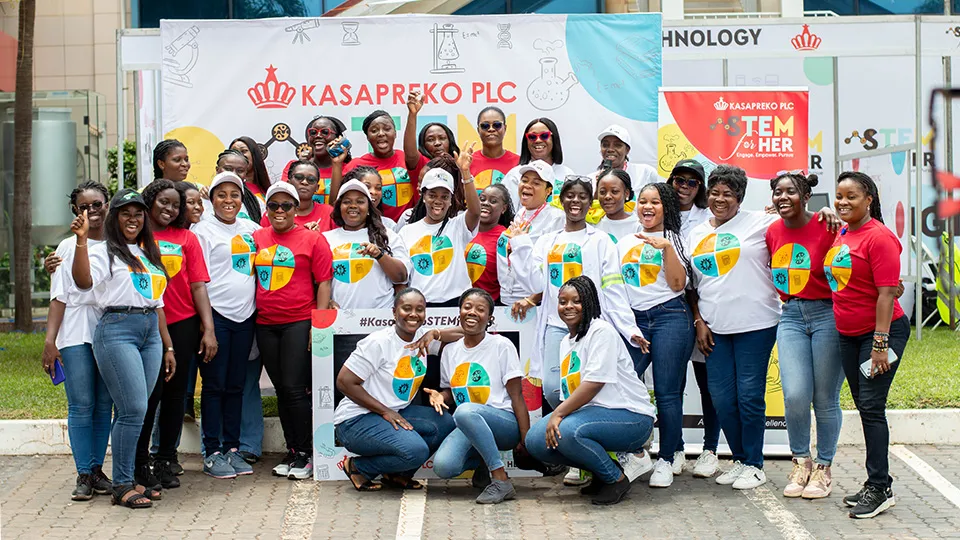
The extraordinary journey of a five-person business that built one of West Africa's most recognisable beverage brands, expanded into international markets, attracted more than $146 million in IPO bids and is now investing in the next generation of Ghanaian manufacturing.
Imagine walking into a neighbourhood shop in Accra.
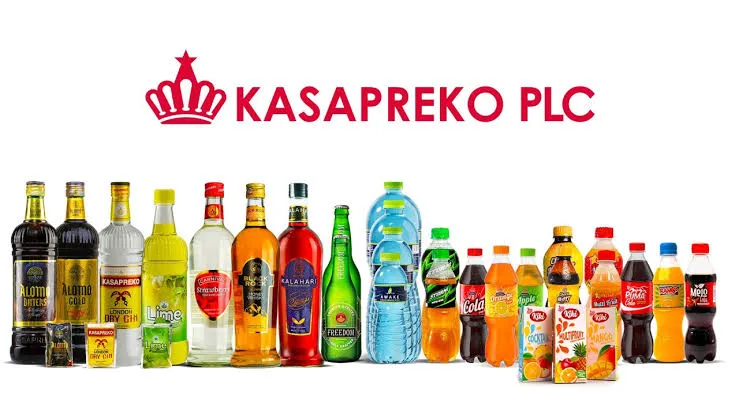
A customer asks for Alomo Bitters. Another picks up a bottle of Awake Water. A group of friends chooses a carbonated drink. A retailer restocks gin, whisky, juice and other beverages for the weekend.
Different customers. Different occasions. Different products.
But behind several of those familiar bottles is one Ghanaian company that began its journey with five employees and a small operation in Nungua.
Its name is Kasapreko.
Today, Kasapreko PLC is one of Ghana's most recognisable indigenous beverage manufacturers. Its product portfolio stretches from herbal bitters and spirits to bottled water, carbonated soft drinks, juice and ready-to-drink beverages. Its products are exported beyond Ghana, its manufacturing operations have expanded considerably, and its shares began trading on the Ghana Stock Exchange in June 2026.
The financial numbers tell an interesting story.
For the year ended December 31, 2025, Kasapreko reported revenue of GH¢3.50 billion (approximately $298.5 million) and profit after tax of GH¢354.2 million (approximately $30.2 million).
Then, in June 2026, the company completed an initial public offering that raised GH¢700 million (approximately $59.7 million). Investor applications reached approximately GH¢1.72 billion (approximately $146.6 million).
That is a remarkable evolution.
But the most interesting part of Kasapreko's story is not simply that it became a large beverage company.
It is how the business transformed a distinctly Ghanaian product idea into a commercially recognised brand, built manufacturing capabilities around it, diversified into other beverage categories and eventually opened its ownership to the public.
This is a story about entrepreneurship, product innovation, brand positioning, manufacturing, distribution, exports and the discipline required to turn a popular product into an enduring company.
And there is a particularly important lesson for African entrepreneurs:
A local idea can become an international business when it is supported by the right combination of product development, brand identity, operational capability and distribution.
Five employees, one garage and an ambitious Ghanaian vision#
Kasapreko traces its operating history to 1989, when its founder, Dr Kwabena Adjei, started the business in a garage in Nungua, a suburb of Accra.
According to the company's history, the initial team consisted of five employees.
The idea was to respond to demand for quality and affordable alcoholic beverages, with a distinctive focus on products incorporating locally sourced herbal ingredients.
The company wanted to produce something that connected with Ghanaian tastes and heritage rather than simply reproducing existing international beverage concepts.
That decision would eventually lead to its most recognised product: Alomo Bitters.
There is a small but important corporate-history distinction worth making.
Kasapreko identifies 1989 as the beginning of its operating and manufacturing story. Its 2026 IPO prospectus records the original company's legal incorporation in 1987, its conversion to a public company in 2023 and its subsequent registration as Kasapreko PLC.
Both dates are relevant: one reflects the company's operating heritage, while the other concerns its legal corporate history.
The founder's opportunity#
The founder, Dr Kwabena Adjei, recognised that there was room for a Ghanaian beverage manufacturer with a distinctive product identity.
But having an idea is not the same as building a company.
Kasapreko needed to solve several problems:
How would it develop a consistent product?
How would it source ingredients and packaging?
How would it manufacture at a reliable standard?
How would it persuade retailers to stock a new product?
How would it build consumer recognition?
And, perhaps most importantly, how would it make customers choose its products repeatedly?
Those questions would shape the company's development.
Kasapreko's growth therefore did not depend on one advertising campaign. It required the gradual development of manufacturing, distribution, research and product-management capabilities.
The business that began in a garage was building the foundation of a beverage manufacturing operation.
# Alomo Bitters: The product that gave Kasapreko a distinctive identity
Every great consumer brand needs a product people can remember.
For Kasapreko, that product was Alomo Bitters.
The company says it conceptualised, researched, designed and developed what it describes as Ghana's first scientifically formulated herbal-based alcoholic beverage.
The product drew inspiration from Ghanaian herbal traditions and became the company's flagship brand.
Its appeal was not based solely on the liquid inside the bottle.
It was also connected to identity.
The name, packaging, botanical associations and cultural references helped give Alomo a recognisable place in the market.
Instead of positioning itself as just another alcoholic beverage, the brand developed a distinctive Ghanaian personality.
Its later "Celebrate Your Roots" campaign reinforced that identity by connecting the product to heritage and cultural expression.
This is a valuable branding decision.
International competitors could enter Ghana with global advertising budgets, established distribution and popular product categories.
But Kasapreko could develop something that was more closely connected to local tastes and cultural familiarity.
That became part of Alomo's differentiation.
The importance of Alomo's brand positioning#
Alomo illustrates how a company can use cultural identity to create a product proposition that customers understand.
Its brand strategy brings together several elements:
- A recognisable Ghanaian identity.
- A distinctive botanical-inspired product concept.
- Familiar packaging and brand symbols.
- A product name that became associated with its manufacturer.
- Distribution beyond its original domestic market.
However, a responsible business analysis must make an important distinction.
The use of herbs and traditional ingredients in a beverage does not automatically establish medical or therapeutic benefits.
Alomo Bitters is an alcoholic beverage. Its botanical positioning should not be interpreted as proof that drinking it treats illness or improves health.
The brand itself carries responsible-drinking and legal-age notices.
The commercial lesson is about cultural differentiation and product identity, not medical efficacy.
# The real breakthrough: Kasapreko did not remain a one-product company
Many businesses become successful because of one product and then make the mistake of depending on it for too long.
A flagship product can generate attention, revenue and customer loyalty.
But consumer tastes change.
Competitors introduce alternatives.
Distribution channels evolve.
And a business that depends excessively on one product can become vulnerable.
Kasapreko gradually expanded beyond Alomo Bitters.
Today, its product portfolio covers several beverage categories.
1. Bitters and herbal-based beverages#
Alomo Bitters remains the flagship.
The company also offers Alomo Gold and related products within its bitters portfolio.
This category gives Kasapreko a distinctive position connected to its founding product concept.
2. Spirits#
The spirits portfolio includes products such as:
- Kasapreko London Dry Gin.
- Other gin varieties.
- Whisky products.
- Brandy.
- Liqueurs.
These categories allow the company to compete in different segments of the alcoholic beverage market.
3. Black Rock Whisky#
Black Rock is one of the company's recognisable whisky brands.
The range includes Black Rock Honey Whisky, which appears in the company's current product portfolio.
It demonstrates the company's ability to develop product identities beyond its original bitters category.
4. Ready-to-drink beverages#
Ready-to-drink (RTD) products are packaged beverages designed for consumption without requiring additional preparation.
Kasapreko's portfolio includes Carnival products and other beverages in this category.
The RTD market is commercially interesting because convenience, packaging, taste and distribution can influence customer choices.
5. Awake Water#
Kasapreko also operates in the bottled-water market through Awake Purified Drinking Water.
This is strategically important because bottled water serves a different purchasing occasion from alcoholic beverages.
It expands the company's exposure to everyday hydration and convenience consumption.
6. Carbonated soft drinks#
The company has products in the carbonated soft-drink category, including Puma Cola and other beverages.
The category provides access to a large and competitive market where price, distribution, brand visibility and product availability are important.
7. Juice and fruit beverages#
Supa Star and other fruit-based beverages add another dimension to the portfolio.
These products allow Kasapreko to serve customers looking for non-alcoholic alternatives.
Why product diversification matters#
Kasapreko's strategy is interesting because it has not simply developed unrelated brands.
It has built a portfolio around the beverage market.
That creates opportunities to share manufacturing infrastructure, distribution relationships, packaging procurement, sales teams and retail partnerships.
A distributor who already carries one Kasapreko product may be able to carry several others.
A retailer may stock multiple products from the same manufacturer.
The company can also develop different brand personalities for different customer segments.
This is the advantage of a portfolio strategy.
But diversification has to be managed carefully.
Each new product creates additional decisions around marketing, inventory, production capacity, customer demand and working capital.
A large catalogue is only valuable when the products can be sold profitably.
# The manufacturing story: From a garage to industrial-scale production
One of the most important parts of Kasapreko's evolution is its investment in manufacturing.
The company did not rely exclusively on importing finished beverages and placing its name on the packaging.
It developed production facilities, quality-control systems, product-development capabilities and its own manufacturing processes.
In earlier reporting, Kasapreko's production facilities were described as having capacity for approximately 70,000 bottles of alcoholic beverages and 40,000 bottles of non-alcoholic beverages per hour.
Those are historical figures, not a claim about the company's current total installed capacity.
The company has since continued investing in its manufacturing footprint.
Kasapreko also reports that it was among the first local beverage manufacturers in Ghana to establish a modern quality-control and product-development laboratory and to introduce proprietary bottle and cap designs.
Why is this important?
Because beverage manufacturing is not simply about mixing ingredients and filling bottles.
It requires:
- Consistent ingredient sourcing.
- Formulation and product development.
- Water treatment.
- Food-safety systems.
- Quality testing.
- Packaging technology.
- Production-line efficiency.
- Storage and distribution.
- Regulatory compliance.
A bottle may look simple when it reaches a shop.
But the process behind it is an industrial operation.
The importance of quality systems#
Kasapreko's 2026 IPO prospectus identifies quality management, food-safety certification, research and development, modern manufacturing facilities and customer feedback as elements of its quality proposition.
The prospectus references certifications including FSSC 22000 and ISO 9001:2015.
ISO 9001 relates to quality-management systems, while FSSC 22000 is a food-safety management certification scheme.
These systems are important because beverage manufacturers must maintain consistency across production batches and comply with relevant regulatory requirements.
For a company exporting to multiple markets, quality control becomes even more important.
Different countries can have different product standards, labelling requirements and regulatory processes.
The ability to manufacture consistently is therefore both an operational requirement and a competitive advantage.
# Sixteen countries: How a Ghanaian beverage brand crossed borders
Kasapreko's ambition was never limited to Accra or Ghana.
The company reports that it exports products to more than 16 countries through distributor partnerships across West, East and Southern Africa and other international markets.
Its October 2026 corporate announcement also described international markets spanning Africa, Europe, Asia, the Middle East and North America.
This is important because exporting a beverage brand requires far more than putting bottles into shipping containers.
A company must understand:
- Import requirements.
- Local product registration.
- Food and beverage standards.
- Labelling rules.
- Distributor relationships.
- Retail pricing.
- Consumer preferences.
- Logistics and shipping.
- Currency and payment risks.
And when a product contains alcohol, the regulatory environment is particularly important.
Age restrictions, advertising controls, excise taxes, product registration and responsible-marketing obligations can differ significantly between markets.
Kasapreko's export ambition therefore requires a combination of brand management and international market execution.
What the export figures reveal#
The company's audited 2025 financial statements provide an especially useful insight.
Kasapreko reported:
| Revenue source | 2025 | Approximate USD |
|---|---|---|
| Local sales | GH¢2.812bn | $239.7m |
| Export sales | GH¢689.3m | $58.8m |
| Total revenue | GH¢3.501bn | $298.5m |
Exports represented approximately 19.7% of total revenue in 2025.
That means almost one-fifth of the company's reported sales came from outside Ghana.
This is more meaningful than simply saying that the brand is available internationally.
It demonstrates that export markets are contributing to the company's actual sales.
However, the figures also show that Ghana remains the company's largest revenue market.
That creates both strength and risk.
Its domestic market provides a significant commercial foundation, but international expansion remains an important opportunity for reducing dependence on one economy.
# The numbers: How much business is Kasapreko really doing?
Now let's examine the financial performance.
Kasapreko is no longer simply a privately owned beverage business with limited public financial information.
Following its move to the Ghana Stock Exchange, it has become more visible to public-market investors.
Its audited financial statements for the year ended December 31, 2025 provide a useful basis for understanding the company's financial position.
Kasapreko's FY2025 financial performance#
| Financial measure | 2025 | Approximate USD |
|---|---|---|
| Revenue | GH¢3.501bn | $298.5m |
| Gross profit | GH¢1.119bn | $95.4m |
| Operating profit | GH¢585.96m | $50.0m |
| Profit before tax | GH¢452.96m | $38.6m |
| Profit after tax | GH¢354.20m | $30.2m |
| Net cash from operating activities | GH¢423.79m | $36.1m |
The numbers reveal significant growth compared with 2024.
Revenue increased from GH¢2.721 billion (approximately $232.0 million) in 2024 to GH¢3.501 billion (approximately $298.5 million) in 2025.
That represents growth of approximately 28.7%.
Profit after tax increased from GH¢137.7 million (approximately $11.7 million) to GH¢354.2 million (approximately $30.2 million).
That is growth of approximately 157%.
Operating profit increased by approximately 49%.
This is an encouraging financial performance.
But why did profitability improve so much faster than revenue?
Several factors contributed.
The company reported improved operating performance, stronger gross profit and lower finance costs.
Finance costs fell from approximately GH¢220.7 million ($18.8 million) in 2024 to GH¢134.6 million ($11.5 million) in 2025.
That reduction helped improve the amount of profit retained after financing expenses.
What does the gross profit margin tell us?#
Kasapreko's gross profit margin increased from approximately 27.1% in 2024 to approximately 32.0% in 2025.
Gross profit margin measures how much revenue remains after deducting the direct cost of products sold.
In simple terms, if a company sells a beverage for GH¢100 ($8.52), the gross profit margin tells us how much remains after accounting for the direct production cost of that product.
It does not yet deduct all administrative expenses, financing costs and taxes.
An improving gross margin can indicate better product mix, pricing, cost control or production efficiency.
Kasapreko's 2025 results therefore suggest that its improvement was not limited to generating more sales.
The company also retained a greater proportion of its revenue after direct production costs.
But there is another important number: Debt#
At December 31, 2025, Kasapreko reported total borrowings of approximately GH¢606.2 million ($51.7 million), down from GH¢748.4 million ($63.8 million) in 2024.
Its cash balance increased to approximately GH¢243.0 million ($20.7 million) from GH¢162.9 million ($13.9 million).
This is useful context.
The company was generating more profit, reducing its reported borrowings and increasing cash balances before the 2026 IPO.
However, a business undertaking major factory expansion must continue monitoring the relationship between debt, cash flow and capital expenditure.
A company can be profitable and still experience financial pressure if too much cash becomes tied up in inventory, receivables or long-term projects.
That is why operating cash flow matters.
Kasapreko generated approximately GH¢423.8 million ($36.1 million) in net cash from operating activities during 2025.
This is important because reported accounting profit and cash generated by the business are not always the same thing.
Cash flow helps determine whether the company can fund operations, service financing obligations and contribute to future investments.
# 2026: The latest numbers show the business is still growing
The 2025 financial year was not the end of the story.
Kasapreko's unaudited results for the nine months ended September 30, 2026 provide a more recent view of its performance.
The company reported:
| Financial measure | Nine months 2026 | Approximate USD |
|---|---|---|
| Revenue | GH¢2.786bn | $237.5m |
| Gross profit | GH¢826.1m | $70.4m |
| Operating profit | GH¢480.0m | $40.9m |
| Profit before tax | GH¢382.6m | $32.6m |
| Profit after tax | GH¢295.8m | $25.2m |
For comparison, revenue during the corresponding nine-month period in 2025 was GH¢2.560 billion (approximately $218.3 million).
That means revenue increased by approximately 8.8%.
Profit after tax increased by approximately 14.3%, while operating profit increased by around 11%.
These are positive developments.
They indicate that the company continued to grow revenue and improve profitability during the first nine months of 2026.
But these are unaudited interim figures.
They should not be confused with a full-year result, and they should not be presented as though the company has already completed its 2026 financial year.
What happened to the company's asset base?#
At September 30, 2026, Kasapreko reported total assets of approximately GH¢2.954 billion ($251.8 million).
This compared with approximately GH¢1.778 billion ($151.7 million) at September 30, 2025.
Property, plant and equipment increased from approximately GH¢705.4 million ($60.1 million) to GH¢1.334 billion ($113.7 million).
The company's cash and bank balances also increased to approximately GH¢470.9 million ($40.1 million).
The results reflect a significantly expanded financial position.
The increase in equity also reflects the new shares issued during the 2026 IPO.
These figures are particularly relevant because Kasapreko is moving into a new phase of capital investment.
# The historic IPO: Kasapreko opens its doors to public investors
Perhaps the most important corporate milestone in Kasapreko's recent history was its initial public offering.
On June 2026, Kasapreko PLC listed its ordinary shares on the Ghana Stock Exchange under the ticker KASA.
The company offered up to 583.33 million ordinary shares at an offer price of GH¢1.20 per share (approximately $0.10).
The target raise was GH¢700 million (approximately $59.7 million).
But investor demand exceeded expectations.
Applications reached approximately GH¢1.72 billion ($146.6 million).
That represented subscription of roughly 246% of the offer, or oversubscription of approximately 146%.
It was a significant moment for Ghana's capital market and for indigenous manufacturing businesses.
Why did Kasapreko go public?#
The IPO was not simply about giving the public an opportunity to own shares in a popular beverage company.
It had a specific industrial purpose.
The company intended to use the proceeds to finance a new manufacturing facility at Adeiso, focused on bottled water and carbonated soft drinks.
According to the prospectus, the planned allocation was:
| Purpose | Amount | Approximate USD |
|---|---|---|
| Construction of Adeiso facility | GH¢672.46m | $57.3m |
| Offer expenses | GH¢27.54m | $2.35m |
| Total target proceeds | GH¢700m | $59.7m |
This means approximately 96.06% of the planned proceeds was allocated to the new factory.
The distinction between investor demand and money actually raised is important.
The GH¢1.72 billion ($146.6 million) represented applications from investors, not the amount Kasapreko ultimately raised.
The target gross proceeds were GH¢700 million ($59.7 million).
What changed after listing?#
The IPO transformed Kasapreko's ownership structure and brought public-market disclosure obligations.
It also gave the company a broader shareholder base.
Before listing its ordinary shares, Kasapreko had already participated in Ghana's debt capital market through a note programme on the Ghana Fixed Income Market.
The June 2026 equity listing was a different milestone.
It gave investors an opportunity to own shares directly in the company rather than simply participate as lenders through a debt instrument.
For Kasapreko, it created a new platform for raising capital and financing long-term industrial expansion.
For Ghana, it provided another example of an indigenous manufacturer accessing public equity markets to finance growth.
# Adeiso: The next manufacturing chapter
If Alomo Bitters gave Kasapreko its identity, the company's next major challenge is building the manufacturing capacity to support its broader product portfolio.
This is where the Adeiso Industrial Park enters the story.
The new production complex is one of the company's most significant capital projects.
The 2025 annual report described plans for three automated production plants:
- Two dedicated to bottled water.
- One dedicated to carbonated soft drinks.
The objective is to expand production capacity, improve manufacturing efficiency, strengthen supply-chain resilience and serve domestic and regional markets more effectively.
In October 2026, during President John Dramani Mahama's visit to Kasapreko, the company described the Adeiso development as approximately three times the size of its existing Spintex factory.
It also reported that the new facility was designed to have combined installed production capacity of approximately 250,000 bottles per hour.
The company projected that the expansion could create around 1,000 additional direct and indirect employment opportunities across manufacturing, transportation, packaging, distribution and related activities.
These are company-stated design and employment projections.
They should not be confused with confirmed actual output or jobs already created.
Why this expansion matters#
There are several strategic reasons why Adeiso is important.
First, production capacity. More automated production lines can support greater output and help the company meet rising demand.
Second, distribution efficiency. A new facility may improve the economics of serving markets in and beyond Ghana, depending on its location, logistics and operating arrangements.
Third, product diversification. Water and carbonated soft drinks allow Kasapreko to deepen its presence in non-alcoholic beverages.
Fourth, manufacturing competitiveness. More efficient production systems can improve cost control and product consistency.
Fifth, employment and supplier development. A larger manufacturing footprint can create demand for packaging, transport, raw materials, maintenance and other local services.
The expansion is therefore more than a factory project.
It is an attempt to strengthen the company's industrial platform for its next phase of growth.
But the real test will be whether the facility operates efficiently and generates adequate returns on the capital invested.
A large factory is an asset only when the business can utilise it profitably.
# The brand architecture: Why Kasapreko is bigger than Alomo
From a brand strategy perspective, Kasapreko offers a particularly interesting case study.
The company has a corporate identity, but it also manages several product brands with different customer propositions.
This distinction matters.
Kasapreko is the manufacturer and parent brand.
Alomo Bitters is a flagship product brand.
Awake is a bottled-water brand.
Black Rock serves a whisky segment.
Carnival addresses ready-to-drink beverages.
Supa Star participates in fruit-based beverages.
Puma has a carbonated soft-drink identity.
These products do not need to communicate exactly the same message.
They address different preferences and consumption occasions.
This is an example of a branded portfolio strategy.
The corporate brand can provide reassurance about manufacturing, distribution and quality, while individual brands develop their own positioning.
Why this works#
Imagine a customer who knows Kasapreko because of Alomo Bitters.
That customer may later encounter Awake Water or another product from the same manufacturer.
The corporate identity can help build recognition.
However, each product must still compete on its own merits.
A popular brand does not automatically make every product successful.
The company has to invest in product development, consumer research, packaging, distribution and marketing for each category.
The power of a Ghanaian identity#
Kasapreko's brand story is rooted in Ghanaian heritage.
It uses local botanical inspiration and cultural references in a way that gives its flagship product a distinctive market position.
This matters because global brands often have significant advertising budgets and established international recognition.
A local business does not have to abandon its identity to compete.
It can turn authenticity into a commercial advantage.
But authenticity must be supported by quality.
A product's Ghanaian identity may attract initial interest, but consistent product performance is what encourages customers to return.
# The competition: Kasapreko is operating in a demanding market
Beverage manufacturing is a competitive business.
Kasapreko competes with local and international beverage manufacturers across several product categories.
The competitive landscape includes:
- Alcoholic beverage producers.
- Soft-drink manufacturers.
- Bottled-water companies.
- Juice and fruit-drink brands.
- Imported international beverages.
- Retailer-owned and private-label products.
Each category has different economics.
The alcoholic-beverage market is influenced by brand loyalty, excise duties, distribution, regulation and consumer purchasing patterns.
The non-alcoholic market is influenced by price, convenience, quality, availability, packaging and intense competition for shelf space.
The challenge becomes even greater when a company tries to compete across several categories simultaneously.
Kasapreko must therefore maintain a careful balance between its established alcoholic brands and its expanding non-alcoholic portfolio.
What the 2025 results tell us#
The company's managing director reported that its alcoholic-beverages segment grew by 35% in 2025, while its non-alcoholic beverages segment grew by 24%.
These are company-reported segment growth rates.
They suggest that both areas contributed to the business's expansion.
But the figures do not disclose the exact revenue or profitability of every individual brand.
That information matters because strong growth in a product category does not automatically mean that category generates the highest profit.
Management must understand which products deliver the strongest combination of revenue, margin, cash flow and long-term brand value.
# The risks: What could slow Kasapreko's growth?
A serious business article should not celebrate expansion without examining the challenges.
Kasapreko has built a substantial business, but several risks could influence its future.
1. Foreign-exchange exposure#
Kasapreko imports some raw materials and finished products from overseas suppliers.
Its annual report identifies exposure to the US dollar, euro, pound sterling and Nigerian naira.
This means exchange-rate movements can affect its procurement costs and financial performance.
Even a manufacturer with a substantial local production base can remain exposed to foreign currency when imported ingredients, packaging materials or machinery are involved.
Export sales may provide a partial natural hedge, but they do not eliminate currency risk.
2. Commodity and raw-material prices#
Beverage manufacturers depend on ingredients, packaging and other production inputs.
Changes in the prices of sugar, alcohol-related inputs, bottles, plastics, labels, cartons and other materials can affect operating margins.
A company that cannot manage these costs may find that revenue grows while profitability weakens.
3. Excise duties and regulation#
Alcoholic beverages are subject to product registration, tax and excise requirements, advertising rules and other regulatory obligations.
Changes in tax policy can influence prices, margins and consumer demand.
Kasapreko must therefore manage regulatory compliance across both its domestic market and export destinations.
4. Competition and consumer affordability#
Consumers can change brands when prices rise or when cheaper alternatives become available.
The beverage industry also competes for retail shelf space and distributor attention.
Kasapreko must continually protect product quality, availability and customer relevance.
5. Expansion risk#
Adeiso is a major investment.
The company must ensure that the additional production capacity is matched by sufficient demand.
Underutilised factories can create substantial financial pressure because the business still has to cover depreciation, maintenance, staffing, utilities and other costs.
6. Working capital#
Beverage manufacturing requires the purchase of raw materials, packaging, inventory and distribution services.
The company may also extend credit to distributors and other customers.
This can tie up cash in inventory and receivables.
A growing company must ensure that working capital does not become a constraint on day-to-day operations.
7. Responsible marketing and product quality#
Because Kasapreko manufactures alcoholic beverages, it must ensure responsible marketing, appropriate age restrictions, product safety and compliance with relevant advertising regulations.
The company also needs to maintain clear distinctions between its alcoholic and non-alcoholic brands.
Protecting consumer trust is essential across the entire portfolio.
# What African entrepreneurs can learn from Kasapreko
Kasapreko's story offers several lessons for entrepreneurs building consumer brands and manufacturing businesses across Africa.
1. Start with a distinctive product#
Alomo Bitters gave Kasapreko something recognisable.
Instead of entering the market with an undifferentiated beverage, it built around a product identity that reflected Ghanaian heritage.
Entrepreneurs should ask:
What makes this product meaningfully different?
Why should customers remember it?
What can it offer that alternatives do not?
A strong first product can become the foundation of a larger business.
2. Build the systems behind the brand#
A popular product can create demand, but manufacturing systems are required to fulfil that demand consistently.
Kasapreko invested in factories, quality-control processes, packaging and distribution.
That is how a product moves from a small operation into a large commercial business.
3. Diversify around your core competence#
Kasapreko expanded into water, soft drinks, juice, spirits and ready-to-drink beverages.
These are related categories that allow it to use existing manufacturing and distribution capabilities.
The lesson is not to diversify for the sake of appearing bigger.
It is to identify adjacent opportunities that strengthen the original business.
4. Use culture as a commercial asset#
Alomo Bitters demonstrates how a product can draw on local heritage and still build international recognition.
African entrepreneurs do not have to erase their cultural identity to compete globally.
They can use it as a source of differentiation, provided the product meets customer expectations and applicable standards.
5. Invest in manufacturing before growth becomes a bottleneck#
A company may have strong demand but lack the capacity to supply its customers.
Kasapreko's Adeiso expansion is an attempt to ensure that production capacity keeps pace with its commercial ambition.
The broader lesson is that infrastructure investment should be planned before capacity constraints undermine growth.
6. Treat exports as a serious business strategy#
Kasapreko's export sales demonstrate that African consumer brands can generate meaningful revenue outside their home markets.
But international expansion requires more than finding a distributor.
It demands regulatory knowledge, quality consistency, pricing discipline and local market understanding.
7. Build a brand portfolio with clear roles#
Kasapreko's corporate identity and individual product brands have different functions.
Entrepreneurs should understand when to use one master brand and when to create distinct brands for different customer segments.
8. Understand your financial performance#
Kasapreko's 2025 results show the difference between revenue growth and profit growth.
Entrepreneurs need to monitor gross margins, operating costs, finance costs, debt, cash flow and return on capital.
A business can generate impressive sales and still struggle to fund its next stage of expansion.
9. Use the capital market to fund productive assets#
Kasapreko's IPO was designed to finance a new manufacturing facility.
This is an important example of using public equity to support industrial investment rather than relying entirely on bank borrowing.
However, public-market capital brings responsibilities around governance, transparency and accountability.
10. Build a business that can survive beyond the founder#
Kasapreko's journey from a five-person operation to a publicly listed manufacturer demonstrates the importance of building an organisation with professional management, systems and governance.
A founder may establish the original vision.
But sustainable growth requires an institution capable of executing that vision over generations.
# BrandKabal's Final Take
Kasapreko is an important African business story because it demonstrates how a local product idea can evolve into a substantial manufacturing and export business.
It began in 1989 with five employees in a garage in Nungua.
It developed Alomo Bitters into a recognisable flagship brand.
It invested in manufacturing, quality control and product development.
It expanded into spirits, bottled water, carbonated drinks, juice and ready-to-drink beverages.
It built export relationships across more than 16 countries, according to its corporate reporting.
Its audited 2025 revenue reached GH¢3.50 billion (approximately $298.5 million), with profit after tax of GH¢354.2 million (approximately $30.2 million).
Then came the IPO.
The company raised GH¢700 million (approximately $59.7 million), with investor demand reaching GH¢1.72 billion (approximately $146.6 million).
And the funds are intended to support one of its most ambitious manufacturing investments yet: the Adeiso production complex.
But its next chapter will require more than a famous brand and new factories.
Kasapreko must translate its production expansion into efficient operations, protect its margins, manage foreign-exchange and financing risks, strengthen its export performance and maintain the trust of customers and public-market investors.
The real measure of success will not be how many bottles it can produce every hour.
It will be how consistently it can sell them profitably, maintain quality, expand responsibly and create value for shareholders, employees, distributors and the wider Ghanaian economy.
For African entrepreneurs, the biggest lesson is this:
You do not have to begin with a multinational budget to build a multinational ambition. You need a distinctive product, a deep understanding of your customer, the discipline to build the systems behind the product and the courage to keep expanding your capabilities.
Kasapreko started with five employees.
Its next chapter is being financed by thousands of public investors and supported by a major industrial expansion.
That is a remarkable business evolution.
Because sometimes, the journey from a small local product to a major African brand begins with one simple question:
What can we create here that customers will choose, trust and remember everywhere?
BrandKabal's 10 Big Lessons from Kasapreko PLC#
1. A distinctive product can become the foundation of a powerful company.
2. Local culture can create global brand differentiation.
3. Manufacturing capability is essential for sustainable consumer-brand growth.
4. Diversify into related categories rather than chasing unrelated opportunities.
5. Build a portfolio in which every brand has a clear purpose.
6. Use research and quality control to protect customer confidence.
7. Treat exports as a commercial discipline, not merely a marketing ambition.
8. Monitor cash flow, financing costs and margins—not just revenue.
9. Use capital markets to finance productive investments with clear accountability.
10. Build an institution that can grow beyond its original founder and flagship product.
The BrandKabal Question#
Imagine starting a beverage company in Ghana, Nigeria or another African market today.
Would you try to compete immediately with established international brands, or would you develop one distinctive local product, prove that customers want it, build reliable manufacturing and distribution, and then expand into related categories?
Kasapreko's journey suggests that the second approach can be powerful.
The company did not begin by trying to become everything.
It began with a product.
Then it built a business around that product.
And eventually, it built a portfolio around the business.
That is how a local idea can become an industrial institution.
Editorial and fact-check note#
This article uses Kasapreko's audited financial statements for the year ended December 31, 2025; its unaudited interim financial statements for the nine months ended September 30, 2026; its 2026 IPO prospectus; Ghana Stock Exchange disclosures; and company announcements concerning its manufacturing expansion.
The company traces its operating history to 1989, while the IPO prospectus records its earlier legal incorporation in 1987 and subsequent conversion into a public company. The figures for exports, product range, international markets and employment are company-reported.
The 2025 financial figures are audited. The September 2026 figures are unaudited interim results and are not presented as full-year figures. The GH¢1.72 billion ($146.6 million) IPO figure represents investor applications, not the amount raised. The gross offer target was GH¢700 million ($59.7 million).
The Adeiso production capacity of approximately 250,000 bottles per hour and the projected 1,000 additional direct and indirect jobs are company-announced project specifications and projections, not confirmed actual production or employment outcomes.
All currency conversions use the November 17, 2026 indicative rate of GH¢11.73 to US$1. Dollar equivalents are rounded for comparison. This is a common reference conversion, not the historical exchange rate at which the underlying transactions occurred.
This article is a business and brand analysis, not an endorsement of alcohol consumption or investment advice.
Join the conversation