
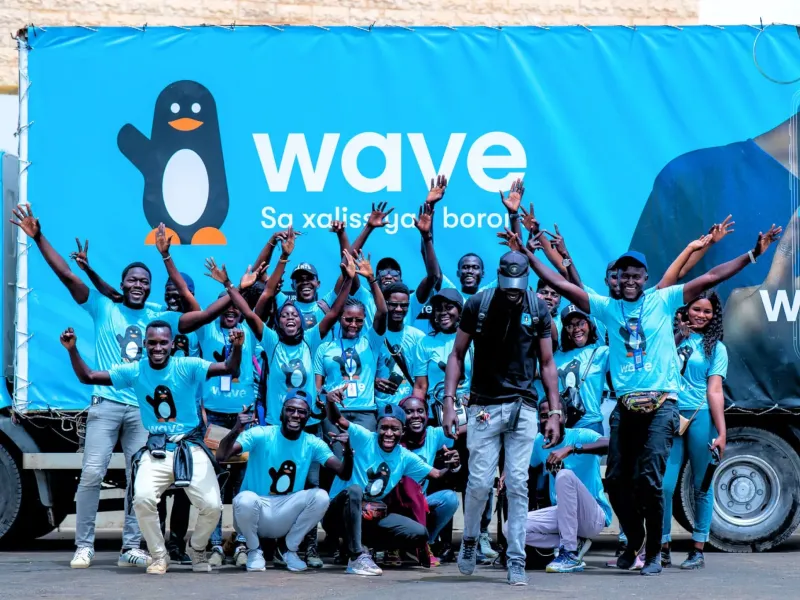
How a fintech with a radically simple promise challenged established financial institutions, changed what customers expected from mobile money and became one of Africa's most influential financial technology businesses.
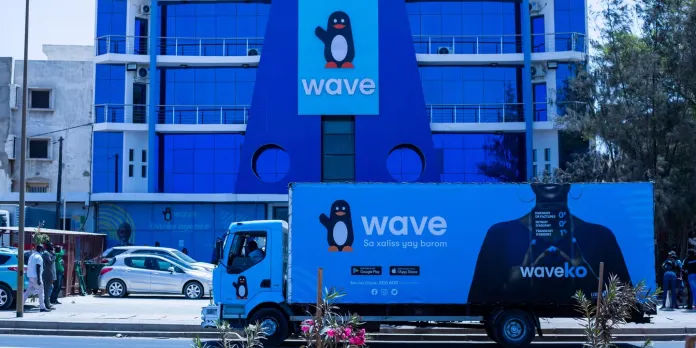
Imagine a market trader in Dakar finishing a day's sales.
She has received payments from customers, bought supplies from wholesalers and set aside money to send home to her family. In the past, moving that money might have involved finding a nearby transfer agent, paying a substantial transaction fee and hoping the recipient could access the funds without unnecessary delays.
Now imagine completing much of that process with a mobile phone.
A few taps. A transparent fee. A nearby agent when cash is needed.
It sounds ordinary today, but this was not always the experience available to customers in Senegal.
For years, mobile money in West Africa was largely dominated by services associated with telecommunications operators and banks. Their networks helped introduce millions of people to digital financial services, but pricing and accessibility remained major issues.
Then a new competitor arrived.
Its promise was remarkably simple: make sending money affordable, make depositing and withdrawing convenient, and build a financial experience ordinary people could understand.
Its name was Wave.
Launched in Senegal in 2018, Wave challenged established mobile-money providers with a low-cost model, an easy-to-use digital product and a growing network of physical agents.
In September 2021, the company raised $200 million in a Series A funding round at a reported valuation of $1.7 billion, becoming the first unicorn from French-speaking Africa.
That achievement attracted international attention.
But the more interesting story is what happened before and after the funding announcement.
Wave did not become important simply because investors valued it at more than a billion dollars.
It became important because it understood something many financial institutions had overlooked:
People do not necessarily need a complicated financial product. They need a simple, affordable and dependable way to move their money.
That insight helped turn Wave from a challenger in Senegal into a major financial technology platform operating across Africa.
And its journey offers some powerful lessons for entrepreneurs, fintech founders, banks, telecommunications companies and brand builders across the continent.
The story began with a problem, not a bank#
Wave's story is closely connected to the experience of its co-founders, Drew Durbin and Lincoln Quirk.
Before building Wave, the founders had developed Sendwave, a digital remittance service that allowed people living abroad to send money to relatives in other countries.
That experience exposed them to a familiar African financial problem.
People needed to move money across borders and within their communities, but traditional channels could be expensive, inconvenient or difficult to access.
The founders saw an opportunity to use technology to make those transactions easier.
Wave entered Senegal in 2018, initially focusing on a market where mobile money was already familiar but where customers still had reasons to demand a better experience.
This was an important strategic decision.
Rather than trying to introduce an entirely unfamiliar concept, Wave entered an established market with an alternative proposition.
It did not need to convince people that digital money transfers were useful.
It needed to convince them that there was a better way to do them.
That is a much more focused competitive strategy.
# The 1% strategy that shook Senegal's mobile money market
Every successful business does not necessarily need to invent a new product.
Sometimes, it can create a new market position by changing the economics of an existing product.
That is what Wave did with its pricing.
When Wave entered Senegal, the mobile-money sector had established transaction-fee structures. A 2024 GSMA study documented historical person-to-person transfer fees of approximately 6% to 10% among the established mobile-money providers it examined.
Wave introduced a simple 1% fee on person-to-person transfers.
Consider what that meant for an ordinary customer.
Imagine sending FCFA 100,000 (approximately $170.79).
At a 1% fee, the transfer charge would be:
FCFA 1,000 (approximately $1.71).
Under a historical fee structure of 6% to 10%, the same transaction could have cost:
- FCFA 6,000 (approximately $10.25).
- FCFA 10,000 (approximately $17.08).
These are historical comparisons based on the pricing ranges documented by GSMA, not a claim about what every competitor charges today.
The difference was significant.
For customers making frequent transfers, lower fees could mean meaningful savings over time.
Wave's pricing was also easier to communicate.
Instead of asking customers to understand complicated fee tiers, it presented a clear proposition:
Send money for 1%.
Its public product proposition also included free cash deposits, free withdrawals and free bill payments, alongside airtime purchases and customer support.
That changed the conversation in the market.
The established players could no longer assume customers would accept the old pricing structures simply because those services were familiar.
GSMA's research documented that providers in Senegal reduced their prices in response to Wave's competitive pressure.
That is what disruption looks like in a real market.
A company does not have to eliminate every competitor to change an industry.
Sometimes, it only needs to make customers question why they were paying so much in the first place.
The business lesson behind the 1% fee#
Wave's pricing strategy illustrates an important business principle:
Reduce friction, increase adoption and build scale around a valuable everyday activity.
A cheaper transaction can encourage more people to use a service.
More users can create more transaction opportunities.
More transactions can strengthen the relevance of the platform to agents, merchants and other financial partners.
That is the logic behind the model.
However, there is a difficult commercial question.
Can a company keep prices extremely low while still generating enough revenue to operate its technology, maintain its agent network, manage compliance, prevent fraud and serve millions of customers?
That is the long-term challenge of low-cost financial services.
And it is one of the most important questions in Wave's business story.
# The app was important, but the agent network was the real bridge
There is an interesting contradiction in mobile money.
It is digital, but many customers still need physical cash.
A person may receive money digitally and then need to withdraw it to pay a supplier who does not accept electronic payments.
A shopkeeper may have cash and want to deposit it into a mobile wallet.
A rural customer may want to use a digital service but live far from a bank branch.
This is why Wave did not build its model around software alone.
It developed an agent-based distribution network.
A Wave agent is the physical bridge between the digital wallet and the cash economy.
The agent helps customers deposit money, withdraw cash and access services through the platform.
This is important because technology adoption is not determined by software quality alone.
It also depends on whether people can access the service in their communities.
A smartphone app was not the only answer#
Wave's model was app-first, but it also developed QR-card functionality to help people who did not own smartphones interact with agents.
This was a practical response to a major African market constraint.
A digital financial service that assumes everyone owns a modern smartphone could exclude a considerable portion of its potential customers.
By combining a mobile application, QR-based access and agents, Wave reduced some of the barriers associated with smartphone ownership.
That is a useful lesson for any technology company operating in an emerging market:
Do not design only for the customer you wish existed. Design for the customer who actually exists.
The scale of the network#
By June 2025, Wave reported that it served more than 20 million monthly active users across eight markets, supported by:
- More than 150,000 agents.
- More than 3,000 employees.
- Operations across eight markets, primarily in West Africa.
These figures describe Wave's broader African operations, not Senegal alone.
Earlier, in 2022, Wave announced that it had surpassed 6 million active users in Senegal within approximately four years of launching its mobile-money service.
The two figures should not be confused: the six-million figure was Senegal-specific, while the 20-million figure covers the wider group across its markets.
What they demonstrate together is the speed at which the company expanded beyond its original market.
# Senegal was the perfect place to prove the model
To understand Wave's success, it is important to understand the market in which it developed.
Senegal has a large informal economy and a population with diverse financial needs.
A person may operate a small business without maintaining a conventional bank relationship.
A trader may receive payments in cash.
A family may depend on transfers from relatives working in another city or country.
A small shop may need to pay suppliers daily.
These are not unusual financial situations.
They are part of everyday economic activity.
Mobile money gives people a way to move value electronically without needing to conduct every transaction through a traditional bank branch.
And Senegal's adoption figures show how important this market has become.
According to GSMA's 2026 report on Senegal's digital transformation, drawing on BCEAO financial-inclusion data for 2024:
| Senegal mobile-money indicator | Reported figure |
|---|---|
| Active electronic-money accounts | 14.65 million |
| Total open electronic-money accounts | Approximately 42.58 million |
| Active share of open accounts | 34.4% |
| Electronic-money service points | 125,292 |
| Electronic-money transactions during 2024 | Approximately 2.9 billion |
An important clarification: electronic-money accounts are not the same as unique individuals. One person may hold more than one account, and many registered accounts may not be used regularly.
Still, the figures show the enormous scale of the ecosystem in which Wave competes.
Financial inclusion is changing#
GSMA reported that Senegal's financial-inclusion rate increased from 70% in 2019 to 86% in 2024.
It also reported that electronic-money services were being used by approximately 64% of the population under its cited indicator.
This is significant.
It demonstrates that digital financial services have become an important part of Senegal's financial system.
However, it would be inaccurate to attribute the country's entire financial-inclusion improvement to Wave.
Senegal's financial ecosystem includes banks, microfinance institutions, telecommunications-led mobile-money services, independent electronic-money issuers and other payment providers.
Wave is one of the major forces in that transformation, but it operates within a wider market.
# What can people actually do with Wave?
Wave has evolved beyond a basic person-to-person transfer service.
Its Senegalese product offering covers several financial activities.
1. Send and receive money#
Customers can transfer money to other wallets and receive funds electronically.
This is the foundation of the service.
It supports transfers between family members, friends, customers, suppliers and other users.
2. Deposit and withdraw money#
Customers can deposit cash into their wallets through the agent network and withdraw cash when required.
This is one of the most important features of Wave's model because it connects digital money with the physical cash economy.
3. Pay bills#
Wave supports bill-payment services, allowing customers to pay certain utility and other service bills without necessarily visiting a physical payment centre.
Its public product proposition advertises bill payments without a Wave service fee.
4. Buy mobile airtime#
Users can purchase prepaid airtime directly through the platform.
This is a small feature, but it illustrates how mobile wallets can become part of everyday financial routines.
5. Merchant and e-commerce payments#
Wave supports merchant payments and e-commerce transactions in Senegal.
This is particularly important for businesses.
A merchant can receive electronic payments rather than relying exclusively on cash.
Over time, broader merchant adoption can increase the usefulness of a mobile-money network.
6. Public-service payments#
Wave's terms describe payments connected to public services, including scholarships, pensions, salaries, taxes and other government-related transactions.
These types of payments demonstrate the potential for mobile wallets to support wider economic activity beyond individual money transfers.
7. Regional and international transfers#
The service supports certain transfers within the West African Economic and Monetary Union (UEMOA).
Its terms also provide for receiving certain international transfers from outside the region, subject to the necessary regulatory approval.
Availability and conditions can depend on the country, partner and particular payment corridor.
8. The Wave Coffre#
Wave's terms also identify a sub-account known as the Coffre Wave.
It is important not to confuse this with an interest-bearing bank savings account.
The published terms describe it as a sub-account for holding electronic money and specify that the balance is not remunerated.
That is an important distinction for customers who want to understand what financial product they are actually using.
# Wave is not a traditional bank — and that distinction matters
One of the most important developments in Wave's history was its regulatory authorisation.
Initially, Wave operated through partnerships with banks, including United Bank for Africa and Ecobank.
That meant its electronic-money operations depended on licensed partner institutions.
Then came a major milestone.
On April 14, 2022, Wave Digital Finance SA received an Electronic Money Issuer (EMI) licence from the Central Bank of West African States, known as the BCEAO.
The company officially launched the activities of Wave Digital Finance in Senegal in November 2022.
This was a significant regulatory achievement.
Wave became the first non-bank, non-telecommunications operator operating in multiple UEMOA markets to receive this type of electronic-money licence.
The licence gave Wave Digital Finance the authority to issue, manage and distribute electronic money directly under the regional regulatory framework.
But there is a critical point customers should understand.
Wave is not a traditional commercial bank.
An electronic-money issuer provides regulated digital money services, but a Wave wallet is not automatically equivalent to a bank current account or interest-bearing savings account.
Wave's terms expressly distinguish its electronic-money wallet from a bank account.
This distinction matters when customers consider where to hold their money, how their balances are protected and what services they should expect.
Regulation is an important foundation of trust, but customers should still read the applicable terms, account limits and consumer-protection arrangements.
# The $1.7 billion moment: How Wave became Francophone Africa's first unicorn
In September 2021, Wave announced a $200 million Series A funding round at a reported valuation of $1.7 billion.
For a relatively young African fintech, the size of the funding round attracted considerable attention.
The investment was led by:
- Sequoia Heritage.
- Founders Fund.
- Stripe.
- Ribbit Capital.
Other investors included Partech and Sam Altman, among others.
The funding made Wave the first unicorn from French-speaking Africa.
A unicorn is a privately held technology company valued at more than $1 billion.
But it is important to understand what that valuation actually meant.
The $1.7 billion was the reported valuation associated with the 2021 funding round.
It should not be described as Wave's confirmed current valuation in 2026.
A private company's valuation can change as its financial performance, growth prospects, funding conditions and investor expectations change.
The achievement was still significant.
It showed that international investors believed the company had the potential to build a major financial-services platform in Africa.
And its expansion beyond Senegal provided further evidence that the opportunity was bigger than one national market.
# The next capital milestone: A €117 million financing facility
Wave continued attracting institutional financing after its unicorn milestone.
On June 30, 2025, the company announced that it had secured €117 million in debt financing, equivalent to approximately $131 million using the November 9, 2026 reference exchange rate.
The financing was led by Rand Merchant Bank and involved development-finance institutions including:
- British International Investment.
- Finnfund.
- Norfund.
The funds were intended to strengthen working capital and support growth in existing and new markets.
This development is particularly interesting because it was debt financing, not another equity funding round.
The distinction matters.
Equity financing involves investors acquiring ownership interests in a business.
Debt financing involves borrowing that must be repaid under agreed terms.
The €117 million facility therefore should not be added to the $200 million Series A as though both were equity investments.
Together, however, the financing milestones show that Wave has been able to attract both venture investors and development-oriented lenders.
That is an important signal about its position in the African financial technology ecosystem.
# The next big chapter: Wave and the future of interoperable payments in West Africa
For years, one of the major limitations of mobile money has been the fragmentation of payment networks.
Imagine having money in one wallet but needing to send it to someone who uses a different mobile-money provider.
In some cases, the transfer may require additional steps, a bank intermediary or a separate cash-in and cash-out process.
That creates friction.
The customer may not care which company operates the wallet.
They simply want their money to reach the right person.
This is why the BCEAO's Interoperable Instant Payment System, known as PI-SPI, is so important.
The platform was officially launched on September 30, 2025.
It was designed to allow participating banks, electronic-money institutions, microfinance institutions and payment providers across the UEMOA region to send and receive funds through a shared instant-payment infrastructure.
The platform operates 24 hours a day, seven days a week.
By April 2, 2026, the BCEAO reported that 80 institutions had connected to the platform.
In November 2026, Wave's integration into PI-SPI was reported, giving customers in Senegal and Côte d'Ivoire access to transfers between Wave and participating financial institutions.
This is a significant development for Wave.
It means its customers can increasingly participate in a wider financial network instead of relying exclusively on transactions within the Wave ecosystem.
What does this mean for ordinary customers?#
Imagine a person in Dakar who uses Wave, while a business partner uses another participating financial institution.
With interoperability, the customer can send money across those networks without necessarily withdrawing cash first.
That can make digital payments more useful.
It can also improve the efficiency of payments between businesses, households and financial institutions.
The new PI-SPI transfer-fee rules#
The BCEAO issued Notice No. 0019 on October 2, 2026, with the rules taking effect on November 2, 2026.
For national instant interoperable transfers between individuals:
- Transfers are free when the cumulative amount sent by one user through one participant is no more than FCFA 8,000 per day (approximately $13.66).
- For amounts above that threshold, providers may apply a fee between 0% and 0.8%, before applicable taxes.
- Receiving money is free, regardless of the amount.
The notice also states that the same pricing conditions will apply to intra-UEMOA electronic-money transfers from June 1, 2027.
These rules relate specifically to transactions using the PI-SPI interoperability system. They should not be confused with the standard domestic Wave wallet transfer tariff, which Wave currently advertises separately at 1%.
A recent report on Wave's integration also noted a 1% agent withdrawal charge for certain funds received through PI-SPI, while other ordinary Wave withdrawals remain advertised as free.
Customers should therefore check the exact transaction route and fee displayed in the app before confirming a transfer or withdrawal.
This is an important development because interoperability can make financial services more useful, but customers still need transparent pricing.
# The brand strategy: Why Wave's simplicity became its biggest marketing asset
Wave's success deserves attention from brand strategists.
Many companies spend enormous resources explaining why their products are innovative.
Wave's original proposition was much simpler.
Your money belongs to you.
Its French-language campaign line, #tonargenttappartient, communicated a message of customer control and affordability.
It was a powerful positioning decision.
Think about the customer who has worked hard to earn a modest income.
When that person sends money to family, transaction fees can feel like a penalty for moving their own earnings.
Wave positioned itself around reducing that friction.
This created a brand promise that was easy to understand.
1. Simplicity replaced complexity#
The 1% transfer fee was easy to remember.
Customers did not need complicated financial knowledge to understand the proposition.
This is a strong branding lesson.
The simpler a product's core benefit is, the easier it can be for customers to explain it to other people.
2. The customer became the centre of the message#
Wave's brand positioned itself around affordability, accessibility and user control.
Instead of beginning with technology specifications, it communicated a benefit customers could immediately understand.
3. The experience reinforced the promise#
A marketing campaign can attract attention.
But customers stay when the experience delivers what the campaign promised.
Wave's low-fee structure, digital wallet, agent network and customer support reinforced its central proposition.
4. It challenged established expectations#
Wave did not merely compete by telling customers that it was better.
Its pricing forced the wider industry to respond.
That is a particularly powerful form of brand differentiation.
It changes the standard against which competitors are judged.
5. Its physical presence supported its digital identity#
The agent network helped make a mobile application feel accessible in the real world.
This is particularly important in markets where digital adoption and cash usage exist side by side.
Wave's brand is therefore supported by more than its mobile interface.
It is supported by the network that helps customers use the service.
# The economics of low fees: Can Wave keep the model sustainable?
Now comes the difficult question.
A low-cost business model can attract customers very quickly.
But it must still pay for infrastructure, staff, technology, compliance, security, customer service, agents and other operating costs.
Wave has not published a full, independently verifiable Senegal-only revenue and profitability breakdown in the public sources used for this article.
It would therefore be misleading to invent revenue, profit margins or transaction-level profitability figures.
However, there is an important industry challenge worth understanding.
Agent economics#
Wave's model depends heavily on agents.
Agents provide the physical cash-in and cash-out services that make the platform accessible.
But agents are businesses too.
They must earn enough commission to cover rent, staff, cash management, security and other operating expenses.
A 2024 GSMA study examining mobile-money providers in West Africa found that reduced transfer fees affected the profitability of providers and agents.
It noted that the increase in transaction volumes had not fully compensated for the reduction in agent income in the markets examined, leading some agents to seek alternative employment.
This is a critical warning.
A low-price strategy can benefit customers while putting pressure on the people who make the service accessible.
For Wave, the long-term challenge is to maintain an attractive customer proposition while ensuring that its agent network remains commercially sustainable.
The importance of transaction volume#
When a company reduces the price of a transaction, it may need higher usage to compensate.
But higher transaction volume does not automatically produce higher profits.
The economics depend on several factors:
- Cost of processing each transaction.
- Agent commissions.
- Fraud losses.
- Technology and infrastructure costs.
- Customer-support expenses.
- Regulatory compliance.
- Cash-management and liquidity costs.
- Revenue from merchant and other services.
The company must manage these costs carefully.
A successful fintech is not simply one with millions of registered users.
It is one that can serve customers reliably and profitably over time.
# What could threaten Wave's growth?
Wave operates in a market with significant opportunity, but there are challenges it cannot ignore.
1. Competition from established providers#
Wave competes with major mobile-money and financial-service brands, including Orange Money and other licensed providers.
These competitors already have customer relationships, merchant networks, distribution infrastructure and significant market knowledge.
They are not standing still.
As Wave expands, competitors can improve their pricing, applications, service quality and product range.
Wave must continue innovating to maintain its relevance.
2. Fraud and cybersecurity#
A mobile wallet is only as valuable as customers' confidence in it.
Fraudsters can target users through impersonation, fake customer-support accounts, social engineering, stolen credentials and other techniques.
The broader mobile-money industry continues to deal with fraud and digital financial crime.
Wave must continually strengthen:
- Identity verification.
- Transaction monitoring.
- Authentication.
- Fraud detection.
- Customer education.
- Dispute resolution.
- Data protection.
- Incident response.
A security failure can damage trust much faster than an advertising campaign can build it.
3. Digital inclusion and smartphone affordability#
A mobile-first product still operates within a society where access to digital technology is unequal.
GSMA's 2026 Senegal report estimated that approximately 38% of the population used smartphones.
That means a significant portion of the population may still face barriers related to device affordability, digital skills, internet access or connectivity.
Wave's agent and QR-based approach helps address some of these constraints, but the wider challenge remains.
Financial inclusion must not be limited to people who can afford modern smartphones.
4. Regulatory changes#
Wave's business is regulated by the BCEAO.
That is an important foundation for trust, but it also means the company must adapt to changing requirements around:
- Electronic-money issuance.
- Customer identification.
- Account limits.
- Safeguarding of customer funds.
- Anti-money-laundering controls.
- Transaction monitoring.
- Interoperability.
- Consumer protection.
The recent changes to PI-SPI fees and electronic-money rules illustrate how quickly the regulatory environment can evolve.
5. Profitability and cost discipline#
Wave's original disruption came partly from its decision to charge less.
But sustaining a low-cost service across multiple countries requires operational efficiency.
The company must carefully balance affordable pricing with the cost of running its distribution network and technology.
6. Dependence on a reliable agent network#
An app can be downloaded in seconds.
A dependable cash network cannot be built so easily.
Agents need liquidity, adequate commissions, reliable technology and security.
Where customers cannot withdraw money when they need it, confidence in the entire platform can suffer.
That makes agent-network management one of Wave's most important operational responsibilities.
# What African entrepreneurs can learn from Wave
Wave's journey contains lessons that go far beyond mobile money.
It offers a useful blueprint for building customer-focused businesses in emerging markets.
1. Solve a problem customers already understand#
Wave did not need to teach customers why transferring money was important.
It focused on making an existing activity cheaper and easier.
Entrepreneurs should look for everyday frustrations customers already recognise.
Sometimes, solving an existing problem better is more valuable than inventing a product nobody has asked for.
2. Challenge industry pricing when you can redesign the economics#
Wave's 1% transfer model changed customer expectations.
The lesson is not to make every product cheap.
It is to question why customers are paying what they pay and whether technology or a better operating model can reduce unnecessary costs.
3. Build for the realities of your market#
Wave understood that mobile money in Africa needed both digital tools and physical distribution.
It did not assume every customer had a smartphone or a conventional bank account.
Entrepreneurs should design products around real customer behaviour rather than importing assumptions from more developed markets.
4. Make your value proposition easy to explain#
Wave's pricing proposition was simple.
People could understand it and tell others about it.
A complicated product can be difficult to sell, even when it is technically excellent.
The strongest brands often communicate one central benefit clearly.
5. Build distribution as part of the product#
The agent network is not an optional extra.
It is a key part of how Wave delivers value.
For entrepreneurs in other industries, distribution can be just as important as manufacturing, software or product design.
A business that cannot reach customers reliably will struggle to scale.
6. Use technology to reduce friction#
Technology should not simply make a business look modern.
It should remove unnecessary steps, reduce cost, improve convenience or create a better customer experience.
Wave's simple payment interface illustrates this principle.
7. Understand the economics of every participant#
A platform is only as strong as the network supporting it.
Wave needs customers.
It also needs agents, merchants, financial institutions and technology partners.
A successful platform must create enough value for the different participants to keep supporting the ecosystem.
8. Treat regulation as part of the business model#
Wave's electronic-money licence was a major strategic milestone.
It gave the company a stronger regulatory position for its financial services.
Entrepreneurs in financial services should understand regulation early, rather than treating compliance as an administrative activity that can be addressed only after growth.
9. Expand when the model is repeatable#
Wave's regional expansion demonstrates the potential of proving a business model in one market before extending it to others.
However, the market opportunity in Senegal does not automatically translate into identical conditions elsewhere.
Every new country brings different customer behaviours, regulations, partnerships and competitive dynamics.
Successful expansion requires adaptation.
10. Build trust into the product#
Trust is not an advertising campaign.
It is the result of reliable transactions, fair pricing, secure systems, responsive support and transparent communication.
In financial services, trust is part of the product itself.
# BrandKabal's Final Take
Wave Mobile Money is one of the most interesting African fintech stories because it demonstrates how a relatively simple idea can challenge a deeply established industry.
It entered Senegal in 2018 with an affordable alternative to existing mobile-money services.
It introduced a transparent 1% person-to-person transfer fee, built a digital product around everyday financial needs and developed an agent network that connected mobile wallets to the cash economy.
It obtained its own electronic-money licence through Wave Digital Finance.
It became the first unicorn from French-speaking Africa after its $200 million funding round at a $1.7 billion valuation in 2021.
By June 2025, the group reported more than 20 million monthly active users across eight markets, supported by more than 150,000 agents.
And in November 2026, its entry into the BCEAO's interoperable instant-payment network marked another important step in the evolution of its business.
But its story is not without challenges.
The economics of low fees must remain sustainable.
Agents must continue earning enough to support the distribution network.
Customers need protection from fraud.
Regulatory requirements will continue evolving.
And Wave must prove that its growth can translate into a durable, profitable financial-services business.
For African entrepreneurs, the greatest lesson is not simply that a fintech can become a unicorn.
It is that a company can challenge an entire industry by understanding a customer frustration that established competitors have learned to tolerate.
Wave did not invent money transfers.
It re-examined the cost and experience of moving money.
That is the power of customer-centred innovation.
And perhaps the most important question for every African entrepreneur is this:
What has your industry made unnecessarily expensive, complicated or inconvenient — and what would happen if you built a business around fixing it?
That is the question Wave answered in Senegal.
And it is a question capable of creating the next generation of African businesses.
BrandKabal's 10 Big Lessons from Wave Mobile Money#
1. Simplicity can be a competitive advantage. Customers value products they can understand and use without unnecessary friction.
2. Price can reshape an industry. A better cost structure can force established competitors to rethink their value propositions.
3. Distribution matters as much as technology. A digital platform needs a real-world network when customers still depend on cash.
4. Build for the customer who exists today. Do not assume everyone has a smartphone, bank account or advanced digital skills.
5. Make regulation part of your strategy. Trust and long-term growth require a clear regulatory foundation.
6. Build a sustainable ecosystem. Agents, merchants, customers and partners all need reasons to participate.
7. Let the product deliver the brand promise. Advertising may attract customers, but reliable service earns loyalty.
8. Expand with market knowledge. Success in one country does not guarantee success in another.
9. Growth must eventually produce healthy economics. Millions of users and billions of transactions do not automatically guarantee profitability.
10. Challenge what customers have been conditioned to accept. Some of the biggest opportunities exist where businesses have stopped questioning the status quo.
The BrandKabal Question#
Imagine building a financial technology business in Africa today.
Would you compete by creating another complicated financial application, or would you identify one frustrating everyday transaction and make it dramatically easier, more affordable and more reliable?
Wave's story suggests that the second approach can be powerful.
Because sometimes, the next billion-dollar business does not begin with a revolutionary invention.
It begins with a simple question:
Why should people have to pay so much for something this simple?
Editorial and fact-check note#
This article focuses on Wave's Senegal operation while distinguishing it from the wider Wave Mobile Money Group.
Historical launch, pricing, regulatory and funding milestones are based on Wave's corporate announcements, GSMA research and contemporaneous business reporting. The June 2025 user, agent and employee figures describe the wider group across eight markets, not Senegal alone.
Senegal's market statistics are drawn from the GSMA's 2026 digital-transformation report using BCEAO 2024 financial-inclusion data. Account figures are not presented as unique individual users.
The $1.7 billion figure is Wave's reported valuation at its September 2021 Series A financing, not a claim about its current valuation. The €117 million debt facility announced in June 2025 is approximately $131 million using the November 9, 2026 reference exchange rate.
For FCFA comparisons, this article uses an indicative rate of US$1 = FCFA 585.49, reported on November 9, 2026. Dollar equivalents are rounded and are intended for reader comparison; actual exchange rates and service-provider charges may differ.
The PI-SPI tariff discussion refers specifically to the BCEAO's rules for interoperable instant payments, effective November 2, 2026. These fees are distinct from Wave's separately advertised standard wallet-transfer tariff.
Wave is an electronic-money issuer, not a conventional commercial bank. Its wallet should not be described as an interest-bearing bank deposit.

Join the conversation