

From petroleum trading to deepwater exploration, Springfield Group is pursuing a bigger ambition: proving that an African-owned company can move beyond supplying the energy industry to becoming an operator of the resources that power it. But with a major offshore discovery, a complicated unitisation dispute and no confirmed commercial production yet, its biggest test may still lie ahead.
Imagine standing on the coast of Ghana's Western Region.
Fishing boats move across the water. Communities depend on the sea for their livelihoods. Farther offshore, beyond what the eye can see, an entirely different industry is at work.
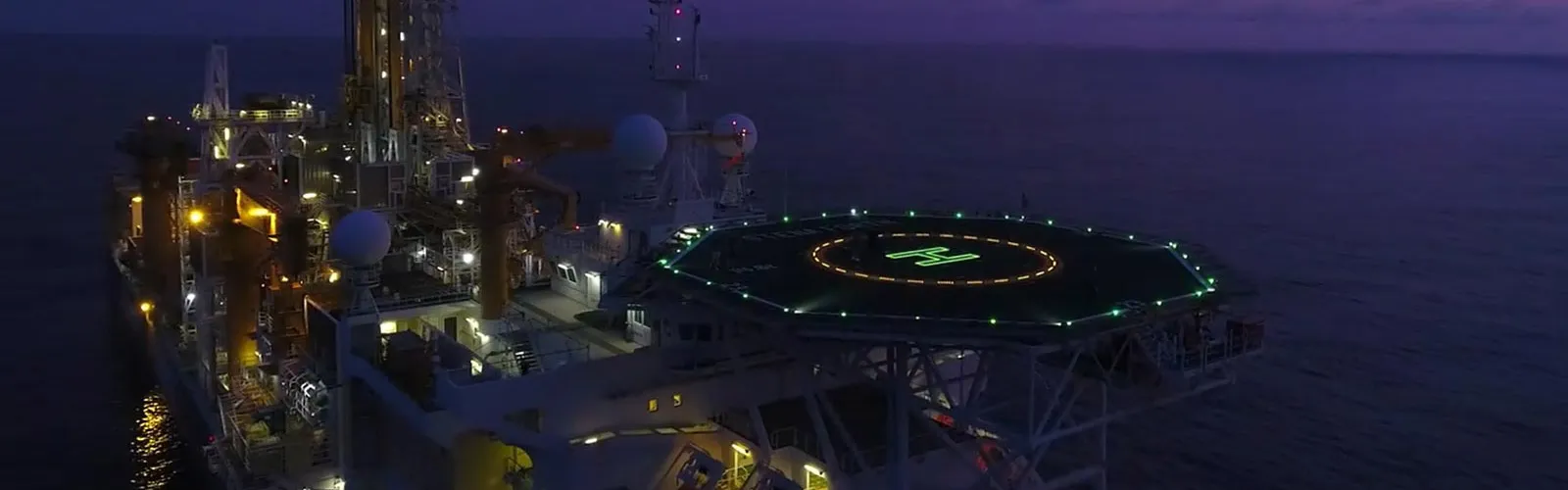
Deep beneath the Atlantic Ocean, geological formations hold deposits of oil and natural gas. Reaching them requires sophisticated seismic surveys, specialised drilling vessels, experienced engineers, billions of dollars in industry infrastructure and years of technical work.
For decades, much of the capital, technology and operational leadership in deepwater oil exploration across Africa has come from large international energy companies.
But what happens when an African entrepreneur decides to compete in that space?
Not as a broker.
Not merely as a supplier.
Not simply as a local contractor working for an international oil major.
But as an owner and operator of an offshore oil asset.
That is the ambition behind Springfield Group, a Ghanaian energy company founded by entrepreneur Kevin Okyere.
The Group began in 2008 with activities in petroleum trading and the downstream oil and gas market. It subsequently expanded into oilfield services, logistics, infrastructure and upstream exploration.
Its most ambitious move came when its subsidiary, Springfield Exploration and Production Limited (Springfield E&P), became the operator and majority interest holder of Ghana's West Cape Three Points Block 2 (WCTP-2), an offshore petroleum block where the company made the Afina oil discovery.
In October 2024, Springfield announced that it had invested more than $60 million in an appraisal campaign on the discovery.
The well test produced a maximum reported flow rate of 4,500 barrels of oil per day.
That was a significant technical milestone.
But there is an important distinction between discovering oil, proving that a discovery can be commercially developed and actually producing oil at a sustained commercial rate.
As of November 17, 2026, I could not verify that Springfield's WCTP-2 asset had commenced commercial production.
And that distinction is central to understanding this company.
Springfield's story is not a simple tale of an African business striking oil and becoming wealthy overnight.
It is a much more instructive story about ambition, capital, engineering, regulation, national participation, commercial risk and the long road between finding a resource and turning it into an operating business.
From a business idea to an energy group#
Springfield Group commenced operations in 2008.
Its founder, Kevin Okyere, had a background in telecommunications, including work related to equipment, network design, operations and information technology.
He recognised an opportunity in Ghana's petroleum industry: to establish an independent Ghanaian company capable of participating in an industry that had historically been dominated by much larger international companies.
His thinking was not simply to trade petroleum products.
It was to use trading as a starting point for building the capabilities, partnerships and infrastructure needed to enter more capital-intensive areas of the energy business.
In a July 2025 interview, Okyere explained that Springfield initially concentrated on downstream activities because upstream oil and gas exploration required far more capital.
That was a practical decision.
Rather than attempting to finance a deepwater drilling project from the beginning, the company started with a business model that was comparatively more accessible.
It built relationships with suppliers and customers, developed its commercial operations and gradually expanded into supporting services.
This approach allowed Springfield to develop experience in the petroleum industry before taking on the financial and technical demands of offshore exploration.
The first important lesson from Springfield is that an ambitious business does not always have to begin at the most expensive point in its desired value chain.
Sometimes, the smarter strategy is to enter through a more accessible segment, develop capabilities and use those capabilities to move into more complex opportunities.
# The downstream business: Where Springfield built its foundation
Before Springfield became widely associated with the Afina oil discovery, it had already established a presence in Ghana's downstream petroleum market.
Downstream activities cover the movement, distribution, marketing and sale of petroleum products after extraction and processing.
These include products such as:
- Petrol and diesel.
- Aviation fuel.
- Liquefied petroleum gas (LPG).
- Other refined petroleum products.
- Crude oil and petroleum-related commodities traded through authorised channels.
In 2010, Springfield obtained a Bulk Distribution Company licence from Ghana's National Petroleum Authority.
This licence allowed it to procure and distribute petroleum products to oil marketing companies and refineries under the applicable regulatory framework.
It was an important milestone because it gave the company a recognised position within Ghana's petroleum supply chain.
The 12.5% market contribution#
According to Springfield's published corporate history, the company supplied approximately 12.5% of Ghana's petroleum-product requirements over a five-year period.
That is a company-reported historical figure, rather than a current market-share measurement.
During the same period, Springfield also exported refined petroleum products to landlocked West African countries, including Mali and Burkina Faso.
This was an interesting commercial opportunity.
Countries without direct access to the sea depend on neighbouring countries, transport corridors and regional supply arrangements to import petroleum products.
A Ghana-based company with trading relationships and logistics capability could therefore serve customers beyond its domestic market.
Springfield was building a regional business rather than limiting itself to one national market.
Its first major international connections#
The company also developed relationships with participants in the international petroleum market.
Its published history identifies commercial relationships and partnerships involving companies such as:
- BP.
- Chevron.
- Total.
- Vitol.
- Trafigura.
- Glencore.
- SK Energy.
- Braskem.
These names demonstrate the international trading and industry relationships Springfield says it developed.
However, the existence of a historical commercial relationship should not automatically be interpreted as proof that every relationship remains active today or that each company is a current equity partner.
The larger point is that Springfield built commercial experience in an industry where relationships, logistics, contracts and counterparties are essential.
# The Nigeria connection: Springfield's West African ambition
Springfield's story is also connected to Nigeria.
According to its corporate history, the Group became active in Nigeria's downstream petroleum sector in 2011.
Its activities included exporting crude oil and handling condensate, a liquid hydrocarbon associated with natural gas production.
It also described complex logistics arrangements involving the movement of products to markets in Asia, South America and Europe.
Why does this matter?
Because it shows that Springfield's commercial ambitions were not confined to Ghana.
The company was attempting to build a business around regional petroleum flows and international trading opportunities.
For a Ghanaian energy company, participating in Nigeria's petroleum market was strategically significant.
Nigeria is one of Africa's largest oil-producing countries and has historically played a major role in international crude-oil trade.
Its petroleum sector also offers opportunities in product distribution, logistics, storage and associated services.
Springfield's regional exposure therefore became part of the commercial foundation from which it pursued its upstream ambitions.
# The move into oilfield services: Building the capabilities behind exploration
Petroleum trading is one business.
Exploration and production are another.
But between those two activities lies a complex collection of technical services.
Offshore oil operations require specialised vessels, subsea equipment, drilling rigs, marine construction, maintenance, logistics, engineering and trained personnel.
Springfield began developing capabilities in this area after obtaining a permit to provide upstream petroleum-industry services in Ghana in 2011.
Its oilfield-service activities have included the supply and coordination of:
- Marine and offshore support vessels.
- Subsea equipment.
- Oil rigs and associated services.
- Marine construction equipment.
- Maintenance.
- Logistics and transportation.
- Vehicle leasing.
- Recruitment and staff placement.
- Contract management and technical support.
These services matter because oil exploration is not something a company can accomplish with a drilling rig alone.
A deepwater project involves a network of specialist contractors and equipment providers.
Each component must work within demanding technical, safety and environmental requirements.
The Aker Solutions partnership#
In 2015, one of Springfield's subsidiaries entered into a joint venture agreement with Norway's Aker Solutions.
The resulting joint venture operated as Aker Solutions Ghana Limited.
This was an important development in Springfield's attempt to strengthen its technical position in Ghana's oil and gas services industry.
Aker Solutions is an established international energy-services company with expertise in subsea production systems and related technologies.
For Springfield, this partnership represented an opportunity to combine local knowledge and commercial relationships with international technical expertise.
It also illustrates something important about industrial development in Africa:
Local participation becomes more valuable when it creates the opportunity to acquire skills, technology, experience and technical capabilities—not merely to participate in contract administration.
# The defining move: Springfield enters Ghana's upstream oil industry
The biggest strategic shift came when Springfield moved into upstream exploration and production.
Upstream activities involve searching for oil and gas, evaluating discoveries, developing fields and eventually producing hydrocarbons.
It is among the most capital-intensive parts of the petroleum industry.
A company must finance geological studies, seismic surveys, drilling operations, well appraisal, development infrastructure and production facilities.
There is also significant geological risk.
A company can spend millions of dollars drilling a well and still fail to discover commercially recoverable oil.
Even when oil is discovered, the discovery may not be economically viable to develop.
This is why Springfield's move into upstream operations was so ambitious.
The company was attempting to become more than a petroleum trader or service provider.
It wanted to own and operate an oil-producing asset.
West Cape Three Points Block 2#
In 2016, Springfield's subsidiary, Springfield Exploration and Production Limited, was awarded its pioneer upstream petroleum asset, the West Cape Three Points Block 2 (WCTP-2), offshore Ghana.
The block covers approximately 673 square kilometres in the Tano-Western Basin.
Springfield describes itself as the operator and majority interest holder of the block, with the Ghana National Petroleum Corporation (GNPC) and its exploration company, GNPC Explorco, holding the remaining interest.
This was historically significant.
Springfield positioned itself as the first wholly Ghanaian-owned independent company to operate an offshore oil and gas block in Ghana while holding a majority interest.
That distinction matters because ownership and operational control are important components of local participation in an industry where the technical and financial barriers to entry are extremely high.
It also represents a different kind of ambition.
Instead of limiting local businesses to supplying services to international operators, Springfield was attempting to become an operator responsible for the development of an offshore petroleum asset.
# The Afina discovery: The oil discovery that put Springfield in the spotlight
In October 2019, Springfield commenced drilling its maiden exploration well, Afina-1, in WCTP-2.
The company contracted the Stena Forth drilling rig for the campaign.
On December 11, 2019, Springfield and its partners announced a significant oil discovery.
The well was located in approximately 1,030 metres of water and drilled to a total depth of approximately 4,085 metres.
The results reported included:
| Afina-1 well result | Reported figure |
|---|---|
| Water depth | 1,030 metres |
| Total well depth | 4,085 metres |
| Gross oil-bearing interval | 65 metres |
| Net oil pay | 50 metres |
| Secondary hydrocarbon-bearing interval | 10 metres |
What do these figures mean?
Water depth describes how far below sea level the drilling location is situated.
Total well depth describes the drilled depth of the well.
Gross thickness refers to the full thickness of the geological interval of interest.
Net pay refers to the portion of the interval that meets the relevant geological and petrophysical criteria for potentially productive reservoir rock.
The discovery encountered light oil in good-quality Cenomanian sandstones.
A secondary target in the Turonian sands also encountered hydrocarbon-bearing formations containing gas and condensate.
It was a major milestone for a young Ghanaian independent operator.
But the most striking announcement concerned the estimated scale of the resource.
The 1.5 billion-barrel figure: What it actually means#
Following the discovery, Springfield announced that its discovered oil-in-place volume across the relevant exploration area had more than doubled to approximately 1.5 billion barrels, with an additional 0.7 trillion cubic feet of gas in place.
Those numbers attracted considerable attention.
But there is an important technical distinction that cannot be ignored.
Oil in place is not the same as recoverable oil reserves.
Oil in place refers to the estimated volume of petroleum contained within a reservoir before accounting for how much can technically and economically be recovered.
Only a portion of oil in place may ultimately be recoverable.
The recoverable volume depends on reservoir properties, pressure, fluid characteristics, recovery technology, development costs, commercial conditions and other factors.
Therefore, the 1.5-billion-barrel figure should not be interpreted as 1.5 billion barrels of proven commercial reserves that Springfield can simply produce and sell.
It is a resource-in-place estimate reported by the company.
That distinction is essential for anyone evaluating the business.
# The $60 million test: Springfield returns to Afina
Finding oil is only the beginning.
An exploration well can identify hydrocarbons, but investors, regulators and technical partners need more information before a field can move towards commercial development.
This is why oil companies conduct appraisal operations.
Appraisal helps determine the reservoir's characteristics, productivity, extent and commercial development potential.
For Springfield, this became especially important because of the relationship between Afina and the neighbouring Sankofa oil field.
In 2024, Springfield contracted the Deepsea Bollsta semi-submersible drilling rig from Northern Ocean Limited to conduct appraisal work on the Afina-1x well.
The company announced that the appraisal campaign represented an investment of more than $60 million.
The rig arrived offshore Ghana in October 2024, and the appraisal operations were completed in November.
The reported results included:
- A maximum oil flow rate of approximately 4,500 barrels per day during the drill-stem test.
- Light oil production from the Cenomanian sandstone interval.
- Additional gas and condensate indications from a secondary target.
The 4,500-barrel figure is significant, but it needs to be interpreted correctly.
It was a maximum reported test rate under the conditions of the test.
It is not proof that Afina can continuously produce 4,500 barrels every day over the life of a commercial field.
A sustained production forecast requires additional reservoir modelling, development planning, well design and economic assessment.
It is also not the same as a declaration that the field has commenced commercial production.
Still, the appraisal marked a significant technical step for Springfield.
It demonstrated that the company could mobilise sophisticated offshore equipment, work with international contractors and execute a complex deepwater operation.
# The Afina-Sankofa dispute: Why one of Springfield's biggest opportunities became complicated
This is perhaps the most important part of the Springfield story.
The company's future offshore development strategy has been closely connected to the question of whether the Afina discovery is physically connected to the neighbouring Sankofa Cenomanian reservoir.
Sankofa is part of Ghana's Offshore Cape Three Points (OCTP) project, operated by Eni Ghana with Vitol as a partner.
The question is not simply whether oil exists in both areas.
It is whether the reservoirs are sufficiently connected to justify developing them as one integrated petroleum accumulation.
That brings us to a technical and legal concept known as unitisation.
What is unitisation?#
Imagine two neighbouring landowners discover oil beneath their respective properties.
The geological formation does not necessarily stop at the boundary between the two properties.
If the same reservoir extends across both areas, drilling independently could lead to inefficient production, duplication of facilities and unnecessary costs.
Unitisation is an arrangement through which connected petroleum resources are developed as a coordinated unit.
The participating parties agree on matters such as:
- How the shared resource is defined.
- Each party's participation interest.
- How development costs are allocated.
- How production is measured.
- How revenues are distributed.
- Which party operates the development.
The objective is to achieve efficient resource recovery while respecting the legal and commercial rights of the participating parties.
For Springfield, a successful Afina-Sankofa unitisation arrangement could potentially provide access to existing offshore infrastructure, including the John Agyekum Kufuor floating production, storage and offloading vessel (FPSO).
Using existing infrastructure can be commercially attractive because building an entirely new deepwater production system can require substantial capital.
But such an arrangement depends on technical evidence and a legally valid agreement.
And this is where the dispute began.
The arbitration involving Eni, Vitol, Ghana and GNPC#
In 2020, Ghana's Ministry of Energy issued directives requiring the relevant parties to pursue unitisation of the Afina discovery and the Sankofa Cenomanian field.
Eni Ghana and Vitol challenged aspects of those directives through international arbitration.
The dispute was heard under the UNCITRAL Arbitration Rules, with the Stockholm Chamber of Commerce administering the case.
On July 8, 2024, the tribunal issued its final award.
The decision was complicated.
The tribunal did not declare unitisation itself unlawful.
Instead, it found that the specific directives issued by the Ghanaian authorities had serious procedural and substantive shortcomings under the applicable petroleum rules and agreements.
The tribunal also affirmed Ghana's legal authority to pursue unitisation where the required conditions and procedures were satisfied.
It dismissed the claimants' requests for monetary damages.
This distinction matters.
The tribunal's decision did not establish that Afina and Sankofa could never be unitised.
It meant that the previous directives could not stand in the form in which they had been implemented.
Ghana withdrew the earlier unitisation directives#
On February 25, 2025, Ghana's Minister for Energy and Green Transition formally withdrew the earlier directives.
The Ministry's explanation referred to the arbitration award and a legal opinion from the Attorney-General.
Among the procedural issues identified were:
- The absence of the required statutory trigger for unitisation.
- Problems with the determination of initial participation interests.
- Insufficient evidence supporting the allocation of those interests.
The Ministry also made clear that its withdrawal did not remove its authority to issue a fresh directive if subsequent evidence and the applicable laws justified doing so.
This is why the matter remains important.
The technical question of reservoir connectivity, the regulatory process and the parties' commercial rights all influence how Afina may eventually be developed.
What happened after the withdrawal?#
Springfield has maintained that the Sankofa field extends into WCTP-2 and that unitisation, potentially with a connection to the existing FPSO, remains its preferred development concept.
However, the GNPC Explorco 2025 Annual Report, published in 2026, records no drilling activity in WCTP-2 during 2025 and notes that alternative development options were being evaluated.
That tells us the project still faces development decisions beyond the successful completion of the 2024 well test.
It would therefore be inaccurate to describe the Afina-Sankofa unitisation as completed or the field as already producing commercially.
The next phase requires technical clarity, regulatory decisions, commercial agreements and financing.
# Why this matters to Ghana's economy
Springfield's ambitions are connected to a wider issue facing Ghana's petroleum sector.
Ghana's oil industry has benefited from major discoveries and investments in fields such as Jubilee, TEN and Sankofa-Gye Nyame.
But the country has also faced declining production from its established fields.
Ghana's 2026 Budget Statement reported that daily oil production had fallen from a peak of approximately 200,000 barrels per day in 2019 to around 150,000 barrels per day in 2025.
The decline reflects natural field depletion and delays in new investments.
This creates an important economic challenge.
Oil production contributes to government revenue, foreign-exchange earnings, investment activity, employment and industrial development.
When production declines, the pressure increases to identify, appraise and develop new resources.
That is why new discoveries and indigenous operators matter.
But a discovery only contributes to the national economy when it moves through the necessary stages of development.
A field must be appraised, sanctioned, financed, developed, connected to infrastructure and operated safely.
The commercial and technical requirements are substantial.
Springfield's success could therefore have implications beyond the company itself, particularly if it succeeds in bringing a Ghanaian-operated offshore discovery into production.
However, the potential economic benefits should not be counted as realised revenue before production actually begins.
# The Springfield business model: More than an oil exploration company
It is easy to associate Springfield Group exclusively with the Afina discovery.
But that would overlook the other parts of the business.
The Group's operating model covers several interconnected areas of the petroleum value chain.
1. Downstream petroleum trading#
The Group entered Ghana's downstream market through the procurement, distribution and export of petroleum products.
This business built commercial relationships and gave Springfield experience in international petroleum trading.
2. Upstream exploration and production#
Springfield E&P operates the WCTP-2 offshore asset.
The company has undertaken seismic exploration, drilled Afina-1 and completed the subsequent Afina-1x appraisal campaign.
The strategic objective remains to develop a producing offshore asset.
3. Oilfield services#
The Group has participated in oilfield support services involving vessels, logistics, subsea equipment, marine construction, maintenance and other technical services.
These activities provide access to a broader set of customers within the petroleum industry.
4. Infrastructure and logistics#
Oil and gas operations require storage, transportation, marine logistics and supporting infrastructure.
Springfield's commercial history includes activities connected to tank farms, petroleum-product movement and logistics.
5. Human-capital and support services#
The Group also describes services involving recruitment, staff placement, vehicle leasing, contract management, consultancy and procurement.
These businesses support its broader industrial and energy operations.
The strategy is to create a business that participates in several connected stages of the petroleum value chain.
However, there is an important qualification.
Although Springfield describes itself as an integrated energy group, its upstream asset has not yet been verified as a commercial producing field.
Its ambition to integrate across the value chain should not be mistaken for having already achieved every stage of that model.
# The leadership behind the ambition
Springfield's story is closely associated with its founder and CEO, Kevin Okyere.
His business journey is notable because he entered the petroleum sector without simply following the conventional path of an established multinational energy executive.
His early experience was in telecommunications and technology-related businesses.
He later identified an opportunity in Ghana's petroleum trading market and used that as a foundation for expanding into the wider energy industry.
In his July 2025 interview with Global Business Reports, Okyere explained that he started downstream because it represented a more accessible entry point into the sector than upstream exploration.
He also described his underlying motivation as creating a place for Africans in industries central to their own economic development.
That ambition is especially relevant in a capital-intensive industry.
A deepwater oil project requires more than an entrepreneur's confidence.
It requires geologists, reservoir engineers, drilling specialists, subsea engineers, commercial experts, lawyers, financiers, regulators, international contractors and technical partners.
The founder's job is to assemble the right capabilities and coordinate them around a commercially viable objective.
That is a different form of entrepreneurship from building a conventional consumer brand.
It involves long development timelines, complex technical decisions and substantial financial exposure.
# Springfield's brand positioning: African ownership with international ambition
Springfield uses the positioning "African Inspired, Globally Focused."
It is a meaningful expression of the company's identity.
The company wants to be recognised as an African-owned energy business capable of operating at international technical standards.
This positioning has several dimensions.
1. National identity#
Springfield's Ghanaian ownership is central to its brand.
It represents an attempt to increase local participation in the ownership and operation of strategic energy assets.
2. Technical ambition#
The company works with international contractors and technical partners.
Its offshore operations have involved specialised drilling equipment and service providers.
This reinforces the message that local ownership does not have to mean local isolation.
3. Regional opportunity#
Springfield's history includes petroleum trading in Ghana and other West African markets, alongside its reported activities in Nigeria and international product markets.
The group has therefore positioned itself within a wider African energy environment.
4. Long-term economic impact#
The company says its social investment policy includes education, healthcare, job creation, environmental initiatives and local-capacity development.
These commitments are important because energy companies operate in communities that experience both the benefits and risks of petroleum development.
A strong industrial brand must earn the confidence of more than shareholders and commercial partners.
It must also consider workers, regulators, host communities and the wider public.
# Social investment: The business beyond the balance sheet
An energy company's impact should not be measured only by the volume of petroleum it trades or the number of wells it drills.
Its relationship with surrounding communities also matters.
Springfield's published social-investment policy identifies several focus areas:
- Education and scholarships.
- Healthcare support.
- Skills development and employment.
- Women's empowerment.
- Environmental conservation.
- Marine clean-up and disaster-relief activities.
- Local procurement and capacity building.
In October 2023, Springfield announced a donation of two refurbished dialysis machines to the Renal Unit of Komfo Anokye Teaching Hospital in Kumasi.
The company valued the donation at approximately $20,000.
This was a practical example of its stated healthcare-support programme.
It is important not to confuse corporate social investment with the wider environmental and social obligations of an offshore oil operator.
Deepwater exploration and production require rigorous environmental management, spill prevention, marine protection, safety systems and engagement with affected communities.
Those responsibilities must be fulfilled consistently throughout the life of a project.
# The risks Springfield must overcome
The company has achieved several important milestones, but its journey is far from guaranteed.
There are significant challenges that could determine whether Springfield becomes a commercially successful independent producer or remains primarily a trading and oilfield-services group.
1. The challenge of financing deepwater development#
Offshore oil development is expensive.
Beyond exploration and appraisal, a company may need to finance:
- Production wells.
- Subsea infrastructure.
- Pipelines.
- Floating production facilities or access to existing infrastructure.
- Export systems.
- Processing equipment.
- Engineering and installation.
- Ongoing operations and maintenance.
A $60 million appraisal campaign is substantial, but it is not the same as funding a complete commercial development.
Springfield will need a credible financing structure and suitable technical partners for the next phase.
2. Reservoir connectivity and unitisation#
The Afina-Sankofa question remains significant.
A development strategy based on unitisation requires adequate technical evidence and legally sound agreements.
If the preferred unitisation approach cannot be implemented, Springfield may need to evaluate alternative development concepts.
The economics of those alternatives could be materially different.
3. The path from discovery to commercial production#
A successful well test does not guarantee a commercially producing field.
The company needs to establish the recoverable resource base, select a development concept, secure approvals, obtain financing and complete construction.
This is where many exploration projects encounter delays.
4. Commodity-price volatility#
Oil prices fluctuate.
A development that appears commercially attractive at one price level may become less attractive if oil prices decline or operating costs rise.
Long-term projects must be evaluated against multiple price and cost scenarios.
5. Environmental and social responsibility#
Deepwater oil operations carry environmental risks.
Spills, marine pollution, operational accidents and poorly managed waste can damage communities and the environment.
Springfield will need strong environmental safeguards and transparent monitoring as it advances its offshore ambitions.
6. Corporate governance and transparency#
Large energy projects require a high level of investor and public confidence.
Governance, timely disclosure, clear project economics and credible reporting are important to securing financing and maintaining stakeholder trust.
For a privately held company, public financial information is naturally more limited than it would be for a listed company.
This makes it particularly important not to confuse corporate claims, project announcements and verified financial performance.
# The financial question: How large is Springfield Group?
A proper business analysis must distinguish industrial importance from financial performance.
Springfield is a privately held group, and I could not verify a complete, publicly available, independently audited consolidated income statement showing its current group-wide revenue, net profit, total debt and cash flow.
It would be misleading to invent those numbers.
However, the group's business history and offshore project investment provide some indication of the scale and complexity of the undertaking.
The company's announced investment of more than $60 million in the 2024 Afina appraisal campaign demonstrates the amount of capital that can be required even before full field development.
The company also works within a sector where commercial success depends on long-term contracts, capital availability, commodity prices, technical execution and regulatory decisions.
For investors, lenders and potential business partners, some of the most important questions are therefore:
How much capital is required to bring Afina into production?
What proportion of the project's funding can Springfield provide itself?
Will it require additional equity partners or debt financing?
What development concept offers the best risk-adjusted commercial return?
What is the expected production profile and break-even oil price?
These questions are more useful than assigning a speculative company valuation.
Until reliable financial statements and a sanctioned field-development plan are available, there is no sound basis for presenting an estimated Springfield Group market value.
# What African entrepreneurs can learn from Springfield Group
Springfield's journey is particularly relevant to founders who want to build businesses in capital-intensive industries.
The lessons go beyond oil and gas.
1. Start where your resources can compete#
Springfield began with downstream trading rather than attempting to finance deepwater exploration immediately.
That allowed it to develop commercial relationships and industry experience before entering a more capital-intensive part of the value chain.
Entrepreneurs should understand the entry points available to them.
The biggest opportunity in an industry is not always the best place to start.
2. Build toward a bigger ambition#
The Group moved from trading into logistics, oilfield services and offshore exploration.
Each stage supported its broader ambition to become an integrated energy company.
This demonstrates the value of building capabilities progressively rather than attempting to do everything from day one.
3. Partnerships can unlock industries that appear inaccessible#
A deepwater project requires capabilities that may be beyond one company.
Springfield's partnerships with international technical contractors demonstrate how local companies can combine ownership ambitions with specialised external expertise.
The objective should be to acquire knowledge and develop local capacity through those partnerships.
4. Ownership matters, but execution matters more#
Local ownership of strategic assets can be important for economic development.
However, ownership alone does not make a project commercially successful.
The operator must demonstrate technical competence, financial discipline, governance and safe execution.
5. Understand the difference between potential and realised value#
A discovered resource may represent substantial economic potential.
But it is not the same as a producing asset.
This lesson applies to startups, real estate, mining, technology and other industries.
A business plan, market opportunity or resource estimate should never be presented as though it were already realised revenue.
6. Technical credibility is a brand asset#
Springfield's ability to attract international drilling contractors and technical partners is an important part of its credibility.
In industrial markets, a company's reputation depends on whether it can deliver complex work safely and reliably.
7. Be patient with capital-intensive opportunities#
Some businesses can reach meaningful scale in a few years.
Deepwater oil projects can take much longer.
Founders must understand the capital cycle of the industry they are entering and plan accordingly.
8. Diversify without losing strategic direction#
Springfield's activities in trading, services and upstream exploration are connected by the petroleum value chain.
This is a more coherent diversification strategy than expanding into unrelated sectors simply because an opportunity appears attractive.
9. Regulatory compliance is part of commercial strategy#
The Afina-Sankofa dispute demonstrates how regulatory decisions and petroleum agreements can influence project economics.
A business operating in a highly regulated industry must understand the law as deeply as it understands the market.
10. Build a business that creates more than financial returns#
Energy companies can contribute to employment, skills development, infrastructure and local procurement.
But those benefits must be matched with responsible environmental practices and genuine community engagement.
# BrandKabal's Final Take
Springfield Group is one of the more interesting African industrial stories because it is attempting something that is difficult even for established energy companies.
It is moving from the commercial trading of hydrocarbons into the ownership and operation of a deepwater oil asset.
Its journey began in 2008 with downstream petroleum trading.
It developed a regional presence.
It expanded into oilfield services and logistics.
It formed a technical joint venture with Aker Solutions.
It entered Ghana's upstream sector and became the operator and majority interest holder of WCTP-2.
Then came Afina.
The 2019 discovery and the 2024 appraisal campaign placed Springfield at the centre of a major conversation about Ghanaian participation in deepwater petroleum development.
But the story has not reached its commercial conclusion.
The Afina-Sankofa unitisation dispute remains an important part of the project's future. Ghana withdrew the earlier directives in February 2025 after the arbitration award, and the latest GNPC Explorco reporting records no drilling on WCTP-2 in 2025.
The company still faces the challenge of demonstrating a technically and commercially viable route to sustained production.
This is why Springfield's next chapter matters so much.
Its ultimate success will not be determined by the excitement surrounding the discovery alone.
It will be determined by whether it can transform geological potential into a producing asset, secure sustainable project financing, manage regulatory relationships, build technical capacity and deliver long-term value to Ghana.
For African entrepreneurs, the biggest lesson is perhaps this:
Do not limit your ambition to participating in an industry. Build the capabilities that allow you to own, operate and shape part of that industry.
Springfield's ambition challenges the assumption that Africans must remain on the sidelines of capital-intensive industries.
But it also reminds us that ambition must be accompanied by execution.
Finding oil is a milestone.
Appraising it is another.
Financing its development is another.
Bringing it safely into commercial production is the real test.
And for Springfield Group, that final chapter is still being written.
BrandKabal's 10 Big Lessons from Springfield Group#
1. Start strategically. Enter an industry through a segment where your resources and capabilities can compete.
2. Build toward the value chain. Trading, logistics, services and production can become connected stages of a broader business strategy.
3. Develop local ownership and technical capability. Economic participation becomes more meaningful when it builds skills and operational expertise.
4. Use partnerships intelligently. International technical partnerships can help local businesses access expertise and equipment.
5. Distinguish discovery from production. Potential is not the same as commercial output.
6. Understand capital intensity. Large industrial projects require realistic financing plans and financial discipline.
7. Respect regulation. Legal and regulatory uncertainty can change the economics of an otherwise promising project.
8. Make governance part of growth. Transparency and accountability are critical to attracting long-term capital.
9. Build regional relationships. African markets offer opportunities that extend beyond national borders.
10. Measure success by execution. The true value of an ambitious project is realised when it moves from announcement to sustainable operations.
The BrandKabal Question#
Imagine an African entrepreneur entering an industry dominated by global corporations.
Would you spend your career competing only for contracts from those corporations, or would you gradually develop the capabilities, partnerships and capital base to become an owner and operator yourself?
Springfield Group chose to pursue the second ambition.
Whether Afina ultimately becomes a commercially producing asset remains to be demonstrated.
But the broader entrepreneurial question is worth considering:
What would happen if more African businesses moved from participating in the value chains of their industries to building the capabilities that shape those value chains?
That is the ambition behind Springfield.
And it is a conversation worth having across Africa.
Editorial and fact-check note#
This article distinguishes Springfield Group's corporate history and company-reported claims from independently reported technical results, arbitration decisions and government records.
The 1.5-billion-barrel oil-in-place figure is a company-reported estimate for its discovered resources in the relevant exploration area; it is not presented as proven recoverable reserves. The 4,500-barrel-per-day figure is the maximum reported flow rate during the November 2024 well test, not a sustained commercial production rate.
The $60 million appraisal investment was announced by Springfield in 2024. It is not a statement of the full cost of developing Afina.
The July 2024 arbitration award and the February 2025 withdrawal of Ghana's unitisation directives are described separately. The withdrawal did not establish that Afina and Sankofa cannot be unitised; it addressed the validity of the previous directives and left open the possibility of new action based on subsequent evidence and proper legal procedures.
The latest GNPC Explorco reporting records no drilling on WCTP-2 during 2025. The Petroleum Commission's published January and February 2026 production tables list Jubilee, TEN and OCTP/Sankofa as producing fields, not WCTP-2. I could not verify commercial production from Springfield's asset as at November 17, 2026.
Springfield is privately held. No unverified group revenue, profit, market valuation or investment-return figures have been invented.
Join the conversation