
There is a particular kind of business idea that sounds almost too ordinary when you first hear it.
No futuristic robot. No revolutionary app. No glamorous Silicon Valley pitch.
Just a simple question:
“What if a driver who knows how to make money with a car simply cannot afford the car?”
That question was at the heart of Moove.
And today, that seemingly ordinary problem has produced something extraordinary.

In August 2026, the Nigerian-born mobility company announced a $250 million Series C investment at a $2.1 billion valuation, officially pushing Moove into unicorn territory. The round was led by Mubadala Investment Company and co-led by Woven Capital, Toyota’s growth fund, and Ion Pacific.
But the interesting part isn’t the $2.1 billion.
The interesting part is how Moove got there.
Because beneath the funding rounds, autonomous vehicles and global expansion is a lesson that every African entrepreneur, marketer, technology founder and brand builder should pay attention to.
Moove didn’t begin by trying to conquer the world.
It began by solving a painfully local problem.
The Lagos Problem Nobody Could Ignore#
Picture Lagos.
It is early morning.
The roads are already filling up. Danfo buses are squeezing through traffic. Okadas are weaving between cars. People are ordering rides on their phones while preparing for work.
And somewhere in that traffic is a driver.
He knows the city.
He knows how to drive.
He knows there are thousands of people willing to pay for transportation.
He may even have the discipline to work twelve hours a day.
But there is one problem:
He doesn’t own the car.
This is where things get interesting.
Traditional financial institutions often look at someone like this and see risk.
Moove looked at the same person and saw economic potential.
That difference in perspective became the foundation of the company.
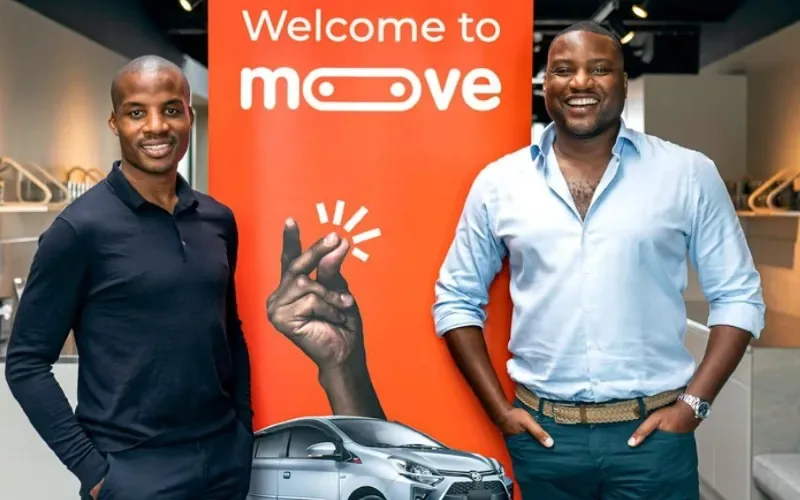
Founded in 2020 by Nigerian entrepreneurs Ladi Delano and Jide Odunsi, Moove initially set out to address the lack of vehicle financing available to African mobility entrepreneurs. The company’s own account says the problem affected more than two million African mobility entrepreneurs. (moove.io)
The solution was deceptively simple.
Instead of asking drivers to somehow produce the money to buy a car upfront, Moove created a revenue-based financing model.
The driver gets access to a vehicle.
The vehicle generates income.
A portion of that income goes toward paying for the vehicle.
Eventually, the driver can own the asset.
In other words:
Moove didn’t just finance a car. It financed the possibility of ownership.
And that distinction matters.
The Genius Wasn’t the Car. It Was the System.#
This is perhaps the first major lesson from Moove.
A lot of entrepreneurs see a problem and immediately start thinking:
“What product can I build?”
Moove’s founders were effectively asking a different question:
“What system is preventing this person from becoming economically productive?”
The answer wasn’t simply “the driver needs a car.”
The deeper answer was:
The driver needs access to capital, but traditional financing doesn’t understand the driver’s earning potential.
So Moove built around that gap.
Technology and mobility-platform data could help establish a driver’s productivity and repayment capacity.
That changed the equation.
Instead of evaluating the driver purely through conventional financial history, Moove could use real-world mobility activity to understand whether that driver could generate enough income.
This is where fintech, mobility and data began to collide.
And suddenly, a car wasn’t merely a car.
It became a productive financial asset.
From “Drive to Own” to a Global Mobility Platform#
The early Moove story is easy to summarize:
Give drivers cars. Help them earn. Let them work toward ownership.
But companies don’t become billion-dollar companies simply because their first product works.
They evolve.
Moove expanded beyond its original Lagos roots into multiple African markets and eventually into the UK, Middle East, India and other markets. Its model also expanded beyond simply financing vehicles. (moove.io)
Then came something even more significant.
Moove began moving from being merely a company that finances mobility to a company that operates mobility infrastructure.
That is a completely different game.
Today, Moove describes its platform around three major pillars:
Capital. Infrastructure. Operations.
The company says it finances and owns mobility assets, builds and manages physical infrastructure for high-utilisation fleets, and runs the city-level operations and workflows required to keep those fleets available and operational. (moove.io)
Read that again.
The company that started by helping drivers get cars is now positioning itself as an infrastructure layer for mobility at scale.
That is not a small evolution.
That is a change in category.
The Uber Moment#
One of the most important moments in Moove’s journey came in 2024.
Uber led a $100 million Series B investment in the company, taking Moove’s valuation to approximately $750 million. Mubadala also participated.
Think about the symbolism.
A company whose business was partly built around helping drivers access vehicles had attracted investment from one of the world’s largest ride-hailing companies.
It was more than money.
It was validation.
The market was effectively saying:
“This isn’t just an African car-financing experiment anymore.”
And the capital gave Moove room to expand.
But perhaps more importantly, the partnership exposed Moove to an even bigger opportunity:
the future of transportation might not involve human drivers forever.
That sounds like science fiction.
Except it isn’t anymore.
Then Moove Started Preparing for a World Without Drivers#
Here’s where the Moove story becomes genuinely fascinating.
Most companies would have looked at autonomous vehicles and thought:
“That could threaten our business.”
Moove appears to have asked:
“What if we become the company that operates the infrastructure behind them?”
In December 2024, Moove announced a partnership with Waymo, Google’s autonomous-driving company, to manage and operate autonomous vehicle fleets. The relationship later expanded toward London.
And suddenly, the company had a bridge from today’s mobility economy to tomorrow’s.
The cars may become autonomous.
But somebody still has to:
- own or finance the vehicles;
- maintain them;
- charge them;
- clean them;
- deploy them;
- monitor them;
- manage their fleets;
- operate physical depots;
- coordinate city-level operations.
Autonomous doesn’t mean infrastructure-free.
That insight could become one of Moove’s most valuable strategic bets.
August 2026: The Moment Everything Changed#
On August 5, 2026, Moove announced its $250 million Series C.
The valuation?
$2.1 billion.
The company’s latest disclosed figures are staggering.
Moove says it has grown from an initial launch involving 76 vehicles in Lagos to approximately 42,000 vehicles across 29 cities in 13 countries, while reaching approximately $420 million in annual recurring revenue.
TechCrunch reported that Moove now employs about 3,300 people globally and operates a 42,000-vehicle ride-hailing fleet across 14 countries.
There are slight differences in how the company and media reports count markets and operating footprints, but the central story is unmistakable:
A company born in Lagos has become a global mobility infrastructure business.
And that deserves attention far beyond the technology industry.
But Here’s What Makes Moove’s Story So Powerful#
It would be easy to read the headlines and conclude:
“Moove raised $250 million. Nice.”
That would completely miss the lesson.
The real story is about problem selection.
Moove didn’t begin with:
“Let’s build a unicorn.”
It began with:
“There are people who can create economic value, but they don’t have access to the asset they need.”
That is an enormous distinction.
Because the best businesses are often hiding inside structural inefficiencies.
Africa has plenty of them.
Capital access.
Logistics.
Energy.
Housing.
Healthcare.
Education.
Agriculture.
Identity.
Payments.
Transportation.
The opportunity isn’t necessarily in inventing a problem nobody has seen before.
Sometimes the opportunity is staring everyone in the face.
The question is whether you can build a scalable system around it.
Moove’s Biggest Brand Lesson: Own the Problem Before You Own the Market#
From a branding perspective, Moove’s evolution is particularly interesting.
Its early story was easy to understand.
Drive to Own.
You don’t need an MBA to understand it.
You don’t need a 40-slide investor deck.
You don’t need a complicated explanation.
There is a driver.
There is a car.
There is income.
There is ownership.
That’s powerful brand communication.
And it demonstrates something many African businesses underestimate:
Your brand becomes stronger when your business idea is easy to explain.#
Moove didn’t have to manufacture an emotional story.
The customer’s real life already contained one.
The driver wants to work.
The driver wants to earn.
The driver wants independence.
The driver wants an asset.
The driver wants a better future.
Moove positioned itself inside that journey.
That is storytelling embedded into the business model.
The Moove Naming Strategy Is Brilliantly Simple#
Even the name deserves attention.
Moove.
It sounds like “move.”
Which immediately connects to transportation, mobility and progress.
But the extra “o” gives it a distinctive visual identity.
More importantly, the word carries a second meaning:
movement.
You’re not just moving from one destination to another.
You’re moving economically.
You’re moving professionally.
You’re moving toward ownership.
You’re moving toward opportunity.
And now, arguably, Moove is moving toward the future of transportation itself.
That is what a strong brand name should do.
It shouldn’t merely identify the company.
It should create a mental territory the company can grow into.
What African Entrepreneurs Should Learn From Moove#
There are several lessons here.
1. Start Local. Think Global.#
Moove started in Lagos.
It didn’t need to solve transportation for the entire planet on day one.
It solved a problem it could see.
But the underlying problem was global:
People need productive assets, but many cannot access traditional financing.
Once Moove proved the model, geography became expandable.
This is a powerful strategy for African founders.
You don’t need to build a “global startup” from day one.
You need to solve a globally relevant problem exceptionally well in a market where you have an unfair understanding of the customer.
2. Don’t Confuse a Local Problem With a Small Market#
This is one of Africa’s biggest entrepreneurial opportunities.
A problem can look local because of where you discovered it.
But its underlying economics may be universal.
Moove saw drivers struggling to finance cars in Lagos.
The deeper problem was access to capital for productive mobility assets.
That exists far beyond Lagos.
The geography was Nigerian. The problem was global.
Learn to separate those two things.
3. Build Infrastructure, Not Just Features#
Apps can be copied.
Features can be copied.
Interfaces can be copied.
But infrastructure is harder to replicate.
Moove’s current strategy illustrates this beautifully.
The company isn’t simply trying to be another ride-hailing app.
It is building around the things mobility companies need in order to operate:
capital + vehicles + infrastructure + operations + data.
That creates deeper relationships with the ecosystem.
And deeper relationships often create stronger competitive advantages.
4. Follow Your Customer’s Future#
Here’s another fascinating lesson.
Moove’s original customer was the driver.
But the future of transportation could dramatically change what “driver” means.
A company that remains emotionally attached to its original product can become obsolete.
A company that remains attached to its customer’s underlying need can evolve.
The need wasn’t actually:
“I need to drive a car forever.”
The need was closer to:
“I need access to mobility assets and economic opportunity.”
That need survives autonomous vehicles.
And Moove appears to be building around that.
5. Data Can Become a Financial Asset#
One of the most interesting aspects of Moove’s model is its use of productivity data in financing.
Traditional financial systems often ask:
“What is your credit history?”
But emerging markets frequently contain people whose economic activity is real even when their conventional financial records are thin.
Technology can create new ways to understand risk.
That opens a much bigger question:
What other African businesses could become possible if real-world economic behaviour were converted into better financial intelligence?#
That question extends far beyond mobility.
It could reshape financing for:
- farmers;
- merchants;
- freelancers;
- logistics operators;
- artisans;
- small retailers;
- independent professionals.
The next generation of African fintech may not simply move money.
It may make previously invisible economic activity legible to capital.
6. Don’t Build a Brand That Your Business Can’t Become#
This is where Moove’s story becomes particularly relevant for BrandKabal.
A lot of businesses create beautiful brands around tiny business models.
They have impressive logos.
They have sophisticated websites.
They have clever taglines.
But ask:
“What could this company become in ten years?”
And there is no answer.
Moove’s evolution demonstrates the opposite.
The brand had room to expand.
From:
Vehicle financing
to:
Mobility
to:
Fleet infrastructure
to:
Autonomous mobility infrastructure.
The company’s positioning has grown with its capabilities.
That is strategic branding.
Not decoration.
From Lagos Traffic to Robotaxis#
There is something almost poetic about this entire journey.
Moove was born in one of the world’s most chaotic mobility environments.
Lagos.
A city where traffic can turn a short journey into an hour-long negotiation with time, weather, road conditions and human behaviour.
And now the company born from that environment is helping build the infrastructure for a future in which vehicles can potentially navigate cities without human drivers.
That’s quite a journey.
From “How do I afford this car?”
to:
“How do we operate thousands of autonomous vehicles?”
The distance between those questions is enormous.
But the bridge is the same:
mobility infrastructure.
The $2.1 Billion Question#
Of course, valuation is not destiny.
A $2.1 billion valuation doesn’t guarantee future success.
Autonomous mobility remains a highly competitive and capital-intensive industry.
Moove will have to prove that it can operate at enormous scale, maintain healthy economics, navigate regulatory environments and turn infrastructure investment into sustainable returns.
But that is precisely why the company’s story matters.
The important question isn’t:
“Is Moove worth $2.1 billion?”
The better question is:
“What did investors see that made them willing to value a Nigerian-born company at $2.1 billion?”
The answer appears to be a combination of:
- real-world operational experience;
- recurring revenue;
- fleet ownership and management;
- mobility data;
- infrastructure;
- global partnerships;
- and a credible position in the emerging autonomous transportation economy.
In other words:
Moove isn’t being valued merely as an app.
It is increasingly being positioned as infrastructure.
And infrastructure businesses can become extraordinarily valuable because they sit underneath entire ecosystems.
The Bigger African Story#
Perhaps the most important part of Moove’s story isn’t Moove.
It’s what comes next.
If a company founded around a Lagos transportation problem can eventually become a $2.1 billion global mobility infrastructure business, then African founders need to rethink the way they see their starting point.
Lagos isn’t necessarily a disadvantage.
Sometimes it is the laboratory.
African markets are messy.
They force entrepreneurs to deal with imperfect infrastructure, fragmented systems, limited credit, operational complexity and customers who have developed extraordinary resilience.
That can be frustrating.
But it can also produce something incredibly valuable:
operational intelligence.
If you can build something that works in an environment where the variables are difficult, you may discover that your solution is much more powerful when exported to markets with similar problems.
This is one reason Moove’s story deserves to be studied.
Not worshipped.
Studied.
What Would You Build If You Looked at Nigeria Differently?#
Here’s the question I want to leave you with.
Look around.
Not at Silicon Valley.
Not at Dubai.
Not at London.
Look around you.
What problem has become so normal that people have stopped questioning it?
What inefficiency has everyone accepted?
What group of people is economically productive but financially underserved?
What industry is still operating through WhatsApp messages, spreadsheets, paper forms and phone calls?
What asset do millions of people need but cannot access?
What data exists but nobody has figured out how to turn into intelligence?
Because somewhere inside those questions could be the next Moove.
Maybe it won’t be mobility.
Maybe it will be agriculture.
Maybe healthcare.
Maybe construction.
Maybe education.
Maybe logistics.
Maybe something we haven’t even named yet.
The next billion-dollar African company may not begin with a billion-dollar idea.
It may begin with a founder looking at an ordinary person and saying:
“There has to be a better way.”
Final Thought: Moove Didn’t Just Move Cars. It Moved the Narrative.#
For years, one of the most persistent narratives about African technology was that the continent was primarily a market for importing solutions.
Moove challenges that narrative.
It started with a distinctly African problem.
Built around African realities.
Proved its model.
Expanded globally.
Partnered with some of the world’s most significant mobility players.
And now sits at the intersection of fintech, transportation, infrastructure and autonomous technology.
That is bigger than a funding announcement.
It is a reminder.
The world’s next great companies don’t necessarily have to be born in Silicon Valley.
Sometimes they are born in Lagos.
Sometimes innovation begins in traffic.
Sometimes the billion-dollar opportunity is hidden inside the problem everyone else has learned to live with.
And sometimes, the smartest thing an entrepreneur can do is simply:
Moove.
BrandKabal’s Take#
If there is one lesson we would take from Moove, it is this:
Don’t just build a brand around what you sell. Build it around the change you want to create.
Moove could have positioned itself as a car-financing company.
Instead, its journey has increasingly positioned it around something much bigger: enabling mobility at scale.
That’s why its story is worth studying from a branding, business and technology perspective.
Because great brands don’t merely occupy markets.
They create categories, shape narratives and give people a reason to believe that tomorrow can work differently from today.
And perhaps that is the real Moove story.
It isn’t simply about cars.
It is about access.
It is about ownership.
It is about infrastructure.
It is about technology.
And ultimately, it is about what happens when somebody looks at a problem that millions of people have accepted as normal and decides:
“We’re going to change this.”
— BrandKabal

Join the conversation