
Reading Time: 12–15 minutes
There is a strange thing about banks.
We usually notice them when we need money.
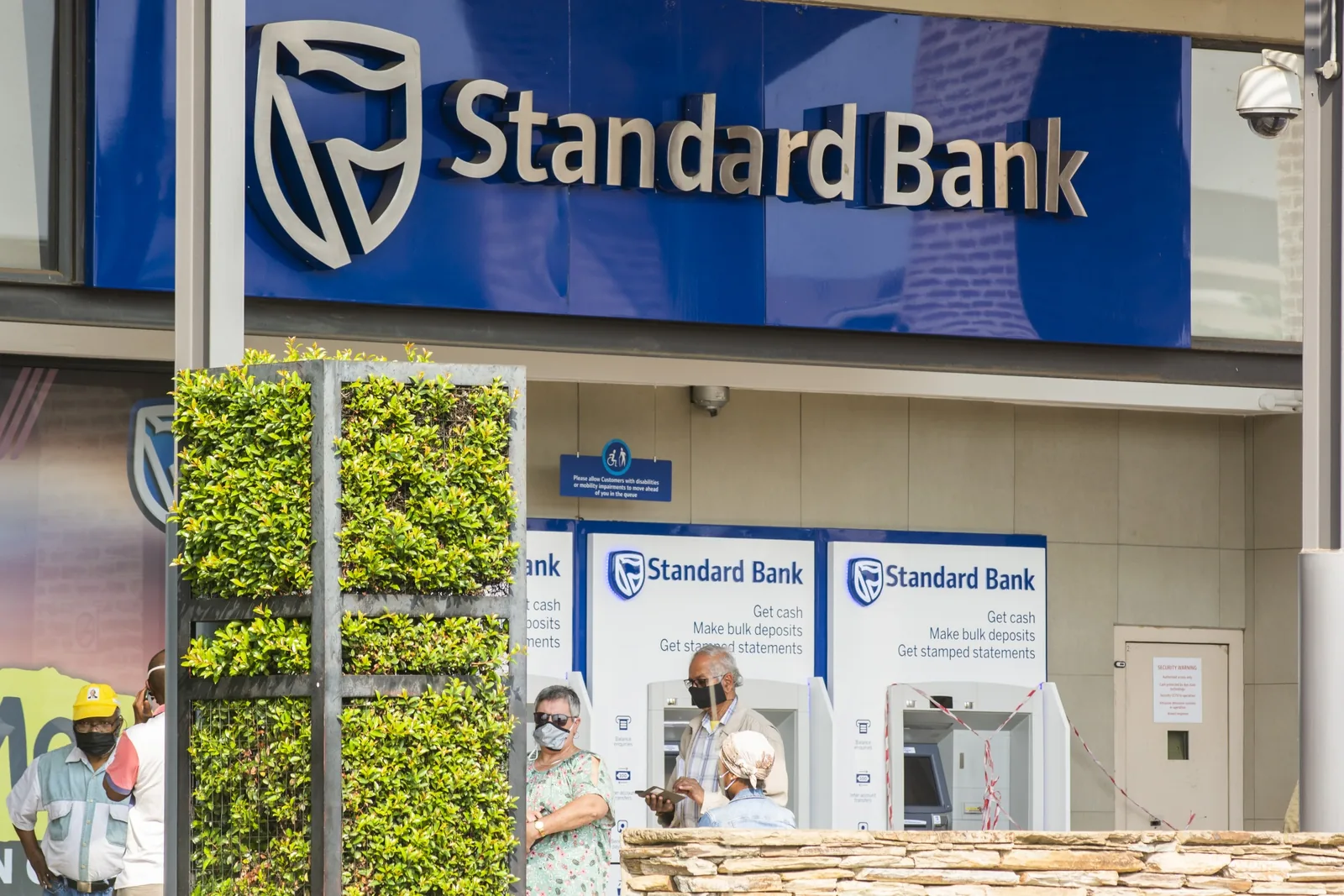
We notice the logo when we’re standing outside a branch. We notice the app when we’re trying to transfer money. We notice the bank when our card refuses to work at the worst possible moment.
But the biggest banks are doing something much larger than moving money.
They are quietly sitting underneath economies.
Behind the entrepreneur trying to open a factory.
Behind the farmer financing the next harvest.
Behind the multinational entering a new African market.
Behind the young professional buying a first home.
Behind governments building infrastructure.
Behind millions of ordinary transactions that nobody stops to think about.
And somewhere in the middle of this enormous financial ecosystem sits a company with a story that stretches back to 1862.
Its name is Standard Bank.
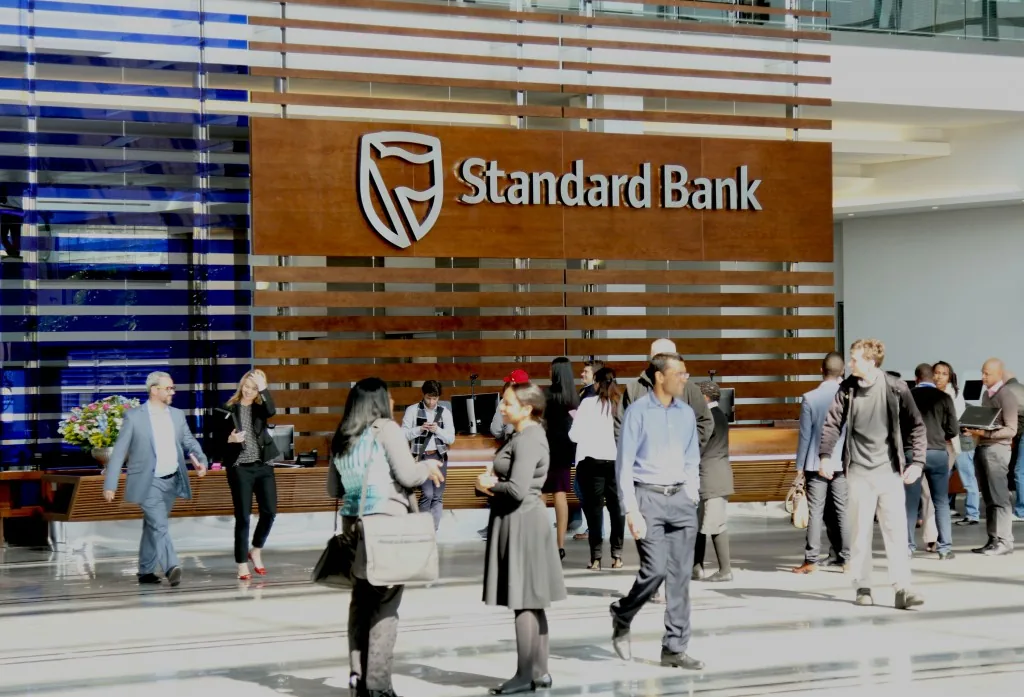
Today, Standard Bank Group is Africa’s largest financial services group by assets, with operations across 21 sub-Saharan African countries, more than 19.5 million clients, over 50,000 employees, and total assets of approximately R3.8 trillion as of June 2026.
But the numbers aren’t the most interesting part.
The fascinating question is:
How does a company founded in the 19th century remain relevant in an economy being transformed by smartphones, fintech, artificial intelligence, instant payments and digital commerce?
That is the Standard Bank story.
And it contains some uncomfortable lessons about longevity, branding, technology and African business that every founder should pay attention to.
It Started Before the Internet. Before Smartphones. Before Most of Modern Africa.#
Imagine Africa in 1862.
No smartphones.
No internet.
No ATMs.
No mobile banking.
No fintech startups.
No WhatsApp.
No cloud computing.
No artificial intelligence.
The Industrial Revolution was still reshaping the world, and global commerce looked nothing like it does today.
It was in that environment that Standard Bank began its journey.
More than a century and a half later, the institution that emerged from those beginnings has grown into one of the continent’s most significant financial organisations.
Standard Bank itself describes its roots as stretching back to 1862 and its evolution alongside Africa.
And there is an important lesson hidden inside that history.
Longevity is not the ability to remain unchanged.
It is the ability to remain relevant while everything around you changes.
That distinction is enormous.
A company that survives 10 years by doing exactly what it did in year one may simply be lucky.
A company that survives 164 years has probably mastered something different:
reinvention.
From Bank to Economic Infrastructure#
Today, calling Standard Bank “a bank” almost feels incomplete.
Yes, it provides banking services.
But the group operates across:
- Personal & Private Banking
- Business & Commercial Banking
- Corporate & Investment Banking
- Insurance & Asset Management
Its 2025 annual report shows 16.6 million Personal & Private Banking clients, 861,000 Business & Commercial Banking clients, R1.2 trillion in corporate and investment banking client deposits, and R1.8 trillion in assets under management and administration.
This is what happens when a company stops thinking about its product and starts thinking about the ecosystem around the customer.
A customer doesn’t wake up thinking:
“I need a bank.”
They wake up thinking:
“I need to buy a house.”
“I need to grow my business.”
“I need to pay my suppliers.”
“I need insurance.”
“I need to invest.”
“I need to send money across borders.”
“I need to receive payment.”
The bank becomes the infrastructure underneath those ambitions.
And Standard Bank’s strategy reflects precisely that shift.
The Most Important Three Words in Standard Bank’s Brand#
There is a phrase Standard Bank repeats consistently:
“Africa is our home. We drive her growth.”
At first glance, it sounds like corporate language.
But look closer.
It is actually a positioning strategy.
Standard Bank isn’t trying to say:
“We are a large bank.”
That would be forgettable.
It isn’t even primarily saying:
“We offer great financial products.”
Every bank says that.
Instead, it is claiming something much bigger:
We understand Africa, we belong here, and we want to participate in its economic growth.
That is a very different brand position.
And it explains why Standard Bank’s brand strategy has increasingly moved beyond functional utility toward emotional resonance. Its 2025 integrated report says the group evolved its brand strategy from functional utility to emotional resonance and launched its “Keep Growing” campaign around that idea.
This is brilliant brand thinking.
Because people don’t fall in love with balance sheets.
They connect with possibility.
“Keep Growing” Is More Than an Advertising Campaign#
Imagine an entrepreneur.
She started selling clothes from her bedroom.
Then Instagram happened.
Then orders increased.
Then she rented a shop.
Then she needed inventory.
Then staff.
Then logistics.
Then a bigger warehouse.
Then perhaps a second location.
Her relationship with money changes every year.
And so does her relationship with her bank.
The bank that only helps her make payments is useful.
But the bank that understands her journey from small business to growing enterprise becomes something else.
A partner.
That is the emotional territory Standard Bank is trying to occupy with “Keep Growing.”
The campaign frames growth as something shared by individuals, businesses and communities rather than simply selling a banking product.
And this is an important lesson for brands:
Don’t only sell the product.#
Sell the future your product helps the customer reach.
The Numbers Tell Another Story#
The emotional story is powerful.
But Standard Bank isn’t running on storytelling alone.
The financial engine underneath the brand is enormous.
For the 2025 financial year, Standard Bank Group reported:
R49.2 billion in headline earnings
and a
19.3% return on equity.
The group says headline earnings increased 11% in 2025, while it met or exceeded its core financial targets established in 2021.
Then came the next strategic chapter.
For 2026–2028, Standard Bank set targets including annual headline earnings-per-share growth of 8%–12%, revenue growth of 7%–10%, and a return-on-equity target of 18%–22%.
These aren’t just numbers for shareholders.
They reveal something about how the institution thinks.
Standard Bank is simultaneously trying to achieve three things:
Grow.
Modernise.
Protect trust.
And that is much harder than it sounds.
The Bank Realised Something Most Traditional Companies Eventually Discover#
Your biggest competitor may not look like you.
For decades, banks competed with other banks.
Then fintech arrived.
Then mobile money.
Then digital wallets.
Then payment companies.
Then e-commerce platforms started embedding financial services.
Then technology companies started behaving like financial companies.
Suddenly, the definition of “bank” became blurry.
Standard Bank’s response has increasingly involved technology, partnerships and platforms rather than simply branches.
The group says its strategy is Africa-focused, client-led and digitally enabled, combining technology, partnerships and financial expertise to deliver broader solutions.
That is the difference between defending an old business model and defending a customer relationship.
Standard Bank’s Technology Bet#
Here’s where the story becomes particularly interesting for tech entrepreneurs.
A bank this large cannot simply decide:
“Let’s launch an app.”
The technology challenge is much deeper.
Think about the consequences of failure.
If a social media app goes down for an hour, people complain.
If a bank’s core infrastructure fails, businesses can stop operating.
People can’t pay.
Merchants can’t receive money.
Payrolls can be delayed.
Markets can be disrupted.
Trust can disappear.
So Standard Bank has been investing in modernising its technology stack, simplifying core systems and migrating key workloads into cloud-based environments. The group says these investments are intended to improve resilience, availability, speed of delivery and digital experiences.
This is one of the least glamorous but most important aspects of digital transformation:
You don’t modernise technology just to look modern.
You modernise because the customer increasingly expects your infrastructure to work at internet speed.
And Then Comes AI#
Now imagine the bank of the future.
You walk into a branch.
Nobody is there.
Not because the bank disappeared.
Because you don’t need the branch.
Your financial assistant already understands your cash flow.
It can identify unusual transactions.
It can help assess risk.
It can personalise recommendations.
It can detect fraud.
It can automate processes that previously required dozens of human interventions.
This isn’t merely a futuristic concept.
Standard Bank says responsible AI will increasingly support risk decisioning, operational efficiency, fraud detection and customer engagement.
That is a significant strategic shift.
AI isn’t being treated merely as a chatbot.
It is being positioned as part of the operating architecture.
And that is where the real AI revolution will happen.
Not necessarily in the flashy demos.
But inside boring, enormous systems where tiny improvements multiplied across millions of transactions become billions of dollars of economic value.
The R164 Trillion Detail Most People Will Miss#
Here’s a number that should make you pause.
In 2025, Standard Bank says it processed more than R164 trillion in payments.
That works out to more than R300 million flowing through its infrastructure every minute, according to the bank.
It processed approximately 2.3 billion individual payments, while cross-border payment flows increased 12%.
Think about what that means.
Every time you tap a card.
Every time a company pays a supplier.
Every time someone transfers money.
Every time a merchant receives funds.
There is a larger financial network quietly making those transactions possible.
This is why banking is increasingly becoming infrastructure.
And infrastructure is where the really interesting technology battles will happen.
Here’s Where Standard Bank Gets Really Interesting#
Most African technology conversations focus on startups.
And rightly so.
But there is another story happening simultaneously.
Legacy African institutions are becoming technology companies.
Not in the sense that they stop being banks.
In the sense that technology increasingly determines:
- how customers interact with them;
- how risk is assessed;
- how fraud is detected;
- how payments move;
- how products are developed;
- how infrastructure scales;
- how businesses access capital.
Standard Bank is a perfect example.
The company has existed for 164 years.
But the organisation competing for the next decade cannot operate like the organisation that existed 164 years ago.
That is the paradox of longevity.
The longer you survive, the more you have to change.
The African Advantage#
There is another reason Standard Bank’s positioning is strategically powerful.
Africa isn’t one market.
It is a collection of markets with different:
- currencies;
- regulations;
- cultures;
- financial behaviours;
- infrastructure;
- levels of digital adoption;
- economic structures.
A company that understands how to navigate this complexity has something difficult to copy.
Standard Bank has on-the-ground operations across 21 sub-Saharan African countries, alongside global centres in Beijing, Dubai, London and New York and offshore hubs in the Isle of Man and Jersey.
That network is more than a footprint.
It is knowledge.
And knowledge accumulated over decades becomes a competitive advantage.
Why Standard Bank’s Brand Is More Powerful Than Its Logo#
Let’s talk branding.
Because this is where many companies get confused.
A brand isn’t a logo.
It isn’t the colour palette.
It isn’t the website.
It isn’t the tagline.
Those things are expressions of the brand.
The real brand is the mental position you occupy in people’s minds.
And Standard Bank has spent years trying to own a particular position:
Africa + growth + trust + financial capability.
That positioning has been reinforced by recognition.
In 2026, Standard Bank retained the title of Africa’s Most Valuable Banking Brand for the fifth consecutive year, according to Brand Finance, while its 2025 annual report also cites recognition from Newsweek, TIME and Forbes.
In 2025, Brand Africa also named Standard Bank Africa’s Most Admired Financial Services Brand, based on research across 31 African countries.
The lesson isn’t:
“Win awards.”
The lesson is:
Build a consistent narrative for long enough that the market begins to associate your name with a particular idea.#
That’s brand equity.
Standard Bank’s Real Product May Be Trust#
This is perhaps the most important insight of all.
A bank technically sells financial services.
But emotionally?
It sells trust.
You give the bank your salary.
Your savings.
Your company’s revenue.
Your investment.
Your transaction history.
Your financial future.
And you’re essentially saying:
“I trust you to keep this safe.”
That makes banking fundamentally different from many consumer businesses.
A clothing brand can lose a customer because the new collection isn’t exciting.
A bank can lose a customer because they no longer believe the institution is reliable.
This explains why Standard Bank’s values emphasise ideas such as being deeply committed, boldly pioneering, trusted stewards, guided by empathy and unfailingly honourable.
The technology can change.
The app can change.
The branches can change.
The products can change.
But trust must survive the transformation.
The SME Opportunity: Where Africa’s Next Giant Companies Will Come From#
One of the areas I find particularly interesting is Standard Bank’s relationship with small and medium-sized businesses.
In 2025, the group says it supported more than 802,000 SME clients across 16 countries.
Why does this matter?
Because Africa’s future isn’t going to be built only by giant corporations.
It will be built by thousands and eventually millions of businesses that start small.
The mechanic who opens a second workshop.
The fashion entrepreneur who begins exporting.
The logistics operator who buys the fifth truck.
The software company hiring its first 100 employees.
The agricultural business expanding into processing.
The retailer moving from one location to ten.
Every large company was once small.
And the financial institutions that help those companies cross the gap between survival and scale can become incredibly important to economic development.
Standard Bank’s Biggest Lesson for Entrepreneurs#
Here’s the part I would underline if this were a business school case study.
Don’t build for today’s customer. Build for the customer’s journey.#
If your customer is a freelancer today, what will they become in five years?
If they’re a small business today, what happens when they become a mid-sized business?
If they’re a student today, what happens when they become a professional?
If they’re a startup today, what happens when they become an enterprise?
The companies that understand these transitions don’t just acquire customers.
They grow with them.
That is precisely what “Keep Growing” communicates.
The customer’s growth becomes part of the company’s growth story.
What Standard Bank Teaches Us About Building a 100-Year Brand#
There are five lessons here that every founder should steal.
1. Build for relevance, not permanence#
Nobody knows what their industry will look like in 20 years.
So don’t obsess over preserving today’s business model.
Build the ability to adapt.
Standard Bank went from a 19th-century financial institution into a modern, digitally enabled financial services group.
The lesson?
Your business model is not your identity.
Your purpose is.
2. Own a meaningful idea#
“Banking services” isn’t emotionally powerful.
“Driving Africa’s growth” is.
A meaningful idea gives employees something to work toward and gives customers something to believe in.
If your brand disappeared tomorrow, what idea would disappear with it?
If you don’t have a good answer, you may have a business.
But you probably don’t yet have a powerful brand.
3. Make technology serve the strategy#
Technology for technology’s sake is expensive decoration.
Standard Bank’s technology investments are tied to concrete outcomes:
resilience, efficiency, personalisation, risk management, payments and customer experience.
That’s how technology should work.
Don’t ask:
“What AI feature can we add?”
Ask:
“What problem can technology remove from our customer’s life?”
That question produces better products.
4. Build ecosystems, not isolated products#
The strongest companies increasingly operate inside ecosystems.
Banking connects to:
- payments;
- commerce;
- insurance;
- investments;
- trade;
- technology;
- infrastructure;
- businesses;
- governments.
When you understand the ecosystem, you stop asking:
“How do I sell one more product?”
and start asking:
“How can I become indispensable to this customer’s journey?”
That’s a much more powerful question.
5. Your history should be an asset, not a prison#
Standard Bank’s 164-year history could have become a liability.
Old systems.
Old processes.
Old thinking.
Old culture.
Instead, history can become credibility.
The trick is knowing what to preserve.
Preserve the trust.
Preserve the purpose.
Preserve the institutional knowledge.
But don’t necessarily preserve the methods.
That is how old companies become new again.
And Here’s the Bigger Story#
There is something symbolic about Standard Bank’s journey.
It began in an Africa that was still being shaped by colonial-era trade.
Today, it is positioning itself inside an Africa that is being shaped by:
- digital commerce;
- urbanisation;
- a young population;
- renewable energy;
- infrastructure investment;
- artificial intelligence;
- cross-border trade;
- financial inclusion;
- and a rapidly expanding technology ecosystem.
The continent has changed.
So has Standard Bank.
But the company’s central idea has remained remarkably consistent:
Participate in Africa’s growth.
That’s the power of a strong purpose.
The tactics can change.
The technology can change.
The customer can change.
The world can change.
But the why remains.
So, Is Standard Bank Really a Tech Company Now?#
Not exactly.
And that’s the wrong question.
The better question is:
What does a 164-year-old financial institution have to become in a world where technology is redefining financial services?
The answer appears to be:
A financial institution powered increasingly by technology, data, partnerships and infrastructure—without abandoning the trust on which banking is built.
That’s a much more interesting proposition.
Because the future probably won’t belong to companies that are simply “banks” or “tech companies.”
It will belong to organisations capable of combining:
capital + technology + data + trust + distribution + customer understanding.
And Standard Bank already possesses many of those ingredients.
The BrandKabal Verdict#
If you look at Standard Bank only as a bank, you miss the story.
If you look at it as a 164-year-old company that has repeatedly reinvented itself around Africa’s changing economic needs, the story becomes much more fascinating.
It teaches us that:
A strong brand can outlive products.
A strong purpose can outlive technology.
Trust can become a competitive moat.
Distribution can be as powerful as innovation.
And African complexity, when understood deeply, can become an advantage rather than a disadvantage.
But perhaps the most important lesson is simpler.
Standard Bank didn’t survive for more than a century by predicting the future perfectly.
Nobody can.
It survived by adapting to the future when it arrived.
From paper.
To branches.
To cards.
To ATMs.
To internet banking.
To mobile banking.
To cloud.
To AI.
To instant payments.
To whatever comes next.
And that brings us back to the words Standard Bank has chosen for its latest chapter:
Keep Growing.#
Not “We have arrived.”
Not “We are the biggest.”
Not “We have figured everything out.”
Keep Growing.
For a company that has already lived through 164 years of economic transformation, perhaps those are exactly the right words.
Because the companies that matter most aren’t necessarily the ones that become successful.
They’re the ones that understand that success is not a destination.
It is the ability to keep becoming relevant.
And for Africa’s businesses, entrepreneurs and builders, that may be the greatest lesson Standard Bank has to offer.
Don’t just build something that works today.
Build something capable of growing with tomorrow.
BrandKabal’s Take#
At BrandKabal, we believe the most powerful brands are not built by shouting louder than everyone else.
They are built by standing for something meaningful, delivering consistently, and evolving before the market forces you to.
Standard Bank’s story is a masterclass in that principle.
Its greatest asset isn’t its age.
It’s the fact that, after 164 years, it is still trying to answer a modern question:
“What does Africa need next—and how can we help build it?”
That is the mindset worth stealing.
Not the logo.
Not the colours.
Not the advertising.
The mindset.
Because the next Standard Bank-sized African success story may already be sitting inside a problem that someone reading this article has the courage to solve.
Keep building. Keep adapting. Keep growing.
— BrandKabal


Join the conversation