
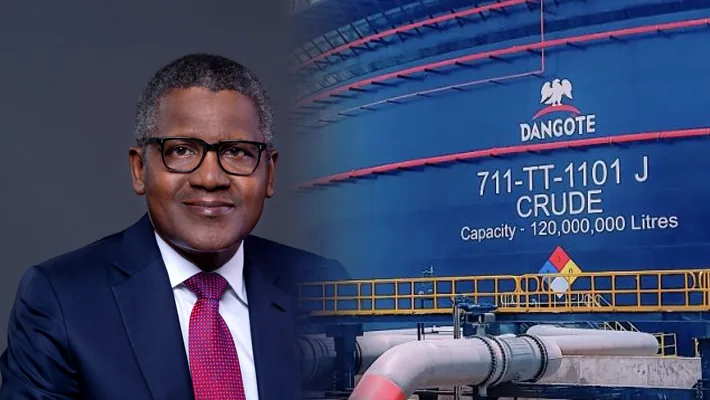
In the Nigerian business landscape, there are startups, there are companies, and then there is Dangote.
The name isn’t just a brand; it’s a symbol. Unlike the recent meteoric rise of digital-first brands like Moniepoint or Chowdeck, Dangote represents a different kind of growth—one built not on apps and algorithms, but on cement, steel, sugar, and sheer industrial ambition.
The brand’s logo is seen on the trucks that build our homes, on the food staples in our kitchens, and now, on the colossal refinery that promises to rewrite the nation’s economic story. Dangote’s growth is not about “blitzscaling”; it’s about “block-by-block” dominance.
For creatives, startups, and business owners, it’s easy to dismiss the Dangote Group as an “old-world” industrial giant whose lessons don’t apply. That would be a grave mistake. The Dangote playbook is perhaps the most important one for understanding how to build an institution of enduring value in Nigeria.
Here are the critical lessons from the Dangote brand’s unceasing expansion.
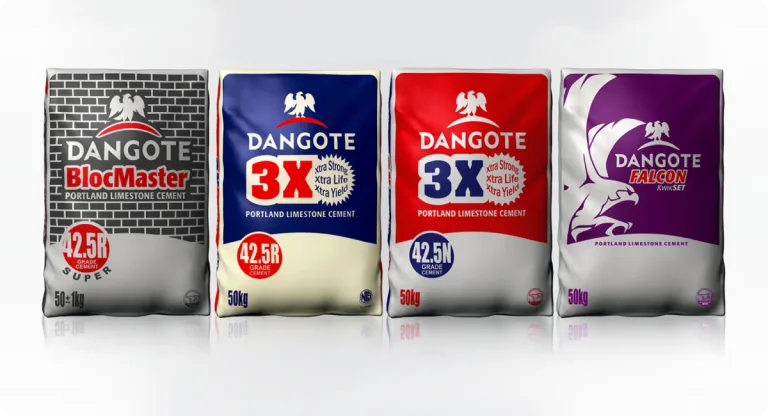
Lesson 1: Solve the “Boring,” Non-Negotiable Problems#
While tech startups chase the latest “disruption,” Dangote’s empire is built on the most fundamental human needs:
- Shelter (Cement)
- Food (Sugar, Salt, Pasta, Flour)
- Energy (The Refinery)
These are not “nice-to-have” services. They are “must-have” commodities. They are the essential building blocks of a developing nation. By focusing on these “unsexy” but critical sectors, Dangote insulated his brand from fads and volatility. The market for cement and sugar is not going to vanish next quarter.
The Takeaway: Stop chasing trends and start solving real, foundational problems. Ask yourself: Is my product or service a novelty, or is it a necessity? The most sustainable businesses are often built on solving the most “boring,” essential needs.
Lesson 2: Master Your Value Chain (Backward Integration)#
This is the core of the Dangote genius. The group’s strategy is not just to sell products; it is to own the entire process.
They don’t just sell cement; they own the limestone quarries, the power plants that run the factories, and the fleet of trucks that distribute the final product. They don’t just sell sugar; they own the sugarcane plantations.
This “backward integration” gives them terrifying control over two things: price and quality. While competitors are held hostage by suppliers and logistical nightmares, Dangote controls his own destiny. The refinery is the ultimate expression of this: solving Nigeria’s fuel problem by controlling the entire process from crude oil to a full tank.
The Takeaway: You may not be able to build a quarry, but you can “own your stack.” For a creative, this could mean mastering both design and copywriting to control the full creative message. For a startup, it means identifying your critical dependencies—be it a software platform, a key supplier, or a delivery service—and finding ways to reduce your vulnerability and control your core inputs.
Lesson 3: Wield Scale as a Vicious Competitive Weapon#
Dangote does not enter a market to participate. He enters to dominate.
The strategy is consistent: build the biggest, most technologically advanced plant, powered by economies of scale. By producing at a massive volume, he can achieve a cost-per-unit that no smaller competitor can touch. This scale allows him to absorb market shocks, influence pricing, and systematically drive competitors out of business.
The Takeaway: As a startup or SME, you cannot out-scale Dangote. But you can apply this lesson to your niche. Don’t try to be everything to everyone. Pick a small, well-defined pond and be the “biggest fish” in it. Dominate a vertical, a specific service, or a local community. Be the undisputed “go-to” for one thing. Own your niche with overwhelming force and quality.
Lesson 4: Weave Your Brand into the National Identity#
The Dangote brand is more than a corporation; it’s a story of national pride. The narrative is powerful: “A Nigerian company, building Nigeria.”
Every factory opened, every bag of cement sold, is framed as a contribution to the nation’s GDP, a solution to importation, and a step towards self-sufficiency. The refinery isn’t just a business; it’s a patriotic act. This “nation-building” narrative builds an incredibly strong “moat” of public goodwill and political capital. It makes the brand a partner in the nation’s progress.
The Takeaway: What is your brand’s “why” beyond profit? How does your work contribute to your community, your industry, or your country? A brand with a mission builds a “tribe” of loyal followers. A product can be copied, but a purpose-driven identity is unique.
Lesson 5: Play the Long Game (Patience in Decades, Not Quarters)#
The Dangote Refinery was not a 6-month startup sprint. It was a decade-long marathon of political, financial, and engineering hurdles. It faced endless skepticism, delays, and monumental costs.
Aliko Dangote’s vision is not measured in financial quarters; it’s measured in decades. He possesses the “patient capital” and, more importantly, the psychological resilience to see monumental projects through, long after the initial glamour has faded. This is a game of “brick by brick,” not “get rich quick.”
The Takeaway: We are an ecosystem obsessed with “overnight success.” The Dangote lesson is the antidote. Are you willing to work on your “refinery-sized” project for 10 years? The most enduring careers and businesses are not built on hacks. They are built on a long-term vision and the relentless, unglamorous execution required to make it a reality.
The Final Blueprint#
The Dangote brand teaches us that while the digital world is exciting, the physical world—of basic needs, of logistics, of manufacturing—is where true, foundational wealth is built.
The lesson isn’t to build a factory. It’s to adopt the mindset: Solve an essential problem, control your process, dominate your niche, build a mission-driven brand, and have the grit to see it through for the long haul.

Join the conversation