
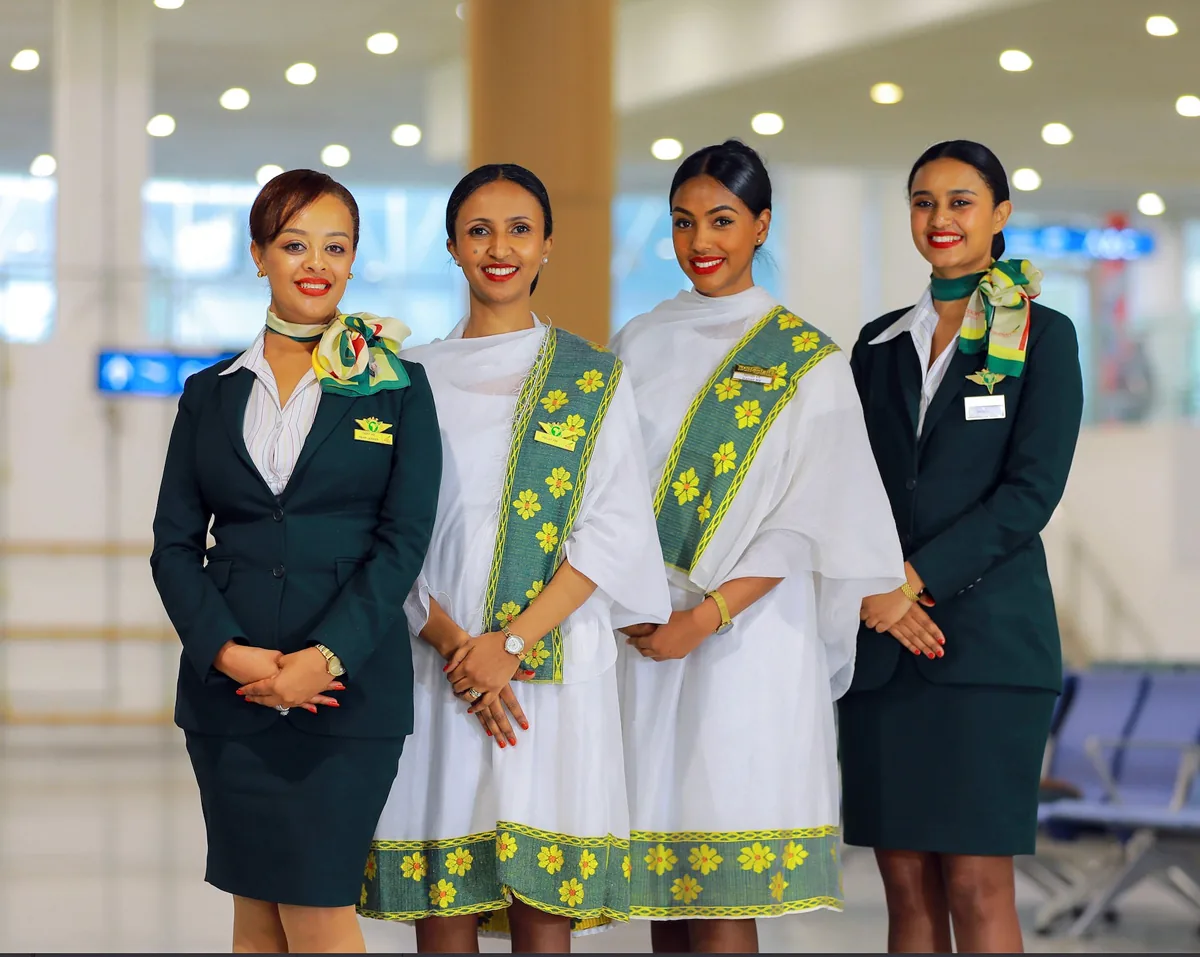
There is a particular moment when a company stops being merely successful and becomes a case study.
For Ethiopian Airlines, that moment did not arrive with a flashy Silicon Valley funding round.
There was no celebrity founder.
No billion-dollar acquisition.
No “disruptive startup” pitch deck.
It started with five aircraft in 1946.
And eight decades later, Ethiopian Airlines Group has grown into a state-owned aviation business that reported $9.1 billion in revenue for the 2025/26 financial year, carried 20.7 million passengers, moved 897,000 tonnes of cargo, and operates a fleet of more than 150 aircraft.
That is not simply an airline story.
It is a story about strategy, infrastructure, talent, patience, culture, brand positioning and African ambition.
And perhaps the most interesting part is this:
Ethiopian Airlines did not build its strength by thinking like an airline alone.
It built an aviation ecosystem.
That distinction changes everything.
The story began with five aircraft#
On April 8, 1946, Ethiopian Airlines began scheduled operations with five Douglas C-47 aircraft, flying from Addis Ababa to Cairo through Asmara.
Eight decades later, the company marked its 80th anniversary in April 2026.
Think about that for a moment.
In an industry where airlines can disappear after a few difficult years, Ethiopian has survived for 80 years.
And survival is not the same thing as growth.
Ethiopian grew.
Its own history records a progression from early Douglas aircraft to becoming a pioneer in Africa with aircraft such as the Boeing 787 Dreamliner and Airbus A350 family. The airline now serves more than 145 international passenger and cargo destinations, including more than 60 African cities, according to its corporate overview.
The lesson starts here:
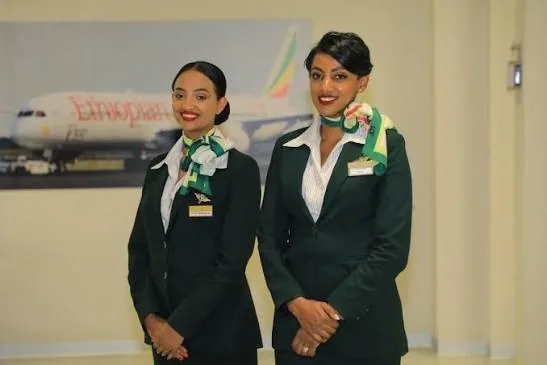
Long-term brands are rarely built in one dramatic move. They are built through thousands of strategic decisions that compound.
That is the first Ethiopian Airlines lesson.
The numbers tell a much bigger story#
Strip away the airline uniforms, beautiful aircraft and airport lounges, and look at the business.
The numbers become fascinating.
For the 2024/25 financial year, Ethiopian Airlines Group reported:
| Metric | 2024/25 |
|---|---|
| Revenue | $7.57 billion |
| Operating profit | $1.52 billion |
| Profit before tax | $1.16 billion |
| Passengers | 19.03 million |
| Cargo | 785,323 tonnes |
| Aircraft | 164 |
| Destinations | 167 |
| Passenger load factor | 77.29% |
The group’s operating profit increased by 44% year-on-year to $1.52 billion, while revenue increased 8%. Its passenger load factor rose from 73.40% to 77.29%.
The audited financial statements also reported profit after tax of approximately ETB 139.64 billion, which corresponds to roughly $1.19 billion using the report’s implied ETB/USD conversion.
Then came another jump.
For 2025/26, the airline reported revenue of $9.1 billion, approximately 20% higher than the prior year. Passenger traffic reached 20.7 million, while cargo volumes grew 16% to 897,000 tonnes.
But there is an important detail serious readers should not miss.
At the July 2026 performance briefing, Ethiopian Airlines did not publicly disclose a full-year 2025/26 profit figure. Aviation Week reported that revenue and operating expenses were discussed, with expenses rising 25%, but profit was not disclosed.
That distinction matters.
Revenue tells us how much business passed through the company.
Profit tells us how much economic value was actually left after the cost of producing that revenue.
So when discussing Ethiopian’s latest performance, it is more accurate to say that revenue reached $9.1 billion, while the latest fully detailed audited profit figures available in the annual report are for 2024/25.
That is what factual business analysis looks like.
But here is where Ethiopian Airlines gets really interesting#
Most people see Ethiopian Airlines and think:
Aircraft.
That is understandable.
But aircraft are only one part of the story.
Ethiopian has built businesses around the airline itself, including:
Passenger transportation.
Cargo and logistics.
Maintenance, Repair and Overhaul (MRO).
Aviation training.
Ground services.
Airport-related operations.
Catering.
Hotels and tourism-related services.
Its corporate structure and strategic documents have long described Ethiopian as an aviation group rather than simply an airline.
This is one of the most important reasons its story deserves attention.
Imagine you own a restaurant.
Most restaurant owners think:
“How many meals can I sell?”
Ethiopian’s model is closer to asking:
“How many businesses around the customer journey can we participate in?”
That is a completely different mindset.
The secret may not be the airline. It may be the ecosystem.#
Consider maintenance.
Aircraft require enormous amounts of technical maintenance.
Ethiopian MRO, established in 1957, has grown into a major aircraft maintenance operation serving African and Middle Eastern markets. Its facilities are certified by the Ethiopian Civil Aviation Authority, FAA, EASA and other regulators. In 2025, the business also completed LEAP-1B engine performance-restoration capability at its engine test facility.
Now consider training.
In January 2026, Ethiopian Aviation University graduated 457 aviation professionals from 12 countries, including pilots, aircraft maintenance technicians and cabin crew. In September 2025, more than 1,000 aviation professionals from 18 countries graduated from the institution.
Then there is cargo.
Ethiopian Cargo operates dedicated freighters alongside passenger belly capacity and has a cargo terminal with stated annual handling capacity of 1 million tonnes. Its cargo activities cover commodities including horticulture, pharmaceuticals, valuables, live animals and e-commerce.
And then there is catering.
The airline’s catering operation has stated capacity of up to 100,000 meals per day, with local Ethiopian food and international menu options.
Suddenly, the picture changes.
Ethiopian is not merely selling seats.
It is participating across the aviation value chain.
This is vertical integration — and it is powerful#
Here is a simple way to understand it.
Suppose an airline depends entirely on external companies for:
Aircraft maintenance.
Pilot training.
Ground handling.
Cargo infrastructure.
Catering.
Airport services.
Technical expertise.
Every external supplier introduces cost, coordination risk and dependency.
Ethiopian has spent decades building capabilities inside or around its own ecosystem.
That does not eliminate all risk.
But strategically, it can create greater control over important parts of the customer and operating experience.
This is similar to something we have seen in other great business organizations:
Build capabilities competitors have to buy.
That can become a competitive moat.
The brand positioning is equally fascinating#
Ethiopian Airlines does something many African brands struggle to do.
It does not market itself merely as an Ethiopian company.
It presents itself as a Pan-African connector.
Its longstanding positioning, “Bringing Africa Together and Beyond,” reflects that strategy. The company’s network connects Addis Ababa with destinations across Africa and international markets.
This is brilliant brand architecture.
The name says:
Ethiopian.
The promise says:
Africa.
The network says:
World.
That gives the brand three identities simultaneously:
A national flag carrier.
An African connector.
A global airline.
That is a far more powerful position than simply saying:
“We are an airline from Ethiopia.”
Addis Ababa became the company’s strategic weapon#
Here is another critical piece of the puzzle.
Ethiopian Airlines did not build its network randomly.
It built around Addis Ababa as a hub.
Passengers from African cities can connect through Addis to Europe, Asia, the Middle East and the Americas.
That turns geography into infrastructure.
Instead of requiring every African city to have a direct flight to every global destination, the hub-and-spoke model concentrates connections through a central node.
IATA noted that Ethiopia’s international air connectivity expanded by 15% in 2025, reinforcing the country’s position as one of Africa’s leading aviation hubs.
And this is not just an Ethiopian phenomenon.
It speaks to one of Africa’s biggest structural challenges:
Africa has enormous geography but comparatively limited intra-African connectivity.
IATA’s research continues to identify connectivity as a major economic factor across the continent.
Ethiopian effectively turned that problem into a business model.
The airline understood something many companies don’t#
A company does not always have to manufacture demand.
Sometimes it can build infrastructure that becomes indispensable to demand that already exists.
Africa has:
Growing populations.
Growing trade.
Tourism opportunities.
Diaspora travel.
Business travel.
Humanitarian movement.
Export markets.
Pharmaceutical logistics.
Agricultural exports.
International investment.
Ethiopian positioned itself around those flows.
This is why the cargo business is so important.
A passenger can postpone a holiday.
A global supply chain often cannot postpone everything.
Flowers still need to arrive.
Pharmaceuticals still need controlled transport.
Time-sensitive products still need aircraft.
The airline therefore has exposure to more than one aviation revenue engine.
And then comes one of Ethiopian’s most audacious moves#
The new Bishoftu International Airport.
This is where the story stops sounding like a normal airline expansion plan.
The project, roughly 40 kilometres from Addis Ababa, is planned as a major greenfield airport and future international hub.
The African Development Bank said the project is expected to have an initial capacity of 60 million passengers annually, with the potential to scale to 110 million, alongside cargo capacity of approximately 3.73 million tonnes per year. AfDB is working to mobilise financing for a project estimated at around $10 billion.
Construction officially commenced in January 2026.
Phase One is expected to be completed by 2030, according to Ethiopian Airlines’ announcement.
Now pause there.
An airline building its own massive future hub is not simply buying more aircraft.
It is trying to shape the infrastructure on which its next generation of growth will depend.
That is a very different level of strategic thinking.
The aircraft strategy tells the same story#
Ethiopian has consistently invested in newer aircraft.
The airline has been an early African operator of several major aircraft families and currently operates aircraft including Boeing 737s, 777s, 787s, Airbus A350-900s and A350-1000s.
In January 2026, it confirmed an order for nine Boeing 787-9 Dreamliners, with deliveries planned for 2031–2033. In April 2026, it converted options for another six Boeing 787-9 aircraft into firm orders.
Why does this matter?
Because fleet planning is not merely about owning expensive aircraft.
It is about:
Fuel efficiency.
Range.
Capacity.
Route economics.
Maintenance.
Passenger experience.
Network expansion.
Aircraft availability.
The wrong aircraft can destroy a route’s economics.
The right aircraft can open an entirely new market.
Ethiopian also understands the importance of talent#
One of the biggest mistakes companies make is buying technology while neglecting capability.
You can buy an aircraft.
You cannot buy 30 years of institutional knowledge overnight.
You can lease a building.
You cannot instantly create a culture capable of operating a complex aviation network.
Ethiopian has invested heavily in developing its own aviation professionals.
Its university trains people in pilot operations, aircraft maintenance and cabin services, while its group has continued graduating professionals from across Africa and other countries.
That creates something every ambitious business should understand:
Institutional memory.#
People carry knowledge from one generation of employees to another.
That knowledge compounds.
The brand’s consistency is also part of the moat#
In 2026, Ethiopian Airlines won SKYTRAX’s Best Airline in Africa award for the ninth consecutive year.
It also won Best Business Class in Africa and Best Economy Class Onboard Catering in Africa.
Awards alone do not prove that a company is perfect.
They are still external indicators based on specific methodologies and customer assessments.
But nine consecutive years is difficult to ignore as a branding signal.
More importantly, Ethiopian has been recognized repeatedly across other industry platforms, including APEX and cargo-focused awards.
This suggests something deeper:
The brand has managed to build familiarity and recognition alongside physical scale.
That matters because airlines sell an intangible promise before the customer ever boards the aircraft.
The customer is effectively buying:
“Get me there.”
“Get me there safely.”
“Get me there reliably.”
“Make the experience acceptable.”
“Don’t make the journey unnecessarily painful.”
Aviation is therefore a business where trust is part of the product.
But let’s not romanticise the story#
A serious business article should not turn Ethiopian Airlines into a fairy tale.
Aviation is brutally difficult.
Fuel prices can move sharply.
Geopolitical conflicts can close airspace.
Aircraft shortages can limit capacity.
Engine maintenance delays can ground aircraft.
Currency movements can affect costs and liabilities.
Regulatory changes can alter route economics.
Interest rates can increase financing costs.
And airlines carry enormous fixed and semi-fixed costs.
The 2025/26 results themselves illustrate the point.
Ethiopian reported 20% revenue growth to $9.1 billion, but Aviation Week reported that expenses grew 25%.
That tells us something important.
Growth is not automatically the same thing as improved economics.
Revenue can rise while margins come under pressure.
That distinction is incredibly important for entrepreneurs.
There is another risk: expansion can become an addiction#
Once a company becomes successful, expansion becomes tempting.
More routes.
More aircraft.
More airports.
More subsidiaries.
More markets.
More employees.
More capital expenditure.
But the danger is obvious:
A bigger company is not automatically a better company.#
The real question is whether every expansion improves the economic engine.
Ethiopian’s challenge over the next decade will therefore not simply be:
“How big can we become?”
It will increasingly be:
“How efficiently can we become bigger?”
That is a much harder question.
Nigeria should pay attention#
There is a particularly interesting African angle here.
Ethiopian Airlines announced in September 2026 that it will begin scheduled flights to Port Harcourt, Nigeria, on December 1, 2026, making it the airline’s fifth destination in the country.
That says something about the economics of African connectivity.
Nigeria is one of Africa’s largest economies and populations.
Ethiopian is clearly treating the country as strategically important to its network.
But the larger lesson goes beyond aviation.
African businesses increasingly have an opportunity to build regional brands that do not stop at national borders.
The question is whether they have the infrastructure and execution capability to do it.
The Ethiopian brand blueprint#
So what exactly can entrepreneurs, founders and African companies learn from Ethiopian Airlines?
Not “buy aircraft.”
Not “build an airport.”
The deeper lessons are much more transferable.
1. Build capabilities, not just products#
The airline did not stop at flying passengers.
It built MRO, cargo, training, ground services and other capabilities around the core operation.
For a technology company, that could mean:
Product.
Data.
Distribution.
Training.
Customer success.
Infrastructure.
Developer ecosystem.
The principle is the same.
2. Own the bottlenecks#
What is slowing your industry down?
That is often where the biggest opportunity sits.
Ethiopian invested in maintenance.
Training.
Cargo.
Airport infrastructure.
Technology.
These are not glamorous in the same way a new passenger cabin is.
But bottlenecks create strategic value.
3. Think regionally before the competition forces you to#
A company that dominates one city can still be strategically small.
A company that builds a platform across a region can become structurally difficult to replace.
Ethiopian’s Pan-African network illustrates this principle.
The brand was not built around serving one city.
It was built around connecting a continent.
4. Build talent internally#
The most important infrastructure in many African businesses is not a building.
It is people.
Ethiopian’s long investment in aviation training is one of the clearest examples.
When your workforce becomes an institutional knowledge engine, your competitive advantage becomes harder to copy.
5. Let your brand become larger than your product#
Ethiopian Airlines sells flights.
But customers experience something bigger:
Africa connected to the world.
That is the power of positioning.
A product answers:
“What do you sell?”
A brand answers:
“What role do you play in people’s lives?”
Those are not the same question.
And this may be Ethiopian Airlines’ most important lesson of all#
The company did not appear to chase the startup world’s obsession with becoming famous quickly.
It spent decades becoming useful.
There is a massive difference.
A company can become famous through advertising.
But it becomes important through infrastructure, reliability, distribution, capability and trust.
Ethiopian Airlines spent 80 years becoming useful.
And usefulness compounded into scale.
BrandKabal’s Final Take#
Ethiopian Airlines is fascinating not simply because it is Africa’s largest airline group.
It is fascinating because it demonstrates what can happen when a business thinks beyond its immediate product.
The five aircraft of 1946 became a network.
The network became a hub.
The hub supported cargo.
Cargo created logistics capabilities.
The airline developed maintenance expertise.
Training created talent.
Talent supported expansion.
The group expanded into airport and hospitality infrastructure.
And now the organization is investing in another major airport intended to support the next generation of that ecosystem.
That is not a single-product strategy.
It is an ecosystem strategy.
And that may be the most valuable lesson for African entrepreneurs:
Don’t only build the thing customers buy. Build the system that makes your business difficult to replace.
Ethiopian Airlines started with five aircraft.
Today, the latest reported annual revenue is $9.1 billion.
But the bigger achievement may not be the number.
It may be the architecture behind the number.
Because aircraft can be purchased.
Routes can be copied.
Advertising can be replicated.
But culture, institutional knowledge, infrastructure, network effects and decades of accumulated capability are much harder to copy.
That is where the real story lies.
BrandKabal’s 10 Big Lessons from Ethiopian Airlines#
1. Think in decades, not quarters.
2. Build an ecosystem around your core product.
3. Turn operational capabilities into competitive advantage.
4. Invest in talent before you desperately need it.
5. Own critical bottlenecks where possible.
6. Turn geography into strategy.
7. Build a regional brand, not merely a local company.
8. Treat infrastructure as part of the business model.
9. Never confuse revenue growth with profit growth.
10. The strongest brands become useful before they become famous.
The BrandKabal Question#
If Ethiopian Airlines had remained only an airline—without its training systems, cargo business, MRO capabilities, network strategy, infrastructure investments and broader aviation ecosystem—would it have become the organization it is today?
That question is worth asking about every ambitious African business.
Because sometimes the secret to building a great company is not finding a better product.
It is building a better system around the product.
Sources & Editorial Note#
This article draws on Ethiopian Airlines Group’s 2024/25 annual report, its official 2026 factsheets and press releases, African Development Bank project documentation, IATA connectivity research, Reuters reporting and aviation-industry reporting. The $9.1 billion 2025/26 revenue figure was announced by Ethiopian Airlines at its July 2026 annual performance briefing; a full-year profit figure was not disclosed in that briefing, so this article does not present an unverified 2025/26 profit number.



Join the conversation