
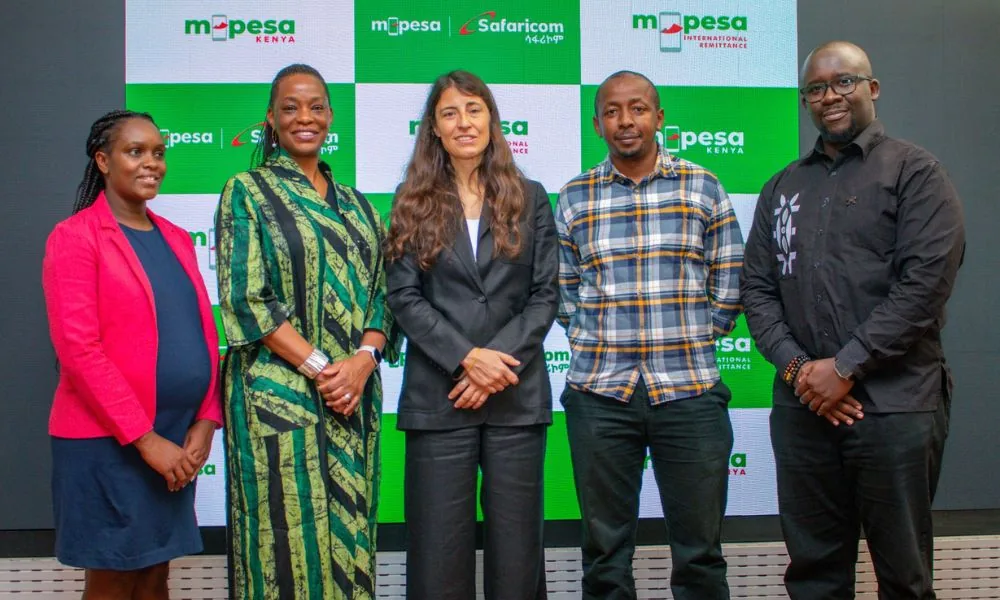
M-PESA: How a Simple Idea From Kenya Became One of Africa’s Most Powerful Technology Platforms Reading Time: 12–15 minutes
There was a time when sending money across Kenya could mean handing cash to someone travelling in the same direction.
A mother working in Nairobi might need to send money home to her family in a rural village.
A worker could earn money in the city but struggle to get it safely to his parents.
A small business owner could make sales all day and still have to physically move cash around.
The problem wasn’t that people didn’t have money.
The problem was moving it.
Then something happened that would permanently change the way millions of people think about money.
A mobile phone became a wallet.
And the name attached to that transformation was M-PESA.
What started in Kenya in 2007 as a relatively simple mobile money service has evolved into one of Africa’s most important financial technology platforms.
By the financial year ended March 2026, M-PESA had reached 40.99 million one-month-active customers in Kenya, generated KSh182.74 billion in revenue, processed 46.4 billion transactions, and handled approximately KSh41.7 trillion in transaction value during the year.
But the numbers only tell us what M-PESA became.
They don’t explain why it worked.
And that is where the real story begins.
Before M-PESA, the Problem Wasn’t “Banking”#
Imagine you’re living in Kenya in the mid-2000s.
You have a mobile phone.
You earn an income.
Your family lives somewhere else.
You need to send them money.
The conventional financial system isn’t necessarily designed around your reality.
Banks require branches.
Branches have opening hours.
Transactions can involve fees and paperwork.
And physical cash carries risks.
Meanwhile, mobile phones are spreading rapidly.
The infrastructure for communication already exists.
The question becomes:
Could the phone that allows you to talk to someone also allow you to send them money?
That sounds obvious today.
In 2007, it wasn’t.
The World Bank described M-PESA’s launch as a major development in mobile money, noting that Safaricom introduced the service in March 2007, allowing customers to deposit and withdraw through agents and transfer money electronically.
And here’s the important part:
M-PESA wasn’t initially conceived as the enormous financial ecosystem we know today.
It began with a much narrower idea.
M-PESA Wasn’t Originally Designed to Become M-PESA#
This is one of the most fascinating parts of the story.
The original project was connected to an experiment involving microfinance borrowers.
The goal was essentially to make it easier for people to repay microfinance loans using mobile phones.
Vodafone developed the concept with support from the UK’s Department for International Development, working with partners including Safaricom and Kenyan financial organisations. During the pilot, the team discovered something much bigger.
People didn’t just want an easier way to repay loans.
They wanted an easier way to move money.
The business model evolved.
And in March 2007, Safaricom launched M-PESA commercially in Kenya.
This is a profound entrepreneurial lesson:

Sometimes your customers will reveal a bigger business than the one you originally planned.#
Founders often become emotionally attached to their first idea.
M-PESA’s story demonstrates the opposite.
The technology was useful.
But the customer behaviour was more important than the original business plan.
March 6, 2007#
On March 6, 2007, M-PESA officially launched.
One month later, it had 19,671 active users.
By November of the same year, that figure had exploded to more than one million active users.
Think about that.
A product that was barely months old was already behaving differently from a normal product launch.
Why?
Because M-PESA wasn’t asking people to create a completely new behaviour.
It was making an existing behaviour easier.
People already needed to send money.
They already trusted mobile phones.
They already used local shops.
M-PESA simply connected those behaviours.
Phone + cash + local agent + recipient = mobile money.
That simplicity was powerful.
The Secret Weapon Wasn’t the App#
Today, when we think fintech, we immediately think about apps.
Beautiful interfaces.
Dashboards.
Biometric authentication.
QR codes.
AI assistants.
But M-PESA became enormous before smartphones were everywhere.
Its early success was built around something much less glamorous:
agents.
Small shops.
Airtime sellers.
Local businesses.
People customers could physically see.
These agents allowed users to convert physical cash into electronic money and later convert it back into cash.
In other words, M-PESA didn’t try to eliminate the physical financial world overnight.
It built a bridge between the physical and digital worlds.
This was brilliant.
Because telling someone:
“Forget cash. Everything is digital now.”
would have been unrealistic.
Instead, M-PESA said:
“Bring your cash here. We’ll turn it into digital value.”
That was much easier to understand.
The Agent Network Changed Everything#
The World Bank has repeatedly identified the density of M-PESA’s agent network as a major factor in its rapid adoption.
Agents effectively became a distributed network of tiny financial access points.
You didn’t need to find a bank branch.
You could find an M-PESA agent.
That distinction is enormous.
Technology becomes powerful when it is accompanied by distribution.
A brilliant app that nobody can access is not a revolution.
A relatively simple service available within walking distance of millions of people can be.
This is one of the biggest lessons M-PESA offers today’s African startups:
Don’t confuse technology with accessibility.#
Your product can be technologically sophisticated and still fail if customers cannot conveniently reach it.
“Send Money Home”#
Then came the storytelling.
M-PESA’s early “Send Money Home” campaign captured something deeply human.
This wasn’t about fintech jargon.
It wasn’t about blockchain.
It wasn’t about digital transformation.
It was about a person sending money to someone they cared about.
And that matters.
Because people rarely adopt technology because technology is interesting.
They adopt it because their lives become easier.
M-PESA understood the emotional job before the financial technology industry became obsessed with explaining the technology.
The message wasn’t:
“Experience our revolutionary mobile financial infrastructure.”
It was effectively:
“Send money home.”
Simple.
Human.
Memorable.
And culturally relevant.
The campaign even won international recognition at the 2008 GSMA Global Mobile Awards.
The Name “M-PESA” Was Doing More Work Than People Realised#
“M-PESA” combines mobile technology with pesa, the Swahili word for money.
It is almost painfully simple.
And that is precisely why it works.
The name tells you:
This is money on mobile.
No explanation required.
No complicated invented word.
No corporate acronym.
No technical terminology.
From a branding perspective, this is a masterclass in contextual naming.
The brand didn’t try to sound foreign.
It sounded local.
And in Africa, where companies sometimes make the mistake of trying too hard to appear globally sophisticated, there is a lesson here:
Global relevance doesn’t require cultural distance.#
Sometimes the thing that makes a brand globally interesting is how authentically local it is.
Then M-PESA Started Becoming Bigger Than Money Transfers#
This is where the story changes.
At first:
Send money.
Then:
Receive money.
Then:
Withdraw money.
Then:
Pay bills.
Then:
Pay businesses.
Then:
Buy goods.
Then:
Access credit.
Then:
Save.
Then:
Invest.
Then:
Send money internationally.
Then:
Run a business.
Then:
Build digital services on top of the platform.
The product expanded because the underlying infrastructure could support more use cases.
Safaricom itself has described M-PESA not simply as a product but as a broader platform containing multiple digital possibilities for consumers, businesses and developers.
That distinction is critical.
Product vs Platform: The M-PESA Lesson#
A product solves a problem.
A platform creates an environment where multiple problems can be solved.
That’s the evolution M-PESA went through.
At the beginning:
“I need to send money.”
Later:
“I need to pay my electricity bill.”
Then:
“I need to pay a merchant.”
Then:
“I need working capital.”
Then:
“I want to save.”
Then:
“I want to invest.”
Then:
“I want to build something that connects to M-PESA.”
The platform becomes more useful as more participants join it.
Customers attract merchants.
Merchants attract customers.
Developers build integrations.
Financial institutions create partnerships.
Businesses create services.
And suddenly you have an ecosystem.
That’s the network effect.
The Numbers Became Almost Ridiculous#
Fast-forward to FY2026.
M-PESA is no longer a side product attached to a telecommunications company.
It is a massive financial engine.
Safaricom reported that M-PESA revenue grew 13.4% year-on-year to KSh182.74 billion in FY2026.
Its Kenyan one-month-active customer base reached 40.99 million, up 14.5% year-on-year.
Transaction volumes reached approximately 46.4 billion for the year, up 25.1%.
Total transaction value reached about KSh41.7 trillion, compared with KSh38.3 trillion in FY2025.
And M-PESA contributed roughly 45.6% of Safaricom Kenya’s service revenue in FY2026.
Pause for a second.
A telecommunications company built a financial services platform that eventually became responsible for almost half of its Kenyan service revenue.
That is not a product extension.
That is a business-model transformation.
The Most Interesting Number May Be the Free Transactions#
Here’s something that deserves more attention.
Not every M-PESA transaction generates a fee.
Safaricom’s M-PESA Kadogo initiative makes many low-value transactions free.
In FY2026, M-PESA Kadogo facilitated 17.1 billion free transactions, representing a substantial share of total activity. Safaricom has said these free transactions are part of its affordability and financial inclusion strategy.
From a purely simplistic perspective, you might ask:
“Why would a company deliberately make billions of transactions free?”
Because sometimes the most valuable transaction isn’t the one that generates revenue immediately.
It is the one that creates habit.
A customer who uses your platform frequently is more valuable than a customer who uses it once.
The person who sends KSh50 today might eventually:
- pay merchants;
- receive salary;
- save;
- borrow;
- invest;
- buy insurance;
- transfer money internationally.
This is a critical platform-economics lesson:
Don’t optimise every interaction for immediate revenue.#
Sometimes optimise for adoption, trust, frequency and lifetime value.
M-PESA Is Becoming a Financial Operating System#
Look at what sits around the core payment function today.
Consumer payments.
Business payments.
Savings.
Credit.
Investment.
International transfers.
Merchant services.
Digital applications.
Developer APIs.
Super Apps.
Cards.
Business tools.
That begins to look less like a wallet and more like a financial operating system.
And that’s where M-PESA becomes especially interesting to technology entrepreneurs.
The question is no longer:
“How can we build another payment app?”
There are thousands of those.
The bigger opportunity is:
“What can we build on top of a trusted financial network that already has millions of users?”
That is a fundamentally different entrepreneurial question.
Developers Became Part of the Business Model#
One of M-PESA’s smartest strategic moves was opening infrastructure to developers.
Safaricom’s Daraja API ecosystem allows businesses and developers to integrate M-PESA functionality into their applications.
By FY2024, Safaricom reported nearly 80,000 developers in the M-PESA ecosystem and more than 45,000 API integrations.
Why is that important?
Because Safaricom cannot possibly imagine every product customers will need.
Developers can.
Entrepreneurs can.
Businesses can.
Startups can.
So instead of saying:
“We will build everything.”
the platform says:
“Here are the rails. Build with us.”
That is ecosystem thinking.
And it is one of the biggest reasons platforms can scale faster than companies trying to build every feature internally.
The Super App Changed the Game Again#
Then came another evolution.
M-PESA moved from menus and USSD toward smartphone experiences.
The M-PESA Super App centralised payments and additional services into a more comprehensive digital experience.
Safaricom’s FY2026 reporting shows the Consumer App reached 6.6 million active users, while the Business App reached approximately 458,900 active merchants.
This tells us something important.
M-PESA isn’t abandoning its original USSD and agent-based accessibility.
It is adding another layer.
Feature phone.
USSD.
Agent.
Smartphone.
Super App.
API.
Merchant platform.
That is multi-channel architecture.
And in emerging markets, that matters enormously.
Because not every customer has the same device, income, connectivity or digital literacy.
The Real Innovation Was Not Technology#
This may sound strange coming from a technology-focused article.
But M-PESA’s greatest innovation wasn’t simply the technology.
It was the combination of:
Technology + distribution + trust + simplicity + local behaviour + regulation + partnerships.
Remove any one of those and the story becomes much harder.
A mobile wallet without agents struggles.
Agents without trust struggle.
Trust without a useful product struggles.
A useful product without regulatory cooperation struggles.
Regulation without innovation doesn’t create adoption.
M-PESA worked because multiple pieces eventually aligned.
That is why simply copying its interface doesn’t reproduce its success.
Regulation Was Part of the Innovation Story#
This is an important part of the M-PESA story that often gets ignored.
M-PESA entered a financial environment where the regulatory framework for non-bank electronic money was still developing.
The Central Bank of Kenya conducted technical assessments and exercised oversight of the platform while allowing the model to develop. The World Bank has highlighted Kenya’s regulatory approach as an important part of the M-PESA story.
This matters because innovation and regulation are often presented as enemies.
The Kenyan experience suggests something more nuanced.
Good regulation doesn’t necessarily kill innovation.
Well-designed oversight can create the trust needed for innovation to scale.
When people know their money is operating inside a supervised system, adoption becomes easier.
M-PESA Changed More Than Payments#
There is substantial academic and development-economics research around M-PESA’s broader effects.
World Bank research has associated mobile money with stronger financial inclusion and improved ability for households to manage economic shocks. Research has also found that mobile money can reduce the cost and friction of sending transfers and increase access to formal financial services.
And Safaricom’s own historical “True Value” work estimated significant social value from M-PESA through factors including improved ability to manage money, lower transaction costs and greater safety.
The important point is not to claim that M-PESA single-handedly transformed Kenya.
That would be simplistic.
Kenya’s financial inclusion story involves many forces:
- banking;
- mobile connectivity;
- regulation;
- economic growth;
- fintech;
- government initiatives;
- competition;
- consumer behaviour.
But M-PESA became one of the most visible and consequential pieces of that transformation.
The Global Expansion Problem#
Here’s where the story becomes even more useful.
A successful product in one country does not automatically become a successful product everywhere.
M-PESA has expanded beyond Kenya, including into markets such as Ethiopia.
But the results haven’t simply been a copy-and-paste of Kenya.
Safaricom Ethiopia, for example, reported that M-PESA customers more than doubled to 5.2 million in FY2026 as adoption accelerated.
That’s impressive.
But compare that with Kenya.
The Kenyan ecosystem has had nearly two decades to develop.
It has enormous agent networks.
Deep merchant acceptance.
Customer habits.
Developer integrations.
Financial partnerships.
Government use cases.
Brand trust.
That ecosystem cannot be transported overnight.
And this gives entrepreneurs another powerful lesson:
Your competitive advantage may not be your technology.#
It may be the ecosystem you have spent years building around it.
The Moat Is the Network#
Anyone can build a wallet.
Building millions of active customers is harder.
Anyone can build an API.
Building tens of thousands of developers around it is harder.
Anyone can build a merchant payment product.
Building millions of merchants is harder.
Anyone can advertise “financial inclusion.”
Building a dense network of agents across cities and rural communities is harder.
That’s the moat.
Not the code.
The network.
And once a network becomes deeply embedded in daily life, switching becomes psychologically and economically expensive.
People don’t just change a financial platform.
They would have to change where they pay.
How they receive money.
Where they withdraw cash.
How businesses collect payments.
How developers integrate services.
How merchants interact with customers.
That’s why network businesses can become incredibly powerful.
M-PESA’s Brand Strategy Is Almost Invisible#
One of the smartest things about M-PESA is that it doesn’t constantly scream:
“We are fintech.”
The brand is woven into everyday life.
You don’t necessarily think:
“I am now participating in a revolutionary digital financial ecosystem.”
You think:
“Send me the money.”
“Pay via M-PESA.”
“What’s your Till number?”
“I’ll pay by Paybill.”
That’s when a brand becomes powerful.
When it stops sounding like a brand.
And starts becoming a verb, a habit or a cultural reference point.
When a Brand Becomes a Verb, You Have Won Something#
Think about the world’s strongest brands.
Some become shorthand for an action.
Google it.
Uber it.
Photoshop it.
And in Kenya, M-PESA has become deeply embedded in everyday language around sending and paying money.
That’s not merely marketing.
It’s cultural penetration.
A logo can be changed.
An advertisement can be forgotten.
But when people use your brand name to describe an activity, you’ve achieved something extraordinarily valuable:
mental availability.
Your brand becomes the default answer.
M-PESA 2.0: From Payments to Financial Empowerment#
The next chapter may be even more interesting than the first.
M-PESA is increasingly moving beyond payments into:
savings.
investment.
credit.
insurance.
wealth management.
business finance.
In FY2026, Safaricom reported strong growth across financial services attached to the M-PESA ecosystem, including products such as Ziidi and other financial solutions.
This represents a major philosophical shift.
The original question was:
“How do I move money?”
The new question becomes:
“How do I build wealth with my money?”
That’s a much larger market.
Payments solve a transaction.
Financial empowerment solves a life problem.
And That Is Where the Next Battle Will Be#
Payments eventually become commoditised.
If everyone can send money instantly, sending money becomes less differentiated.
The next competitive frontier becomes:
What happens after the money arrives?
Can you help customers:
- save it?
- invest it?
- borrow responsibly?
- insure themselves?
- manage cash flow?
- grow a business?
- access international markets?
- make better financial decisions?
This is where M-PESA’s future could become even more significant.
The wallet is no longer the destination.
The wallet becomes the doorway.
What M-PESA Teaches African Entrepreneurs#
There are at least seven lessons worth stealing.
1. Solve a painful problem, not an impressive problem#
M-PESA didn’t begin by asking:
“How can we revolutionise fintech?”
It addressed a very ordinary problem:
How do people send money home?
The best businesses often start there.
Find something people are already struggling with.
Then make it dramatically easier.
2. Build around existing behaviour#
People already used mobile phones.
People already used cash.
People already visited local shops.
M-PESA connected these behaviours.
This reduced the psychological cost of adoption.
Don’t always try to teach customers something completely new.
Sometimes the smarter move is:
Take what they already do and make it 10 times easier.
3. Distribution can beat sophistication#
A technically brilliant product with poor distribution can lose to a simpler product that is everywhere.
M-PESA’s agent network became part of its competitive advantage.
For African startups especially, distribution deserves as much attention as product design.
Ask:
How will customers discover us?
How will they access us?
How will they trust us?
How will they keep using us?
4. Design for the infrastructure you actually have#
M-PESA didn’t wait for every Kenyan to own a smartphone.
It worked with the devices available.
SMS.
SIM toolkit.
USSD.
Agents.
Then smartphones.
Then Super Apps.
That’s adaptive innovation.
Don’t build for the infrastructure you wish existed.
Build for the infrastructure your customer actually has.
5. Let the Ecosystem Build With You#
The developer strategy is huge.
You cannot predict every use case.
But an ecosystem can.
Give entrepreneurs APIs.
Give businesses tools.
Give developers documentation.
Give partners incentives.
Then let the market surprise you.
Some of the most valuable products built around your platform may be things you never imagined.
6. Don’t Monetise Too Early#
M-PESA’s free low-value transactions provide an important lesson.
Sometimes affordability creates adoption.
Adoption creates habit.
Habit creates scale.
Scale creates data.
Data improves products.
Products create new monetisation opportunities.
This doesn’t mean every startup should give everything away.
It means founders need to understand where value is created in the customer journey.
The transaction may not be the business.
The ecosystem around the transaction may be.
7. Build Trust Like Your Business Depends on It#
Because it does.
Financial technology has one major problem:
People are trusting you with their money.
That makes trust a product feature.
Not a PR campaign.
Security.
Reliability.
Transparency.
Customer support.
Regulatory compliance.
Fraud prevention.
Privacy.
Availability.
All of these become part of the brand.
When your platform moves billions or trillions of shillings, “trust” isn’t a slogan.
It is infrastructure.
The M-PESA Story Is Also a Warning#
There is a temptation to look at a successful company and conclude:
“Just copy it.”
That’s dangerous.
M-PESA’s success depended on a unique combination of Kenyan conditions.
Safaricom had a dominant market position.
Mobile penetration was growing.
Traditional financial access was limited.
The agent model was powerful.
Regulatory conditions allowed experimentation.
Customers had a genuine need for domestic remittances.
And the company had years to develop the ecosystem.
Copying the visible product without reproducing the underlying conditions won’t necessarily produce the same result.
So don’t copy M-PESA.
Study the principles.
That’s far more valuable.
The Future of M-PESA#
The next phase is unlikely to be simply:
“More people sending money.”
It is more likely to be about deeper financial relationships.
More digital commerce.
More merchant services.
More savings and investment.
More business tools.
More international payments.
More APIs.
More partnerships.
More data-driven financial services.
More integration into everyday life.
And potentially much more sophisticated AI-driven financial experiences.
But the underlying principle will remain the same:
Make financial services easier to access and easier to use.
That’s the idea that started everything.
From a Text Message to a Financial Ecosystem#
There is something almost poetic about the journey.
In 2007, someone could use a basic mobile phone to send money.
Today, M-PESA is processing tens of billions of transactions a year.
It has grown from a money-transfer service into an ecosystem encompassing consumers, merchants, developers, financial services and businesses.
And Safaricom’s FY2026 numbers show that M-PESA is still growing: KSh182.7 billion in revenue, 40.99 million active customers and 46.4 billion transactions in a single year.
That isn’t merely a fintech success story.
It is a lesson in how technology becomes infrastructure.
BrandKabal’s Verdict#
If you study M-PESA only as a mobile-money product, you’ll learn how to move money.
If you study it as a business case, you’ll learn how to build a platform.
If you study it as a technology case, you’ll learn how APIs, mobile infrastructure and distribution can create enormous network effects.
If you study it as a brand case, you’ll learn how simplicity and cultural relevance can beat complicated messaging.
And if you study it as an African innovation story, you’ll learn something even more important:
World-changing innovation does not always begin with world-changing technology.
Sometimes it begins with someone noticing an everyday problem.
A worker wants to send money home.
A mother needs to receive it.
A shopkeeper wants to accept payment.
A customer wants somewhere safe to keep digital money.
A business needs working capital.
A developer wants to build a service.
One problem becomes a product.
The product becomes a habit.
The habit becomes a network.
The network becomes an ecosystem.
And eventually, the ecosystem becomes infrastructure.
That is M-PESA.
The Bigger Lesson for Africa#
Africa doesn’t need to become Silicon Valley.
It doesn’t need to copy every American startup model.
It doesn’t need to wait for someone in London, New York or San Francisco to invent the future.
M-PESA is one of the strongest reminders that some of the world’s most consequential innovations can emerge from African realities.
The challenge is not whether Africa has problems.
We have plenty.
The challenge is whether we have entrepreneurs willing to look at those problems differently.
What if the problem you’ve been complaining about is actually a business opportunity?
What if the infrastructure everyone thinks is a disadvantage forces you to invent something better?
What if the customer everyone else ignores becomes your most valuable market?
What if the solution you build for one African city eventually becomes relevant to millions of people elsewhere?
That is how M-PESA started.
Not with a billion-dollar valuation.
Not with a giant global office.
Not with a futuristic AI product.
Just a simple question:
“Can we make it easier for people to move money?”
The answer changed Kenya.
Then Africa.
And arguably, the global conversation about what financial technology could look like.
Final Word#
The greatest technology companies don’t merely create products.
They change behaviour.
M-PESA changed how people think about money.
It changed how merchants collect payments.
It changed how businesses interact with customers.
It changed how developers build financial services.
It changed how regulators think about non-bank financial infrastructure.
And most importantly, it showed the world that a mobile phone could become a gateway to financial participation.
That is why M-PESA deserves to be studied.
Not because it was first.
Not simply because it became big.
But because it demonstrates something every entrepreneur should understand:
The biggest opportunities are often hidden inside ordinary problems that everyone else has learned to live with.
Find the problem.
Understand the human being behind it.
Build for their reality.
Make adoption easy.
Create trust.
Build distribution.
Open the ecosystem.
Then keep evolving.
Because the first version of your product may solve a problem.
But if you build it well enough,
it might eventually change an entire industry.
— BrandKabal

Join the conversation