
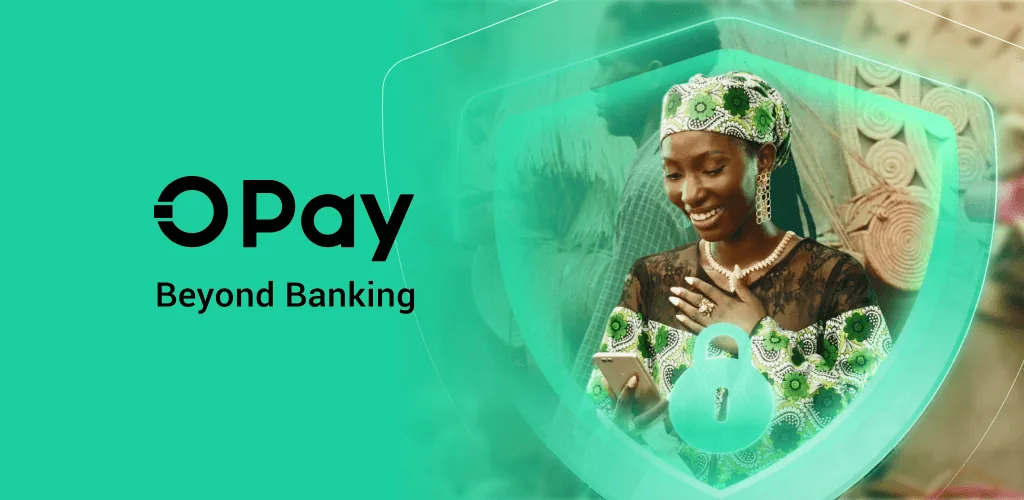
Five years ago, major markets in Lagos, Kano, and Port Harcourt defined commerce by paper notes. The endless wait for bank alerts accompanied that sound.
Today, that soundscape is dominated by a sharp, high-pitched double beep from a bright neon green terminal. Now, Opay account credited.
Traditional banks viewed digital banking as a feature on an existing product.
Moreover, Opay treated payments as real-time digital infrastructure.
At BrandKabal, we look behind glossy corporate rebrands to dissect how companies actually build market dominance. Let’s decode the strategic architecture, psychological positioning, and growth engine that turned OPay into West Africa’s most formidable consumer fintech.
The Strategic Playbook: How OPay Rewrote Fintech Rules#
To understand OPay’s dominance, you have to look past the app store downloads.
Moreover, analyze how they engineered network effects at the ground level.
1. Phased Ecosystem Strategy (The Trojan Horse)#
Most fintechs start by launching a polished consumer app and spending heavily on digital performance ads. OPay took the opposite approach: hyper-local physical presence.
- Phase I (Super-App Saturation): Subsidized daily services (ORide, OTrike, OFood) to drive daily app opens and habituate users to digital wallet funding.
- Phase II (Agent Network & POS Distribution):Deployed over 500,000 active agents with aggressive terminal distribution, converting cash-reliant informal markets into digital nodes.
- Phase III (Financial Utility Integration): Stripped away the transport noise to focus on high-reliability transfers, zero-fee savings (OWealth), micro-loans, and instant debit card issuance.
2. “Phone Number as Account Number” Architecture#
Opay removed the highest-friction element in banking: the 10-digit NUBAN barrier. By anchoring each user’s financial account to their phone number (prefixed with a zero), they substantially lowered the cognitive load. Sending money became as effortless as sharing a contact.
Strategy Breakdown: OPay vs. Legacy Commercial Banks#
| Strategic Pillar | Traditional Banks | OPay Strategy |
|---|---|---|
| Primary Metric | Deposit size & net interest margin (NIM) | High-frequency total payment volume (TPV) |
| Infrastructure | Brick-and-mortar branches + core legacy banking software | Microservices architecture optimized for 99.9% uptime |
| Cost Model | Transaction charges, maintenance fees, SMS alert costs | Zero-fee baseline transfers & yield-generating wallets |
| Trust Anchor | Marble pillars, heritage, and physical branch presence | Instant transaction notifications and field-agent accessibility |
The BrandKabal Take: The Brand Psychology of “Uptime”#
“In emerging markets, reliability isn’t a feature—it is the entire marketing strategy. When money moves instantly, trust follows automatically.”
The Neon Green Monolith#
Color psychology in financial branding usually leans toward deep navy blue or rich burgundy to signal conservatism, safety, and stability. OPay chose vibrant neon green. In high-density African markets, neon green acts as a beacon of high visibility. From merchant storefronts to street corner agents, the visual dominance creates an illusion of ubiquity: if everyone is using it, it must work.
“Uptime” as Emotional Reassurance#
During Nigeria’s 2023 cash crunch, traditional banking apps collapsed under unprecedented transaction spikes. OPay’s microservice tech stack held firm, processing instant transfers while legacy apps timed out.
That single window of structural resilience transformed OPay from an “alternative wallet” into an essential utility. By positioning 99.9% transfer success rates as their core brand promise, OPay shifted consumer perception from “a tech app” to “a reliable safe haven for daily commerce.”
The Strategic Hurdles Ahead#
For all its success, OPay’s next phase of growth presents complex corporate and regulatory challenges:
- Regulatory Scrutiny & Compliance: As fintechs scale into systemic financial institutions, central regulators tighten KYC (Know Your Customer) requirements, fraud monitoring, and capital reserve mandates.
- Monetization vs. Free Services: Sustaining a zero-fee transfer model requires deep cross-selling into higher-margin products like consumer lending, wealth management, and merchant processing fees.
- Cybersecurity & Trust Protection: Rapid scale makes the network a target for social engineering and fraudulent transactions, requiring continuous investment in AI-driven fraud mitigation.
The Bottom Line#
OPay’s rise isn’t just a story about a fast mobile app; it’s a masterclass in distribution, operational velocity, and pragmatic brand positioning. They proved that in fast-moving emerging markets, victory doesn’t belong to the institution with the oldest history—it belongs to the platform that removes friction, guarantees uptime, and integrates seamlessly into the daily hustle.
What’s your take? Can traditional commercial banks innovate fast enough to reclaim daily payment volume, or has OPay permanently locked down the micro-transaction layer? Drop your thoughts below!



Join the conversation